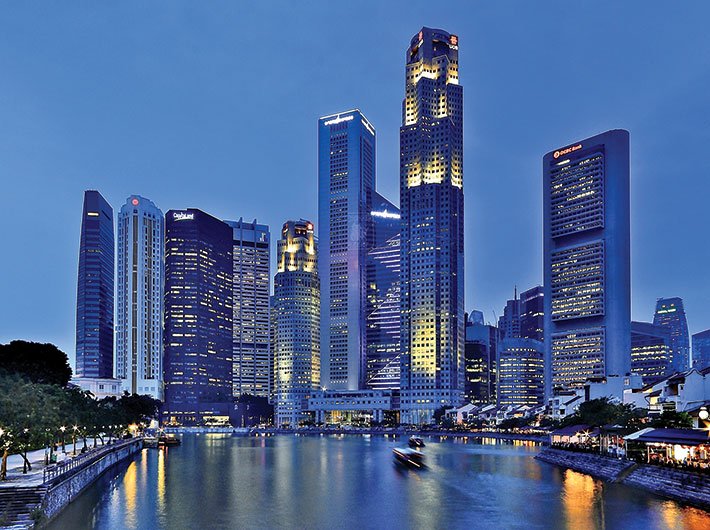
Its economic and administrative achievements are praiseworthy, but following that blueprint is not practical for India
India is a giant in comparison to Singapore; more precisely, it is an anthill compared to a bee. In 1960, India had 271 times as many people as Singapore. Admittedly, Singapore has tried gallantly to catch up; it had brought down the population ratio to 240 by 2010. But with just about five million people, it was far from catching up. In fact, it has no chance, since it would run out of space much before it can come anywhere near India. Even now, it accommodates 20 times as many people per square mile as India does. Only Macau and Monaco are more densely populated.
India has also been a leader in poverty. Singapore was not much richer; its per capita income at purchasing power parity was two and a half times India’s in 1960. In 2010, it was 15 times richer; this is a country of 276 square miles, which had little beyond a good harbour to boast of in 1960. It handled 531 million tonnes of cargo in 2010; all India’s ports together handled 560 million tonnes. All India’s airports handled 75 million passengers in 2013; Singapore’s Changi airport by itself handled 30 million. If Singaporeans had to entertain them all, they would have had 15 guests each per year. But most of the passengers were just changing flights in Singapore. Many of them were Indians, for Singapore is a much more convenient transit point for those travelling east, as Dubai is for Indians travelling west. No Indian airport can match them in serving – and selling expensive handbags to – Indians. Then there were Thais, Japanese, Australians, Fijians, etc, stopping in Changi for the experience.
Many of them would love to settle down in Singapore, not just for jobs it offers, but for the quality of life. Humans walk on pavements, and vehicles ply on streets in Singapore. While walking, no one has to guard her purse; pickpockets are an extinct breed. Not just petty crime – just try cheating in business, not repaying a debt, or selling counterfeits, and you would be caught and fined or jailed within days. The quick, smooth judicial system of Singapore would do the British proud.
Singapore is choosy about whom it lets in to work; it is small, and does not want to be run over by hordes of Chinese or Indians. But citizens of most countries do not need a visa for a visit; they can go there for a good time with just their passports. Only citizens of 33 countries need a visa. Of them, citizens of 16 countries, including India, are let in easily; it is only citizens of 17 countries infamous for terrorism that are given Assessment Level 2, as it is called. And Singapore allows in goods even more easily than people: its trade is 2¾ times its GDP in 2012; India’s was less than half.
Singapore takes seriously Ricardo, who said almost 200 years ago that trade is always good: no one would trade if he did not profit from it. The Indian government likes to keep imports out, especially import of luxuries; it thinks that producing something at home is better than importing it, little realising that trade creates incomes and employment just as production does, and that efficient trade is better than inefficient production.
Singapore gives businesses easy entry, because it is business that brings money and work. It does not have an equivalent of our ministry of commerce, which creates work for itself by controlling and harassing foreign businesses; foreign companies are always welcome in Singapore. And if you do not have a company, you can set one up in a day; the rules are simple, and the administration is fast. For, one of Singapore’s most efficient industries is its tax department. It is squeaky clean and unbureaucratic.
Dealing with the government is easy in Singapore; this is a means of attracting businesses from all over the world. Thanks to the profits that foreign businessmen make in Singapore, two-thirds of Singapore’s revenue comes from direct taxes – taxes on income, assets and property. But its maximum rate of income tax is 20 percent; corporate tax is just 17 percent. The normal reaction of Indians to all this is, let us imitate Singapore. It is not a bad idea, but it is impractical. We cannot get rid of our predatory democracy, and Singaporean efficiency is inconsistent with it. What we should do is to import Singapore’s management of services like ports and airports. Changi airport has tried many times to participate in joint ventures to run Indian airports, with Sunil Mittal, GVK, Bengal Aerotropolis, and so on, but it has never got seriously involved, partly because only Indian businessmen know their way around the Indian government.
It would be far better to let Changi take over a part of the government itself. It is not possible to close down parliament or assemblies, but it is perfectly possible to replace the National Port Trust or Airports Authority of India with a team from the Singapore government. It would be an even better idea to outsource the government of a territory to Singapore; for instance, Goa could well emerge as a mini-Singapore if it was rid of Hitlers and Churchills and given over to Singaporean civil servants.
It is easy to think of injecting a bit of Singapore into our government; it is more difficult to think of doing so into our business. But there is a big opportunity there as well. The Indian film industry is the world’s biggest – at least in terms of the number of films it produces. But it has reached its limits: even India, which is crazy about films, cannot absorb any more. But it could produce films for export; the only problem is that Indians are not much good at foreign languages. There is one language that Singaporeans know well; it is also the language spoken by the largest number of people in the world. It is Chinese. It would be great to see Shah Rukh Khan team up with Zhang Ziyi, or Huang Xiaoming with Deepika Padukone. Kwek Leng Beng should think about it.
Desai is a veteran economist who served as chief consultant to the finance ministry during 1991-93.
The story appeared in the August 16-31, 2014 issue of the magazine as part of the Singapore-India special edition.