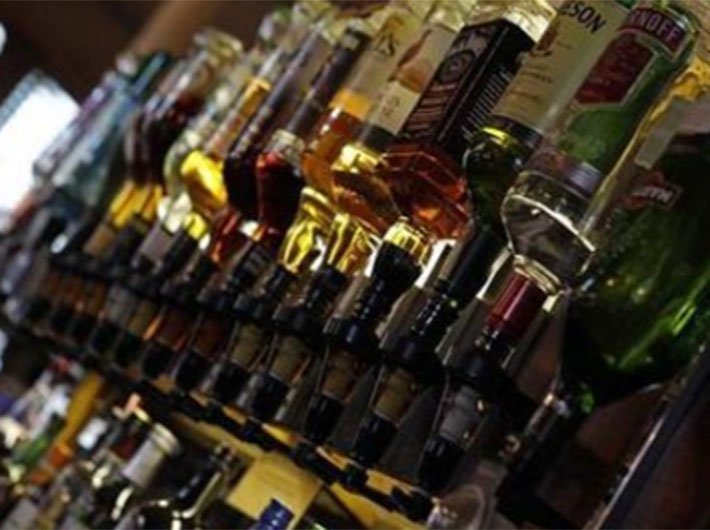
With Bihar’s ban, a sixth of India is now ‘dry’

Costs and benefits of prohibition need to be weighed before rushing in

rahul

Rahul Dass | April 6, 2016


#Liquor Ban   #Nitish Kumar   #Bihar   #Alcohol  


Bihar has prohibited alcohol, becoming the fourth state in the country to do so. Slowly yet surely, it seems, India is headed towards going ‘dry’. It is a bold move.

One swallow does not a summer make, yet there is a clear trend for barring liquor. With Bihar, one of India’s most populous states, joining this bandwagon, a staggering 20 crore people now will not have access to alcohol. This means that a sixth of India’s 1.2 billion people will be impacted, which is more than the population of small countries.

While Gujarat has successfully shown the way right since its inception in 1960, other states have toyed with the idea of banning alcohol over the years. Some have succeeded, while others have been forced to do a rethink.

Today, besides Gujarat, Nagaland, Manipur (in some parts), and the union territory of Lakshadweep have banned liquor while Kerala has since August 2014 been implementing the ban in a phased manner.

Bihar banned some varieties of liquor on April 1 and on Tuesday chief minister Nitish Kumar’s cabinet extended the ban to Indian made foreign liquor (IMFL) with immediate effect. No licence would be granted for sale and consumption of alcohol in places like hotels, club and bars in towns and cities across Bihar. However, army cantonment areas would be out of it.

On the face of it, banning alcohol looks like a political move that has been wrapped in a social garb. Nitish had an electoral promise to keep and the opposition had been hounding him. What better way to win brownie points from women – a huge vote bank – than by banning liquor?

Women activists are right to seek a ban on liquor as they point out liquor destroys families. But they perhaps don’t realise that this may lead to a dangerous trend of moonshine gaining traction. Hooch has repeatedly claimed lives across the country.

What is perhaps needed is a mechanism to regulate the sale of alcohol and more awareness against liquor consumption. Here Alcoholics Anonymous has been doing a yeoman’s service.

Banning alcohol also makes a huge dent in the state exchequer which can be a big problem especially when the coffers are running dry.

Also, one needs to keep in mind that a complete ban on anything is perhaps not the best solution. Enterprising Indians have always found a way to beat the ban.

Suffice it to say that Bihar may well prompt more states to copy it. Before we sign the death warrant for alcohol, we must not forget that other countries are doing just fine where liquor is not banned. India needs to sit back and think before taking any hasty decision.

Comments


Other News

Experts call for stronger communication of air pollution science

Experts have emphasized the urgent need to improve how scientific evidence on air pollution is communicated to policymakers and the public to spur meaningful health and policy action. They were participating in a webinar titled “Communicating Air Pollution Science for Public Health Act

Maharashtra to partner with Starlink for satellite-based internet

In a step toward inclusive digital transformation, the Maharashtra government has signed a Letter of Intent (LOI) with Starlink Satellite Communications Private Limited. With this, Maharashtra becomes the first Indian state to formally collaborate with Starlink to deploy satellite-based internet services f

Young Birders’ Month: A nationwide celebration inspiring budding nature explorers

This November, children and young people across India are embarking on a joyful exploration of birds and nature as part of Young Birders’ Month (YBM) - a first-of-its-kind, month-long campaign created to spark curiosity and ecological awareness among young minds. This initiative is organized collabor

How Bangladesh’s bonhomie with ISI, China poses threat to India

Although New Delhi has not officially commented on the growing footprint of Pakistan’s Inter-services Intelligence (ISI) in Bangladesh, India`s strategic and security community appears to be highly concerned over last week’s development in Dhaka.  During Pakistan’s Joi

CSR in India: Stop counting rupees, start measuring impact

When India became the first country in the world to legislate corporate social responsibility (CSR) in 2013, it marked a bold experiment in blending profit with purpose. By law, companies with a net worth of ₹500 crore or more, or a turnover of ₹1,000 crore or more, or net profit of ₹5 crore or more

A perfect match of Eastern philosophy and modern self-help

Shaolin Spirit: The Way to Self-Mastery By Shi Heng Yi Particular Book/Penguin Books, 264 pages In the history

Visionary Talk: Amitabh Gupta, Pune Police Commissioner with Kailashnath Adhikari, MD, Governance Now


Archives

Current Issue

Opinion

Facebook Twitter Google Plus Linkedin Subscribe Newsletter

Twitter