Lessons from Tamil author Perumal Murugan’s shocking discoveries in a Coimbatore library
I read about the news about the Coimbatore library over coffee this morning. On the face of it, the headline was about a political ‘war’ between the DMK and TVK. But what stayed with me was something much more important than the blame game behind what had transpired. A writer walking through a new public library and finding that some of its books were not what they claimed to be. What’s surprising is that some of them did not even exist and yet continued to find their place in the shelves of a public library meant to inform and educate.
I studied journalism. I talk about books online. I have spent most of my working life around people who write things down for others to believe. And I take that job very seriously. So the story did not feel like a Tamil Nadu story to me. It felt like a question I should have been asking all along. When a book sits on a shelf, who checks it?
The unfortunate story of Coimbatore library
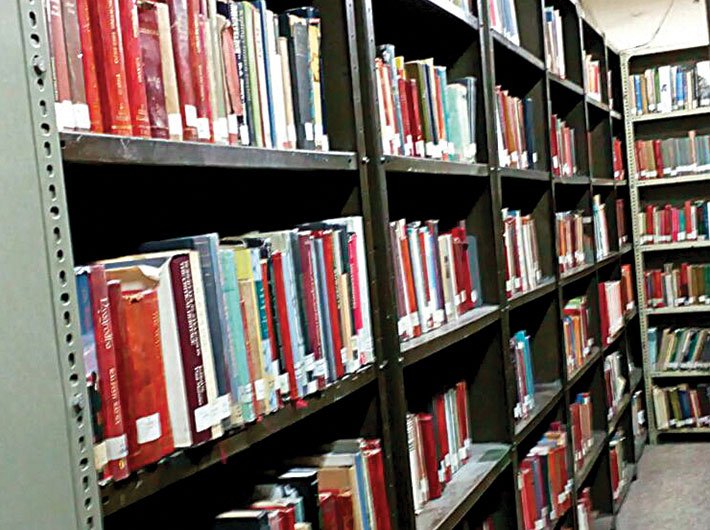
Periyar Arivulagam is a seven-storey library in Coimbatore, built for about Rs 300 crore and opened by Tamil Nadu chief minister Joseph Vijay on October 16. Perumal Murugan, a Tamil writer who has spent decades on classical texts, decided to visit this library and went to the fourth floor in the hope of coming across insightful literature. But what he encountered changed his mind. He counted roughly 1,800 Tamil books in hard-bound editions in mint condition. However, many of them, he wrote, did not survive a careful reading.
A guide to the classical text Naladiyar cost Rs 1,445 for 300 pages and, by his account, misunderstood the work it explained. Another volume credited a poem to a king who never wrote it. "Who on earth is this Koozhathi Peruvazhuthi?" he asked. Some books named authors he could not trace. Their ISBNs matched nothing when searched. He suspected some text had been produced with the help of artificial intelligence.
None of this needed a forensic lab or crores of investment to ensure credibility. It needed someone who knew the subject, an internet connection and the patience to check. All it needed was an intellectual rigour to understand, interpret, and cross-verify. And that is what makes it frightening. The tests were simple, and still nobody ran them before public money was spent.
Vijay has blamed the previous DMK government, under whose order the books were bought, and called for an inquiry. Meanwhile, the DMK has blamed the TVK and Vijay, who inaugurated the library. Who’s to blame will settle in time but what already seems clear is that the books passed through a system and nobody checked whether they were the right books or what was written inside them.
Why printed text is not inherently legible
The part that bothers me most is that this is not new. It’s not the first time that a government has failed to ensure proper verification of books and texts prescribed for the public.
In 2014, a Class 8 social science textbook in Gujarat told more than 50,000 children that Japan dropped an atomic bomb on the United States. The same book said Gandhi was assassinated on October 30, 1948 instead of January 30. It also described a country called "Islamic Islamabad" formed during Partition. The errors reportedly came in during translation from Gujarati to English. The board said it could not recall the books, and promised to put a list of errors online.
Three years later, a Class 9 Hindi textbook in the same state turned "Haiva, Isa", two names, into "haivan", a beast, because of a single extra letter. It ended up calling Jesus a demon. In 2017, a review of NCERT books found more than 1,300 factual errors in the books most of the country treats as the gold standard and a go-to option for UPSC and other government exam preparations. This year, Odisha's new textbooks were found to hold over 1,600 mistakes, 705 of them in Class 8 alone, including Hampi printed in the place of Konark or the Sun temple.
Each time, the pattern is the same. The book is printed and an enormous amount of money is paid for it. It is then distributed. The book reaches readers. Only then does someone outside the system point out the mistakes.
It isn't only that. Some of the most respected publishers in the world have printed books that were completely wrong and lacked the rigour of proper research and editing.
In 2019, Naomi Wolf was promoting her book 'Outrages'. In the book, she argued that many men were executed for sodomy in Victorian England. But, during a live BBC radio interview, the historian Matthew Sweet came crashing down on her after he pointed out that she had misread the legal phrase "death recorded". It meant the sentence was not carried out. Her central evidence and premise fell apart on air, causing great embarrassment. As a result, the US edition was cancelled.
James Frey's memoir A Million Little Pieces sold millions before it emerged that large parts were invented. Jonah Lehrer's Imagine was pulled after a reader noticed quoted attributed to Bob Dylan that Dylan never said.
Much like the situation in Coimbatore, a complete lack of proper editing can turn into a literal catastrophe for the literary world. In 2023, AI-written self-help books made it to Amazon’s recommendation list and some of them gave advice about wild mushrooms that could get someone killed. In 2025, a newspaper in Chicago printed a summer reading list that recommended books that did not exist.
In October, this year, Zimbabwean writer Simbarashe Kundizeza was accused of using artificial intelligence to write his short story "The Blue Fighter," which won the £10,000 Caine Prize for African Writing. However, this remains contested. Be that as it may, In every case, the fix arrived only after the damage, and it came from one person who knew enough to doubt.
Why print fools us
We have learned to distrust WhatsApp forwards and everything we read on the internet. More recently, with the emergence of AI, we’ve also learned to not trust so easily even if the news is coming from a source we have considered credible for a long time. However, we have not learned to distrust books. A printed book carries a kind of authority built upon years and years of printing culture. A student who finds a wrong date in a library book has no reason to doubt it. Why would the library keep something false? If it’s written in a book, it must be true.
That trust is exactly what makes a bad book more dangerous than a bad tweet. A tweet gets fact-checked in the replies within an hour. And there’s always someone to bring it to the attention of people. However, a book sits quietly for years, being cited in school projects and quoted in speeches. Barely anybody replies to a book.
And the checking we assume is happening is necessarily not taking place at all. It’s common knowledge that publishers run on tight margins. Translators are underpaid and rushed. It is an industry after all, an industry in the age of decreasing readership. Today, AI can write a 300-page book in a matter of minutes, and the cost of making something that looks real has reduced to pennies. But the cost of checking it by a human still hasn’t. Every system that still assumes "if it's printed, someone must have checked it" is now open to exploitation.
The lesson of Coimbatore is not that we need fewer books. It’s not even about the emergence of AI tools in writing. It is simply that every book bought with public money needs a named, qualified person (or persons) who has read it, verified it, and given a stamp of approval. Their name should be on the record if it goes wrong. A Tamil classics shelf should be vetted by someone who knows Tamil classics. A history textbook should be read by a historian before it is printed and not after it’s distributed.
For the rest of us, the checks Murugan ran are ones anyone can run. Even you. Does the author exist outside this book? Does the ISBN match anything? Does the publisher have a history? Can a quote be traced to where it was first said? None of this takes expertise, only the habit of asking. If nobody checks the library, we have built a very beautiful building for misinformation.