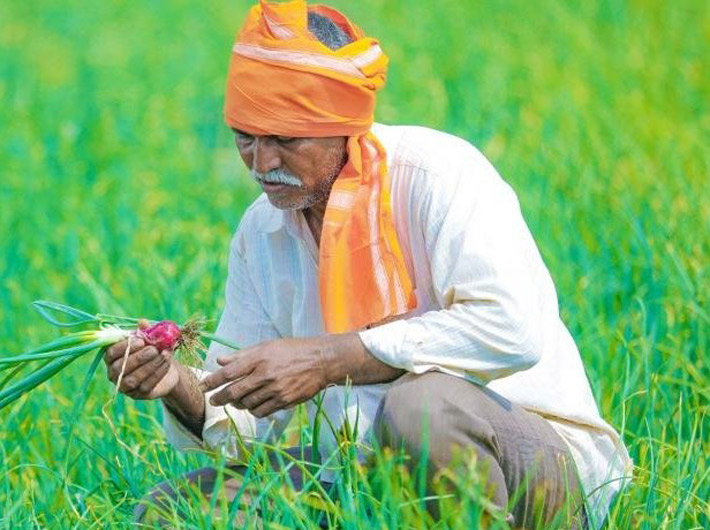
The 2026 Union Budget highlights the necessity of making scientific agricultural research more accessible to farmers in India. The announcement of Bharat- VISTAAR (Virtually Integrated System to Access Agricultural Resources), a multilingual AI tool for farmers to increase agricultural productivity, indicates this. The tool will integrate data from the state-wise Agristack portals with ICAR’s package of agricultural practices to provide customised feedback to farmers. The launch of Bharat-VISTAAR reflects the government’s commitment to incorporating AI into the agricultural sector.
AI in Agriculture: Use-Cases for Bharat-VISTAAR
Artificial Intelligence in agriculture in India comes in a multiplicity of applications ranging across the sowed-to-sold cycle. However, these applications come with their own limitations to be addressed. The above-mentioned applications include but are not limited to the following:
● Crop Management
● Pest Detection
● Soil Monitoring and Nutrition Management
● Financial Risk Assessments
Crop Management
Predictive analytics to monitor crops uses data on crop yield to supplement farmers with micro-level decisions on irrigation, fertilisers, crop varieties and pest control. A
study in Pune’s Baramati, refers to agri-tech solutions developed by Agricultural Development Trust, Microsoft and Map My Crop in the sugarcane belt, and highlighted the savings on farming in multiple ways using government reports. Firstly, significant declines are observed in labour costs for farmers using AI. While non-AI farmers are required to spend approximately Rs 49,000 on labour, AI farmers only spend Rs 36,500. Male labour costs decreased by 30% while female labour costs decreased by nearly 50% due to automation. Other major savings were on manure and fertilisers; Rs 45,500 and Rs 6,000 (Non-AI) vs Rs 38,000 and Rs 5,500 (AI), respectively. AI farmers do face marginally higher costs of machinery and overall cultivation; however, this is off-set by the savings in other parameters. With 49.5% higher yield per hectare and lower costs of production, AI-supported farming proves to successfully improve outcomes for farmers.
Pest detection
Pests contribute to one of the most important factors contributing to biotic stresses on farming. Hence, there is a push for integrating automated systems with IoT based on labelled visual data for detection patterns.
Pest detection forms about 20% of agri-tech solutions adopted.
Automated detection, monitoring and predictive analysis have shown better outcomes for not only managing pests but also decreasing pesticide use, thereby decreasing costs as well as increasing sustainable practices. Data generated through remote sensing, weather stations, and crop monitors is integrated together to produce a complete picture of the requirements on several variables. This includes but is not limited to understanding when to plant seeds, real-time alerts for infestations, best time and quantity to apply for fertilisers and pesticides.
Soil Monitoring and Nutrition Management
This use case suggests soil management through
AI powered analysis of soil health parameters like pH level and nutrient content. Data collected by soil sensors and remote sensing will be analysed to provide a comprehensive understanding of soil nutrient profile and to provide suggestions for fertilisation and irrigation. Additionally, it was recommended that AI algorithms be used to analyse soil profile from images uploaded by farmers. This could potentially reduce barriers that farmers face in formalised soil testing, conducted in labs and requiring specialised equipment. Advancements to soil management could support parallel agricultural initiatives like
the Soil Health Card Scheme, which already works with farmers to identify the requirements for a balanced soil profile. The diagram below illustrates the mechanism of AI powered soil monitoring.
Krishitantra, an Indian agritech startup with a focus on soil health and monitoring, introduced a soil testing device called Krishi - RASTAA to conduct rapid soil analysis with AI powered insights. A soil testing lab utilising the device claimed that lab productivity increased by 40% and farmer trust in solutions improved after its implementation. Information about changes to productivity and feasibility of incorporating AI into farming systems across the country is limited.
Mechanism of AI Powered Soil Management
Financial Risk Assessments
This use case proposes an
AI powered credit risk evaluation system. AI usage is also suggested in the collection of data related to weather conditions to evaluate probabilities of the occurrence of loss-incurring events like droughts or earthquakes. This data will then be utilised to connect farmers with appropriate parametric insurance solutions. The mechanism of both these interventions is consolidated and illustrated in the diagram below.
Considering the Budget’s focus towards small farmers,
who were 16.3% and 30.8% less likely to have access to institutional credit than medium and large farmers respectively in 2023, AI based financial risk assessments could improve financial inclusion.
Case studies on the utilisation of AI [https://ijisem.com/journal/index.php/ijisem/article/view/155] by banks like ICICI, HDFC and SBI to facilitate credit risk evaluations for farmers indicate that the system has had positive impacts on loan targeting, sped up loan distribution and providing customised loan options to farmers. While they also claim financial inclusiveness through a move from the conventional credit scoring system, the studies mainly focus on improving bank outcomes.
Mechanism of Financial Risk Assessments Incorporating AI
Challenges
The effective utilisation of AI in agriculture depends on the availability of good, consistent data. Inaccurate and incomplete data collection will make any AI-based solution irrelevant. For instance, all of the use cases discussed above require accurate and constant monitoring of different soil conditions like moisture content and pH level. The initial cost of setting up specialised equipment and further costs for maintaining and utilising this equipment will be high. Thus, for small and marginal farmers especially, the cost of adopting such technology could deter them from incorporating AI into their agricultural practices. Additionally, the differential access to technology and AI for small and marginal farmers versus medium and large farmers will make AI adoption in agriculture even more irregular. Policy framework encouraging the incorporation of AI into agriculture needs to focus on uniform adoption across all farmers in India.
Considering that the accuracy of AI algorithms in identifying problems and drawing insights comes from training with large databases, it is imperative for the existing agricultural databases to be expanded on. There needs to be more focus towards responsible data collection practices since the reliability of AI recommendations also depends on the quality of the information imputed. It is therefore important to emphasise the limitations of AI powered recommendations while encouraging its adoption among farmers.
Way Forward
Appropriate data privacy and protection regulations are needed to prevent potential harm to farmers from marginalised communities that institutional bias in AI algorithms can cause. Moreover, sensitive data on a farmers’ crop yield or proxy determinants for financial risks need stringent controls to prevent dangerous loans and malpractices in lieu of profiteering by relevant industries in agri-financing.
For better implementation of agri-tech on a large scale, gaps between farmers and the implementing agencies, government bodies as well as private entities under public-private-partnerships must be bridged. Data gaps require on-ground training through extension agencies such as Krishi Vigyan Kendra with better demographic representation and reach. This is largely because the
data collection is then limited to the dominant sections of the society.
There are notable differences across the gender paradigm as well in terms of determination of appropriate crop selection which forms the basis for AI recommendations. Certain varieties of crops require more taxing labour from females than their male counterparts however, since the data collection and labelling process in farms is handled by males such factors are not taken into account. However, inclusive training programs could prevent such errors and help in faster, trusted adoption and transition to AI-enabled farming.
Lastly, as observed under the crop management use-case, while agri-tech can push India to the much-needed move out of labour-intensive agriculture, appropriate measures need to be taken to avoid another phenomenon of jobless growth, especially in a sector employing the majority of India. Bharat-VISTAAR has already taken a step towards inclusive applications due to its multilingual capacity, applied judiciously it could give the push to India’s labour force out of agriculture to more progressive areas in innovation.
Alisha Jose and Yaana Postwala are students and Dr Barun Kumar Thakur teaches Economics at FLAME University, Pune. Views are personal.