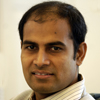
Professor Thomas Pogge is coming up with a new index to calculate poverty figure next year
Professor Thomas Pogge of Yale University is leading a team of experts commissioned by the Oxfam to design an alternative index for calculating the number of poor people. Pogge, who believes most poverty figures calculated around the world are flawed, is also critical of the World Bank and the millennium development goals (MDGs) on extreme poverty concept. In an interview with Governance Now, he says given the wealth of India, there should not have been so much of poverty.
On his fifth visit to India in three decades, Pogge, who is also the chairman of the prestigious US panel Academics Stand Against Poverty, said as compared to China, the changes in India are not that perceptible. India has not achieved its potential in six decades of independence and it has shameful poverty eradication programmes, he says. Edited excerpts…
What’s your analysis about India? Last month, the planning commission stirred a debate when it said those with a daily income of more than Rs 32 cannot be defined as poor. Are you aware of such a proposal?
In India, there are really messy and shameful poverty alleviation programmes. India has been growing quite well in the past 10-15 years. And that growth has not done anything to the poor. It has done a lot for the rich. So you have very rich people. But the lower classes have not benefitted from this globalisation. And the reason for that is partly domestic. India should play a stronger role in defending interest of poor population in international agreements. But it is not happening. In the major negotiations, for example in G20, where India has a strong voice, it will represent the interest of upper class like the industrialists, big companies, banks and so on at the expense of representing interest of the poor population.
The global rules and supernational rules are increasingly burdensome against progress for the poor. It is pretty obvious that given the wealth of India, the total GNP of India, you don’t need to have this much of poverty.
In absolute terms, the number of poor people seems to have gone up in different data that I have seen. In relative term, there is some debate on how it has developed. But given the flaws in the methods of measuring that we now have – purchasing power parity and comparing poor to a national and international consumption basket rather than to their specific needs, I don’t think we have the reliable data. If you see the global data, it has become pretty clear that poverty has become worse. It is worse than in China. Certainly India is falling far behind.
So where is the fault line?
In the first instance, it is the politicians. The businessmen are essentially self-interested profit-maximiser group. However, they have duties like any other person. They should maintain corporate social responsibility. But you can’t expect a great deal from the businessmen. First, because businessmen are competing with one another so if one businessman is more moral then he/she will lose in the competition to others and soon no longer be in the business. The second reason is that many businesses are held by the shareholders and people who run the business will not be allowed to continue if you are nice and shareholders get less profit.
The politicians have the main ability and responsibility to put businesses under rules that make the distance between profit maximising and acting morally as small as possible. The businesses should be so regulated that doing well is also good for the bottom line. They make good decent profit even if they do not harm the common people. Politicians are often corrupt and they put money in their own pockets. Very often they get influenced by powerful lobbies to give money to the politicians. These big lobbies would say that we want rules to be different. That’s the problem. The rules are often designed for the benefits of the rich and then they are detrimental for the poor.
What is the reliability of data on which poverty debate often happens?
I have written a whole book on data, which are by and large designed to be rosy. Indian government and governments around the world have strong interest in presenting rosy trend on the poverty fronts. Some would say that poverty is going down. That’s simply not true. It is interesting but the World Bank main measurement focuses on extreme poverty. And also the millennium development goals’ (MDGs) goal number one focuses on extreme poverty. It is an extremely complicated construct that is based on consumer price indices and purchasing power parities. It shows that poverty has gone down. But if you look at the numbers from the food and agricultural organisation of the UN, you find the number of chronically nourished people is going up and up. It was 788 million in 1996 and it is now over one billion. It has gone up substantially in the world.
What is your idea on poverty estimation? How would you calculate the number of poor people in the world?
I have a project running with Australia National University and Oxfam on how to design the better index to measure poverty and gender disparity. There are dimensions of poverty that need to be incorporated and you don’t need to just look at the money or food. We need to add time burden that imposes. Suppose if a person earns this much money per day and works 14 hours and may be some other person works seven hours that makes a big difference. We have to look at the time burden that a person imposes. We have to look at distribution of income within the family. We have to look at sanitation and clean water availability. Violence is very important factor especially for women, not exactly proponent of poverty. What we do is we interview lots of poor people across the countries to find out what the most important dimension of the deprivation is and how important improvements in these dimensions would be relative to each other. So poverty is much more complicated, complex, multi-dimensional phenomenon than the simple measures like the rupees per day that is normally used can tackle.
So when are you coming with the new dimension of poverty estimate?
Right now we are designing index. Then we have three phases of field work, where we will talk to poor people and do in-depth interviews with them. The first phase is finished. We will ask poor people where they are in multi-dimensional space in terms of income, sanitation, food sufficiency, violence and so on. Secondly, we will ask them what they think is the decent level where they will say it makes a decent and dignified human life possible. Then we will see which improvements are most important. So we will compare and how they rank against each other. Then we will aggregate across many people to find out what are the most important dimensions, how to create unified index created from different dimensions together. That will be done in phases II and III, which are still ahead.
When do you plan to complete the phases II and III?
Probably by the end of 2012.
Are you researching in India also?
We are not doing that in India. We are doing at places where we have time. The countries are Fiji, Angola, Mozambique, Mali, the Philippines and Indonesia.
Do you think that India has achieved its potential in last six decades?
No way near. A lot needs to be done. You have a political class now where majority is corrupt. It is difficult because the majority is corrupt. It is difficult for the non-corrupt people to run the business of the government. They will always collaborate with the corrupt people. Corruption is the major problem that remains to be solved in India and related to that is the problem of poverty. These two problems are closely related. The corruption at the top is percolating all the way down.
You recently met Rahul Gandhi. What was your experience with him?
I had the opportunity to speak with Rahul and Priyanka Gandhi for 20 minutes. Rahul was very interested in some of my ideas. He was very open-minded during the conversation and asked questions. But he did not say anything that he will work on those ideas. He was very careful not to commit anything. But in my view, he was very interested and very open-minded. He is a good listener.
You first came to India in 1980. What difference do you see between India 31 years back and now?
Much less than I would have expected. If you go to China, the difference is mind-blowing. You can’t recognise the cities. It is completely different. In India, the trend is relatively smaller. In the education system, there is a lot more sophistication. People are very articulate and well-informed. The young people are better informed and engaged. There is hunger for understanding and information.
So according to your view, what is not changing in India?
Infrastructure. There is rubbish everywhere. Pavement is uneven. Noise, dirt are still everywhere. That has changed dramatically in China. It is clean and modern in China.
With all the drawbacks that India has, can India emerge as superpower as international political pundits are saying in next 40 years? What is your assessment?
The power of a country has three big sources – military, economic and moral. Each country has a different profile. For India, the best way to emerge as a superpower is emphasis on morality. India has a big advantage on moral values. It has a history of non-violence and also world’s largest democracy. These are huge assets for India. Indian economy will become much larger in the share of the world economy because of cheap labour cost and favourable demography than most other countries. China has a rapidly ageing population. India has smooth transition towards lower birth rate and you have younger population. It has economic advantage and gives sustainable growth of opportunity. I am very optimistic about economic but don’t indulge in military too much. Of course, you have to be able to deter attack by any other country. The moral power is crucial because India is genuine spokesperson of the developing world.