

“Mediocrity breeds, promotes, awards and nourishes mediocrity”

swati

Swati Chandra | January 25, 2017 | New Delhi

#Interview   #Ashok Vajpeyi   #Award Wapasi   #Book Review   #Books   #Governance of Culture   #Mahesh Sharma   #Culture   #Sahitya Akademi  
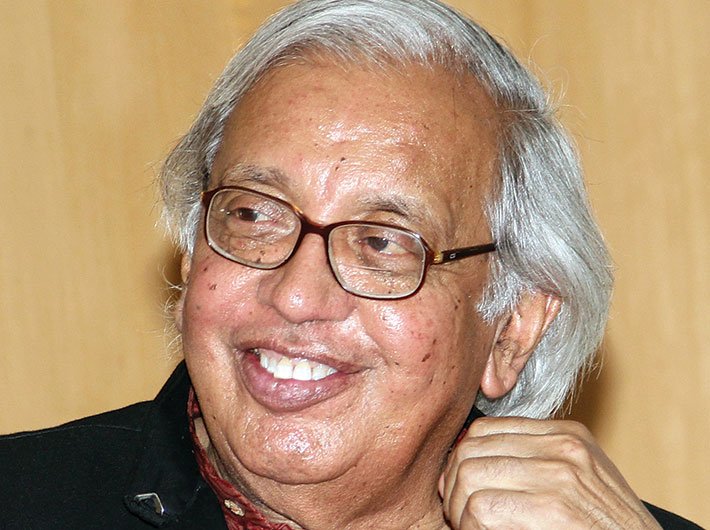
Poet Ashok Vajpeyi
Poet Ashok Vajpeyi

Sahitya Akademi award winning poet Ashok Vajpeyi returned his award in 2015 supporting “the right to dissent”, and was instrumental in the protest against the murder of writers. Vajpeyi, also a retired IAS officer, is not very happy with the Akademi’s style of functioning. 

As an author, what do you expect from the Sahitya Akademi?

The Sahitya Akademi should actively, dynamically and imaginatively work towards making space for dissemination and better accessibility of literature in our time and society.

What do you feel about the autonomy of the Akademi? Is there a need to restructure or rewrite its constitution?

Amongst the three national academies, the Sahitya Akademi has the most autonomous structure. Unfortunately, this autonomy has also promoted mediocrity to take over the Akademi, both in terms of its membership and crucial office-holding personnel. It should be, and some decades ago it indeed was, a national body of excellence with outstanding writers both as its members and office bearers. Today it is dominated by the mediocre, academics of low distinctions and lacking in courage, imagination and dynamism. A restructuring is overdue and should aim at inculcating excellence and creativity rather than get mired in mediocrity and shallow academia.

Should the Akademi be decentralised?

There are state akademies of language and literature. They are at various levels of decline and irrelevance like the Sahitya Akademi. They are being constantly interfered with the politicians in power of all colours and hues. Our political system, as a whole, has no respect and concern for writers, languages and literature and their autonomy. It is an awfully depressing scenario. Most significant writers in Indian languages have nothing much to do with either the Sahitya Akademi or the state Akademis.

Should the award process be simplified?

The process is quite elaborate and involves many readers. It should be retained but steps should be taken that the jury has persons of proven integrity, sound knowledge and adequate stature. At the moment mediocrity breeds, promotes, awards, and nourishes mediocrity!

The Akademi was silent when awards were being returned and also when renowned writer MM Kalburgi was killed. Is the author fraternity of the country angry with the role Akademi played during that time?

The Sahitya Akademi was supposed to stand by writers, to protest, strongly and publicly, against the murder of writers. Instead, it took the role of a shameless sycophant of the government, and belatedly met and passed a resolution. Such shameful behaviour of a national academy of letters made it lose all credentials before the creative community. It, incidentally, invited the head of a TV channel [Subhash Chandra], whose knowledge of Hindi is doubtful, to address the Hindi Day in 2016.
 

[email protected]

(The interivew appears in the January 16-31, 2017 issue)

Comments


Other News

New pathways for tourism growth

Traditionally, India’s tourism policy has been based on three main components: the number of visitors, building tourist attractions and providing facilities for tourists. Due to the increase in climate-related issues and environmental destruction that occurred over previous years, policymakers have b

Is the US a superpower anymore?

On April 8, hours after warning that “a whole civilisation will die tonight,” US president Donald Trump, exhibiting his unique style of retreating from high-voltage brinkmanship, announced that he agreed to a two-week ceasefire with Iran. The weekend talks in Islamabad have failed and the futur

Machines communicate, humans connect

There is a moment every event professional knows—the kind that arrives without warning, usually an hour before the curtain rises. Months of meticulous planning are in place. And then comes the call: “We’ll also need a projector. For the slides.”   No email

Why India is entering a ‘stagflation lite’ phase

India’s macroeconomic narrative is quietly shifting—from a rare “Goldilocks” equilibrium of stable growth and contained inflation to a more fragile phase where external shocks are beginning to dominate domestic policy outcomes. The numbers still look reassuring at first glance: GDP

Labour law in India: A decade of transition

The story of labour law in India is not just about laws and codes, but also about how the nation has continued to negotiate the position of the workforce within its economic framework. The implementation of the Labour Codes across the country in November 2025 marks a definitive endpoint in the process. Yet

Time for India to build genuine resilience in energy security

There is a strip of water barely 33 kilometres wide between Iran and Oman that connects the Persian Gulf to the rest of the world`s oceans. For most of India`s history, it was a distant geographic fact. Since late February, it has been a kitchen problem.   The Strait of Hormuz. T


Archives

Current Issue

Opinion

Facebook Twitter Google Plus Linkedin Subscribe Newsletter

Twitter






