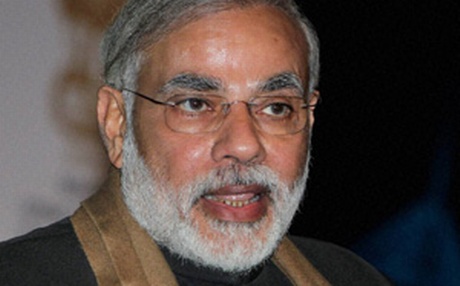
Way back in 2007, when few saw a future for Narendra Modi as bright as it has turned out to be now, he used a funny one-liner in the assembly election campaign: Hun khato nathi ane khava deto nathi (neither do I eat – that is, take bribes – nor do I let anyone else do so). Everywhere you saw, there were posters and hoardings with his photo and this slogan.
Unlike claims made during poll campaigns go, this was a credible one. At least, the only opposition around, the Congress, had no way of countering it. Amarsinh Chowdhary, a former chief minister who was the leader of opposition in the eventful year of 2002, used to say in public at the time that Modi is not corrupt – of course, the late politician used to say so in the tone of ‘there are hundred things wrong with this man, with only one exception’.
Manoharsinh Jadeja, a Congress politician from Rajkot, would repeat the same party line to a US diplomat in 2006, the conversation would be captured in a confidential diplomatic memo, and the memo would be leaked by WikiLeaks. Thus, in March 2011, when The Hindu published the ‘India Cables’, the headline highlighted Modi’s “incorruptibility”.
Who was saying this? Modi on his blog thought it was coming from the US itself. “Wikileaks cables are accurate. I am glad to learn that America admits Modi is incorruptible,” he said, according to his blog [read it here].
But that was back then. In the current campaign, some fan of Modi in the party wanted to remind the voters of the great leader’s virtues, and thus came the tweet that nobody less than the ultimate whistleblower, Julian Assange, the WikiLeaks founder, himself says that Modi is incorruptible. “America fears Modi because they know Modi is incorruptible” runs the line in the tweet with a picture of Assange and what looks like his signature. This led to a minor farce, with the international organisation tweeting that Assange had never said anything like that. To which, BJP spokesperson Mukhtar Abbas Naqvi’s response was that the party does not need a certificate from Assange.
He didn’t explain, however, why Modi bragged about it back then.
Like everything else in politics, there are two ways to respond to the WikiLeaks content, and that depends on who you are rooting for. When the content is in favour of your favourite leader, you can say that now even the US or WikiLeaks (or the actual source of information) says so. That is the Modi scenario.
When the content is risky, you can say that it is baseless, and merely a perception. That is the Arun Jaitley scenario. The BJP leader was quoted as terming Hindu nationalism as what everybody outside the Sangh Parivar seems to know – an opportunistic issue.
But before responding in one way or the other, it would also make sense to read through the whole cable and not just what the apparently “secular” Hindu newspaper put in its reports. Here is the stuff from the cable that for some reason did not make it to “incorruptible Modi” report published in the Hindu [the original here, courtesy the Hindu again:]
“He has successfully cultivated the image of a clean politician who has reduced corruption in public life in Gujarat. Views differ on how clean and non-corrupt Modi actually is, however.” Thus, the endorsement, dear reader, is not coming from the US, WikiLeaks, Assange or the Congress. This is Modi endorsing Modi.
Yet, “All our interlocutors acknowledge that Modi is a modest man who, unlike many elected officials in India, has not used his position to enrich himself or his family. Most contacts also say that he has purged the state administration of petty corruption at the mid- and lower levels of the bureaucracy. However, several people tell us that big ticket corruption is still common.”
Now comes the meaty party, which has (or lacks) as much truth value as ‘Modi-is-incorruptible’ line: “Journalist Javed Rahmatullah claimed that Reliance Industries Ltd. (RIL) paid a large bribe for permission to expand its refinery in Jamnagar. The money went into the BJP's party coffers, Rahmatullah claimed, and not to Modi or any other individual. Other contacts have told us that business money flows to the BJP in Gujarat, but nobody had been this specific. We have been unable to verify Rahmatullah's claim.”
If we wait a bit, some fan may soon tweet: Modi is incorruptible, says Mukesh Ambani.