
Almost 99 percent of demonetised currency is back: RBI

The volume of banknotes increased by 11.1 percent, mainly due to higher infusion of banknotes of lower denomination in circulation following demonetisation

GN Bureau | August 30, 2017

#demonetisation   #currency   #RBI   #annual report  
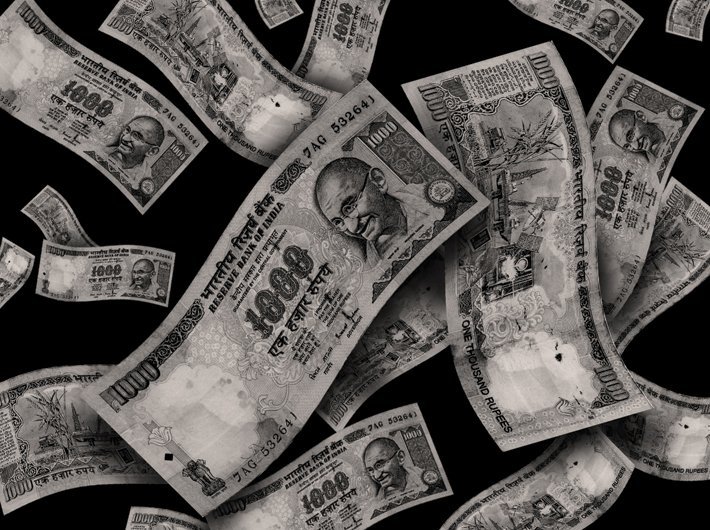
(Illustration: Ashish Asthana)

As much as Rs 15.28 lakh crore out of Rs 15.44 lakh crore of the scrapped currency has come back, the Reserve Bank of India said on Wednesday.
RBI released its annual report 2017 which said that the volume of notes in circulation continued to increase till November 8, 2016 when the government notified that banknotes of Rs 500 and Rs 1000 denominations of the existing series shall cease to be legal tender with effect from November 9, 2016.
 
The report said that simultaneously, a new series (Mahatma Gandhi New Series) of banknotes of a different size and design, highlighting the cultural heritage and scientific achievements of the country, was introduced. In view of the withdrawal of legal tender character of nearly 86 percent of value of notes in circulation on November 8, 2016, the focus of the Reserve Bank subsequently shifted to making available banknotes generated from printing presses to currency chests and from there to bank branches and ATMs in the shortest possible time.
 
This process was facilitated by air lifting of notes as also direct remittances from the presses to currency chests wherever feasible and adopting a hub and spoke model of distribution.
 
As a result, during a short span from November 9 to December 31, 2016, the Reserve Bank pumped in 23.8 billion pieces of bank notes into circulation aggregating Rs 5,540 billion in value. The pace of remonetisation continued ceaselessly thereafter also and the notes in circulation (NiC) as on March 31, 2017 increased close to 74 percent of the NiC prevailing on November 4, 2016.
 
RBI said that sustained efforts were made towards indigenisation of banknotes production along with enhanced security features during the year. The Bank Note Paper Mill at Mysuru started commercial production. Efforts towards a greenfield project for production of security inks were also undertaken.
 
The report went on to say that the value of banknotes in circulation declined by 20.2 percent over the year to Rs 13,102 billion as at end-March 2017. The volume of banknotes, however, increased by 11.1 per cent, mainly due to higher infusion of banknotes of lower denomination in circulation following the demonetisation. In value terms, the share of Rs 500 and above banknotes, which had together accounted for 86.4 percent of the total value of banknotes in circulation at end-March 2016, stood at 73.4 per cent at end-March 2017.
 
The share of newly introduced Rs 2000 banknotes in the total value of banknotes in circulation was 50.2 percent at end-March 2017. In volume terms, Rs 10 and Rs 100 banknotes constituted 62.0 percent of total banknotes in circulation at end-March 2017 as compared with 53.0 per cent at end-March 2016.


Comments


Other News

Ethanol blending: The two sides of a story

India`s crude oil consumption is estimated to be around 88.5% imported from abroad. This one single figure is also responsible for why ethanol has become both an economic strategy and fuel policy at the same time. In an economy like India, which depends so heavily on foreign oil, any increase in internat

Food inflation: Not a macroeconomic statistic but a developmental indicator

India`s retail inflation shows a reassuring picture at first glance. According to the latest data, Consumer Price Index (CPI) inflation edged up to 4.38% in June 2026 from 3.93% in May 2026, but continued to remain within the Reserve Bank of India`s (RBI) target band of 4% (+/- 2%). However, beneath this

Skin in the game or masterful market timing?

When a company founder opens their personal chequebook to buy shares in their own business, stock markets usually applaud. To the average retail investor, it feels like the ultimate vote of confidence, a sign that the people running the show have real skin in the game and believe brighter days are ahead.

India’s freedom struggle was shaped by wider Asian political thought

As we mark 80th anniversary of independence, ‘Asianism and the Fall of Empire’ (HarperCollins India) by historian Mithi Mukherjee offers a new perspective on Ind

What is colonialism? A relook at modern history

The Chromatic World Order: The Fiction That Rules Our World  By Sajid Mohamed Aakar Books  

Monsoon session of parliament adjourns sine die

The Monsoon Session, 2026 of Parliament which commenced on July 20 was adjourned sine die on Thursday. The session provided 19 sittings spread over a period of 25 days.   During the session 11 Bills were introduced in Lok Sabha and 2 Bills were introduced in Rajya Sabha. 12 B

Upcoming Conferences


-->

Archives

Current Issue

Opinion

Facebook Twitter Google Plus Linkedin Subscribe Newsletter

Twitter






