
Rohit Saran’s ‘100 Ways to See India’, full of stories about ourselves that we did not know, is as fun and engaging as it is timely
GN Bureau | March 5, 2026
If you pay income tax, you think you are in the top bracket, among the richest in the country. After all, only 2.8% of the adult population paid income tax in 2024. But you really are not among the 2.8% wealthiest in India. Farmers several times richer than you do not pay income tax. There are other concessions that leave many other groups and individuals making far more than you do out of the tax net. Then, among those who pay, the salaried class pays it upfront, whereas self-employed professionals can claim expenses and pay less.
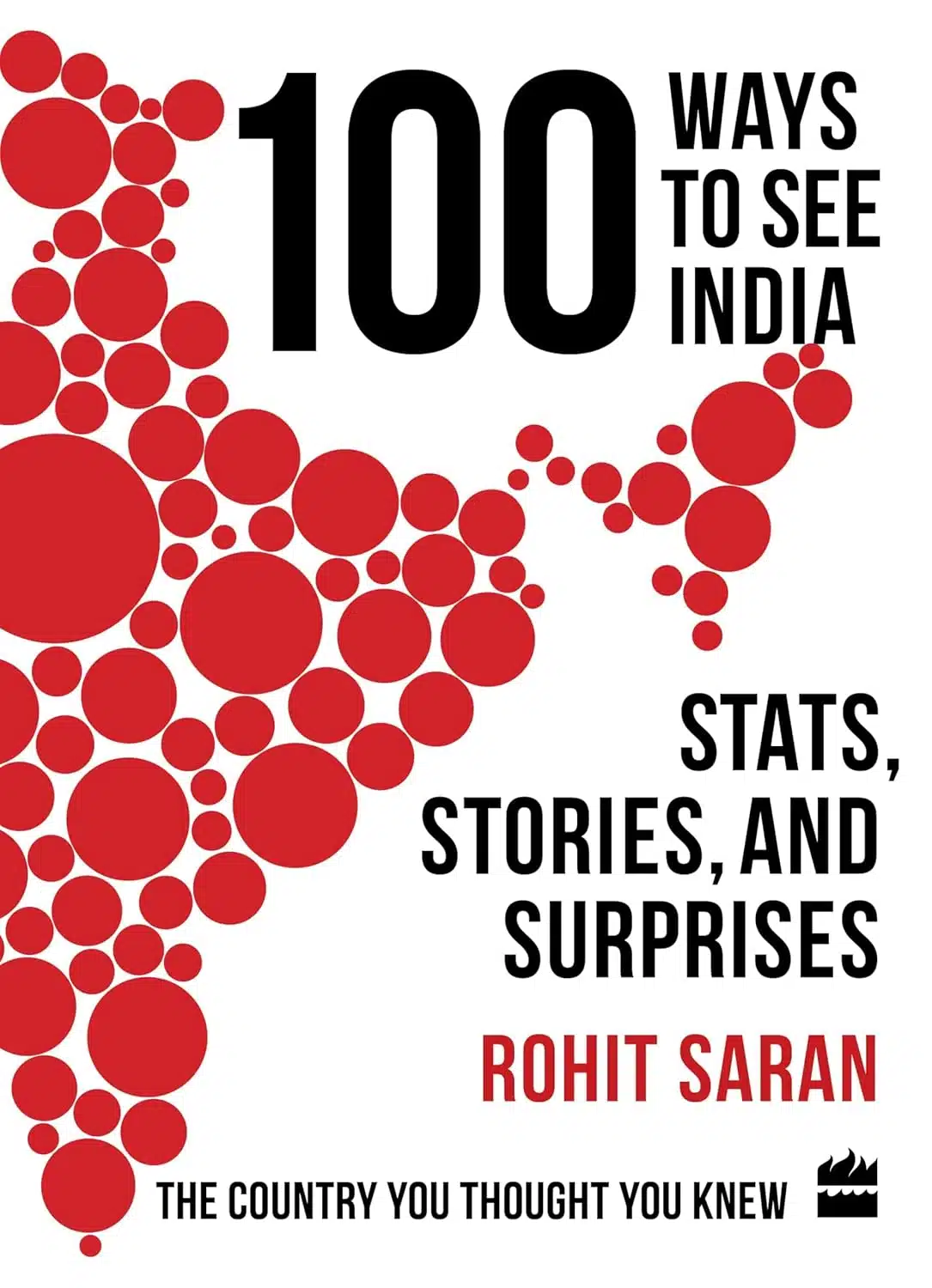 These facts, based on official statistics, are quoted here from a highly unusual book, 100 Ways to See India: Stats, Stories, and Surprises (published by HarperCollins). The author, Rohit Saran, is the managing editor of The Times of India. In the past, he served as executive editor of The ToI, The Economic Times, and India Today, and editor-in-chief of Business Today and Khaleej Times. These days, ‘data journalism’ is a welcome trend, and every self-respecting print publication offers data-heavy articles with reader-friendly visuals. Saran started doing ‘data journalism’ way back in the 1990s, blending numbers, visuals, and text to tell stories in a better way. He is joined here by Sajeev Kumarapuram, the design editor of The ToI. Their cumulative experience has made the book lively, interactive and altogether a pleasant reading experience. They have turned drab PDFs and Excel sheets into exciting stories about ourselves – the stories that we sometimes were vaguely aware of and sometimes will be utterly surprised to read.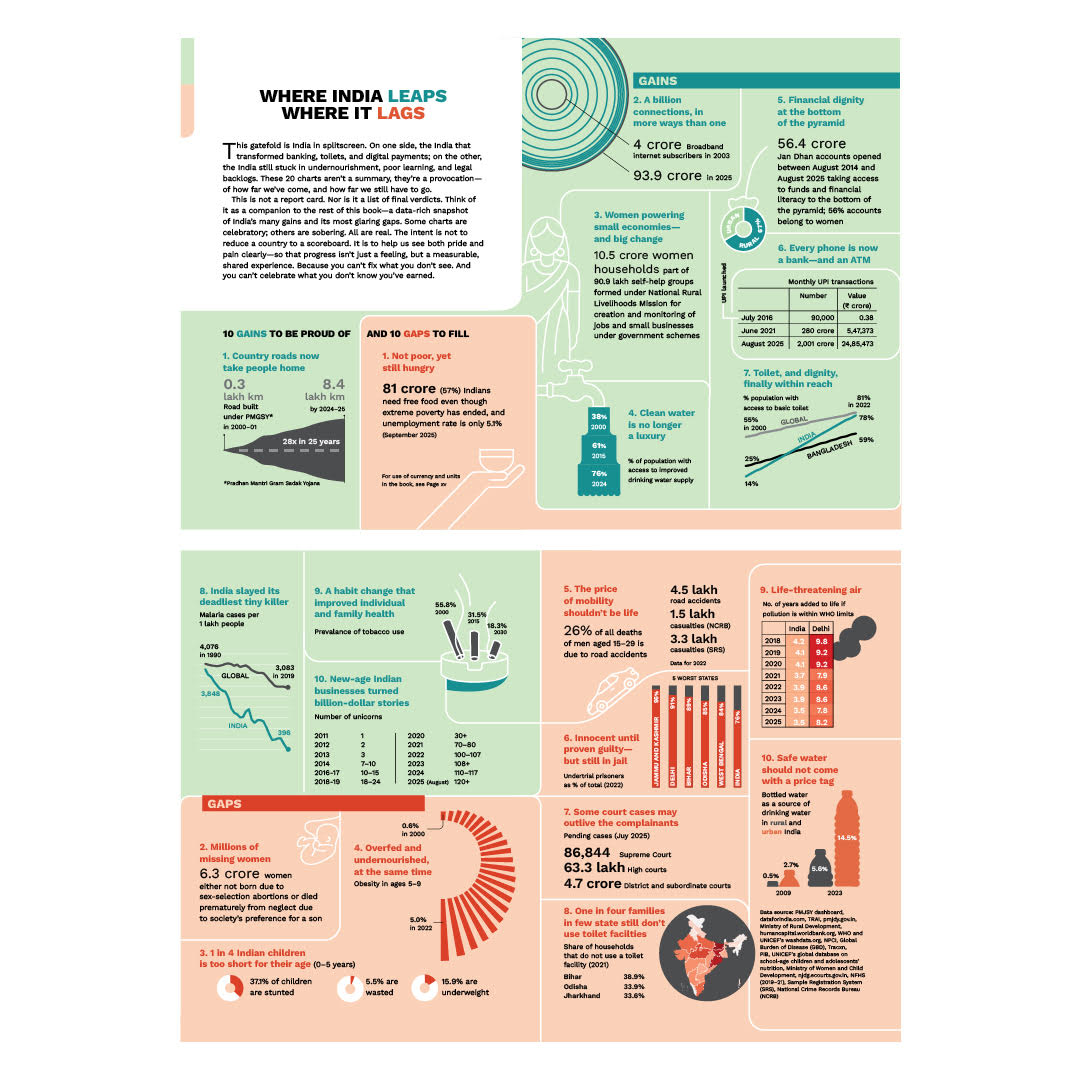
In a significant gain for citizen protection in the digital economy, the Department of Telecommunications (DoT) has helped prevent suspected cyber fraud losses of more than ₹5,000 crore through its Financial Fraud Risk Indicator (FRI) within fifteen months of its launch on May 22, 2025. This money did
The Defence Acquisition Council (DAC), under the chairmanship of Raksha Mantri Rajnath Singh, on Monday accorded Acceptance of Necessity (AoN), that is, in-principle administrative approval to various acquisition proposals of the defence forces at an estimated cost of about Rs 1,10,000 crore.
There`s a certain moment in diplomacy that`s too personal to be captured in a communiqué, too small to make the front page, but more revealing than the front page. This week, prime minister Narendra Modi reached Tashkent and, amid the pomp of state visits, managed to evoke the old Bollywood tunes
India became the 123rd WTO member to ratify the multilateral Agreement on Fisheries subsidies (AoFS) when it deposited the Instrument of Acceptance for Phase 1 on July 20, 2026. The ratification is restricted to disciplining Illegal, Unreported and Unregulated fishing (IUU), protection for overfished
India has become accustomed to hearing the 7% growth number. It is now less a milestone than an expectation. Yet the paradox is becoming clearer: maintaining 7% growth may be considerably harder than achieving it once. India’s real GDP grew 7.7% in FY2025–26, following growth of 6.5% in FY202
Justice Abhay Oka, who retired from the Supreme Court in May 2025, has said that the Constitution of India cannot be altered. Explaining the landmark Kesavananda Bharati judgment (1973) on the basic structure of the Constitution, he said, “This is one judgment that has saved democracy in India.&rdq











