
Manu Joseph’s ‘Why the Poor Don’t Kill Us’ offers unflinching and yet darkly hilarious diagnosis of the malaise
GN Bureau | September 17, 2025
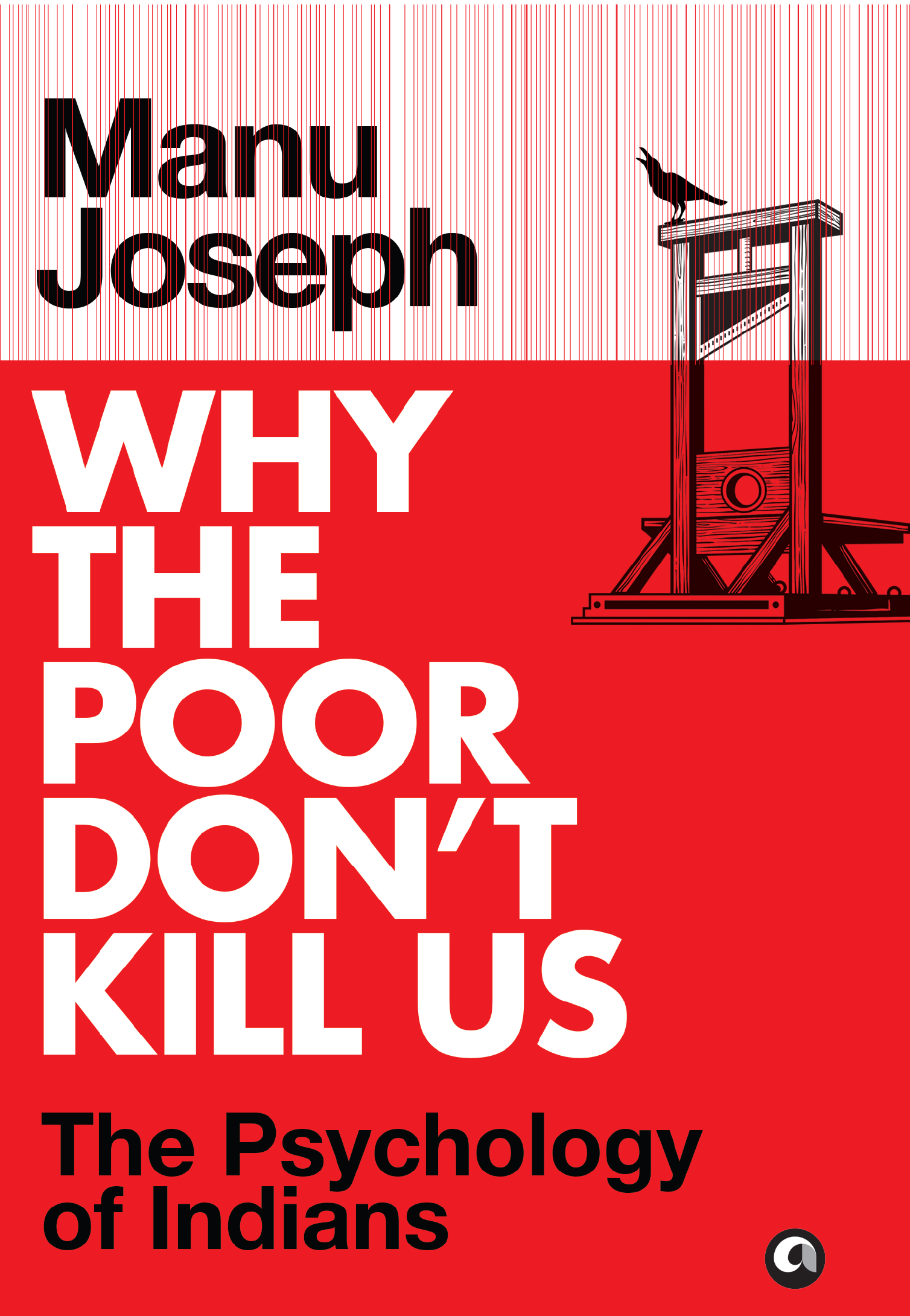
Why the Poor Don’t Kill Us: The Psychology of Indians
By Manu Joseph
Aleph Books, 280 pages, Rs 599
 Thomas Piketty, the renowned French economist, brought the subject of economic inequality to high debates more than a decade ago with his book, ‘Capital in the Twenty-First Century’. In 2017-2018, he and Lucas Chancel went through a lot of taxation data of India, and wrote the paper, ‘Indian income inequality, 1922-2015: From British Raj to Billionaire Raj?’. They found that “the share of national income accruing to the top 1% is at its highest since the creation of the Indian Income tax act in 1922. The top 1% of earners captured less than 21% of total income in the late 1930s, before dropping to 6% in the early 1980s and rising to 22% in the recent period.”
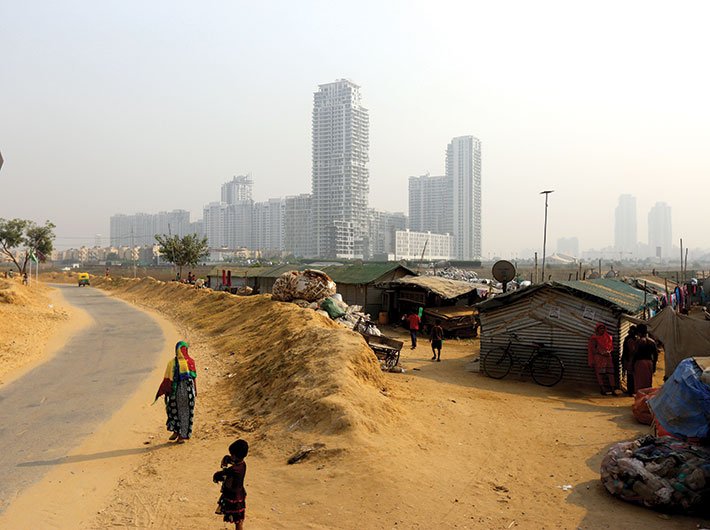
Economic inequality is of course a worldwide phenomenon, and a direct outcome of capitalism, economists would tell you. But India, being India, is an outlier in this respect. It has among the highest, if not the highest, figures for inequality, depending on how the data is interpreted.
Data apart, this inequality is too in-your-face to be missed. The pandemic created havoc everywhere, but it was only here that it left the billionaires richer and the rest poorer. Those who have it like to flaunt it, rubbing, as if, salt in the wounds of the have-nots. And yet, this large majority of the poor trudge on, not complaining beyond a few clichés, and not certainly doing anything more.
This theme has been explored in academics and more so in the arts – think of ‘Sadgati’, Prem Chand’s short story that inspired a film by Satyajit Ray. Manu Joseph, an accomplished novelist (‘Serious Men’, ‘The Illicit Happiness of Other People’, and ‘Miss Laila, Armed and Dangerous’) could have tackled this topic in fiction. But he is also a columnist with a contrarian angle.
In his new book, first non-fiction, he explores why the poor of India don’t rise in revolt against the rich despite all the above. His diagnosis of the malaise is unflinching and yet darkly hilarious.
“This book is about how Indians behave, framed narrowly by a mystery – why is there peace between the classes in one of the most unequal regions on Earth?” He writes in ‘author’s note’.
The poor know how much we spend in a single day, on a single meal, the price of Atlantic salmon and avocados. ‘Why,’ he asks, ‘do they tolerate it? Why don’t they crawl out from their catastrophes and finish us off? Why don’t little men emerge from manholes and attack the cars? Why don’t the maids, who squat like frogs beside kitchen sinks, pull out the hair of their conscientious madams who never give them a day off? Why is there peace?’
‘Why the Poor Don’t Kill Us’ shows us in pitiless detail just how hypocritical and exploitative people of privilege are, and it also shows us how and why they get away with it. It’s a sharp, witty, and perceptive critique of the many faults of the India we live in.
As for the question raised in the title, among the reasons Manu offers in brief, highly readable chapters are: India’s chaos and ugliness protect us (meaning the people-like-us), the poor are the worst enemies of the poor, politics provides a highly effective steam-venting mechanism, and lastly, they are not as miserable as we think.
In a significant gain for citizen protection in the digital economy, the Department of Telecommunications (DoT) has helped prevent suspected cyber fraud losses of more than ₹5,000 crore through its Financial Fraud Risk Indicator (FRI) within fifteen months of its launch on May 22, 2025. This money did
The Defence Acquisition Council (DAC), under the chairmanship of Raksha Mantri Rajnath Singh, on Monday accorded Acceptance of Necessity (AoN), that is, in-principle administrative approval to various acquisition proposals of the defence forces at an estimated cost of about Rs 1,10,000 crore.
There`s a certain moment in diplomacy that`s too personal to be captured in a communiqué, too small to make the front page, but more revealing than the front page. This week, prime minister Narendra Modi reached Tashkent and, amid the pomp of state visits, managed to evoke the old Bollywood tunes
India became the 123rd WTO member to ratify the multilateral Agreement on Fisheries subsidies (AoFS) when it deposited the Instrument of Acceptance for Phase 1 on July 20, 2026. The ratification is restricted to disciplining Illegal, Unreported and Unregulated fishing (IUU), protection for overfished
India has become accustomed to hearing the 7% growth number. It is now less a milestone than an expectation. Yet the paradox is becoming clearer: maintaining 7% growth may be considerably harder than achieving it once. India’s real GDP grew 7.7% in FY2025–26, following growth of 6.5% in FY202
Justice Abhay Oka, who retired from the Supreme Court in May 2025, has said that the Constitution of India cannot be altered. Explaining the landmark Kesavananda Bharati judgment (1973) on the basic structure of the Constitution, he said, “This is one judgment that has saved democracy in India.&rdq











