
Sumana Roy’s ‘Provincials: Postcards from the Peripheries’ explores geographies of imagination
GN Bureau | July 19, 2024
Provincials: Postcards from the Peripheries
By Sumana Roy
Aleph Book Company, 320 pages, Rs 899
 Sumana Roy’s latest work, like its predecessor ‘How I Became a Tree’, is not easily classifiable. Freewheeling literary essays structured around a theme can be a working description. Here, the theme is the small town and its possibilities for someone with a creative bent of mind.
In modern times, much of notable creative work, apart from most other kinds of work that “matter”, has been produced in big cities. Various kinds of necessary infrastructure and facilities have come to be developed in the metropolis, making the task of literary/creative production easier. Yet, something of essence may altogether be missing in the overcrowded atmosphere. Someone working from a small town may not have the option of supporting their creative work by teaching in a university or the luxury of spending the evening networking at a book launch party. But they have more freedom, less pressure, and they are closer to nature. Roy explores these themes from the viewpoint of someone who “tries to live mostly in Siliguri”.
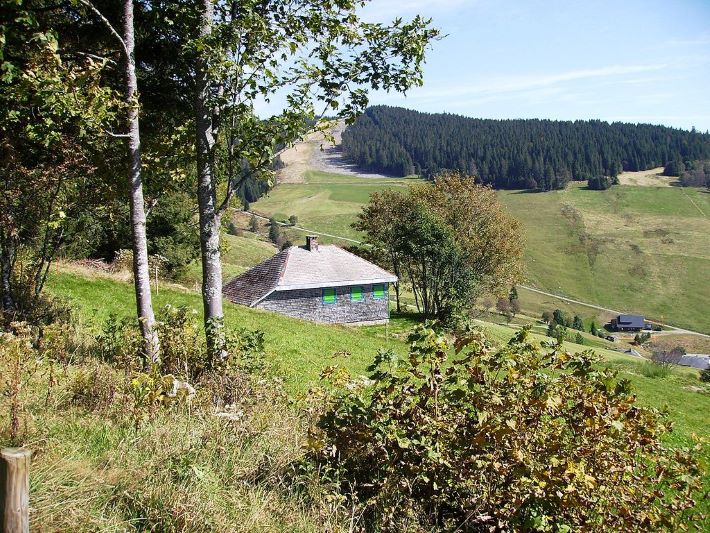
The trope of a writer/poet/thinker living in the hills, forests or seaside will remind the reader of many figures ranging from German philosopher Martin Heidegger to Hindi poet Vinod Kumar Shukla. The essays – “postcards” – here bring them all to testify. Heidegger, born in a rural place, moved to a town for studies, taught in towns, but refused better job offers from cities and preferred to spend as much time as he could in his hut in the Black Forest mountains. His lecture, ‘Why Do I Stay in the Provinces?’, is carefully analysed here. The range of personalities includes “artists, filmmakers, cricketers, tour guides, English tutors, lovers, and chroniclers”. More from the jacket copy: “Delving into the lives and works of Rabindranath Tagore, the Bhakti poets, Kishore Kumar, William Shakespeare, John Clare, T. S. Eliot, J. M. Coetzee, V. S. Naipaul, the Brontës, Annie Ernaux, and others, she celebrates the wit, mirth, whimsy, and irony of small-town lives and living.”
The outcome is exciting, resulting in not only an urge to run away from Delhi (or Mumbai or whichever city the reader is based in), but (more practically) an urge to read or read again the works mentioned. The reader can certainly learn from these essays how to engage with literature in a more meaningful way.
‘Provincials’ is a deeply personal work, and not a literary manifesto. There are explorations, not arguments. So, it would not be fair to pose counter-arguments, more so in a brief introductory note like this. But there are other ways to look at small towns – not to mention big towns. It’s a different matter that no author would think it’s worth the bother to write something like ‘Metro: Meditations from the Megalopolis’.
‘Madame Bovary’, the most perfect novel according to a reputed critic, bears the P word in its subtitle. Flaubert was born in the small town of Rouen, went to Paris for studies and disliked the urban life so much that he returned to an even smaller town near Rouen to spend the rest of his days. But the man who said “Madame Bovary, that’s me” must have perceived something about the Chekhovian travails of provincial people. Emma, a creature of provinces, pines for a Parisian lifestyle. Which leads to much trouble.
There are significant delays in the handling of corruption cases involving officials of the Brihanmumbai Municipal Corporation (BMC), a Right to Information (RTI) response obtained by rights activist Jeetendra Ghadge has revealed. As of 30 April 2026, 207 BMC officials face Anti-Corruption Bureau (A
Every company is transforming, or so it claims. There was a time when the word ‘transformation’ carried weight. It signified bold strategic shifts, reinvention of business models, and breakthrough technologies that fundamentally changed how organizations created
Patel: A Life By Rajmohan Gandhi Aleph Books, 568 pages, Rs 1,199 There are many biographi
The month of July exceeded its rainfall target despite forecasts of a below-normal month under a strengthening El Niño. The reason could be that climate change is amplifying monsoon complexity: West Pacific warming, Western Disturbances and evolving ocean conditions increasingly interact with El Ni&
Mumbai`s public space crisis is as much about mismanagement as it is about scarcity, and offers a governance roadmap that can be implemented without new legislation, according to a new report by the Urban Design Research Institute (UDRI) and the NGO Alliance for Governance and Renewal (NAGAR).
The Lok Sabha on Wednesday passed the Public Examinations (Prevention of Unfair Means) Amendment Bill, 2026 by a voice vote after an extensive discussion. Replying to the debate, minister of state (independent charge) for science & technology; earth sciences and MoS in the PMO, Dr. Jite











