
100 percent Door to Door waste Collection, Segregation achieved under Swachh Bharat Mission (Urban): MoS MOHUA

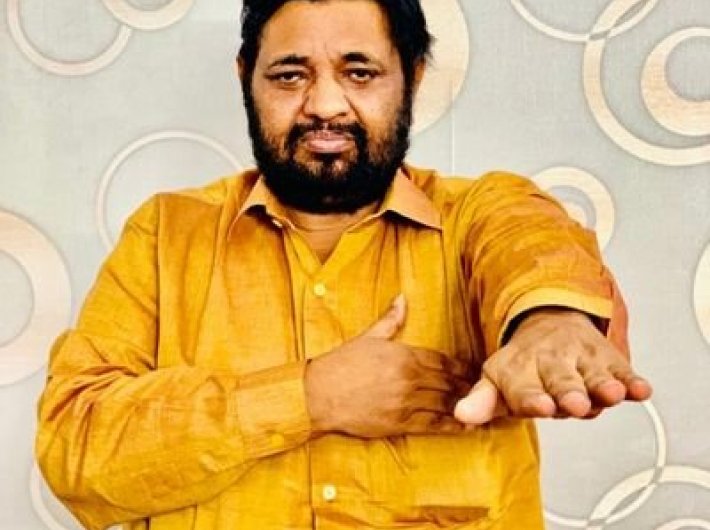
MoS MOHUA Kaushal Kishore in his written reply to the Rajya Sabha highlighted the focus area of Swachh Bharat Mission 2.0 and Atal Mission for Rejuvenation and Urban Transformation (AMRUT) 2.0 which were launched newly on October 1, 2021.

GN Bureau | December 15, 2021

#Ministry of Housing and Urban Affairs; Swachh Bharat Mission(Urban);  


 (With PIB inputs)


In a written reply to the Rajya Sabha on December 13, the Minister of State for Housing and Urban Affairs Kaushal Kishore highlighted the focus areas of the Swachh Bharat Mission (Urban) 2.0 and Atal Mission for Rejuvenation and Urban Transformation (AMRUT) 2.0.

The two flagship missions of the Ministry of Housing and Urban Affairs, Government of India, were launched on October 1, 2021, in a bid to make cities in India garbage-free and secure of its water resources during the mission period of five years from 2021 to 2026.

The minister in his written reply brought in some of the highlights of SBM (U) 2.0 which includes

• All households and premises must segregate their waste into “wet waste” (from kitchen and gardens) and “dry waste” (including paper, glass, plastic, and domestic hazardous waste and sanitary waste wrapped separately).

• Complete (100 per cent) door to door collection of segregated waste from each household/ premise.

• Proper and scientific management of all fractions of waste, including safe disposal in scientific landfills.

• All legacy dumpsites to be remediated.

• All used water including faecal sludge, is safely contained, transported, processed and disposed of so that no untreated faecal sludge and used water pollutes the groundwater or water bodies, in cities with less than one lakh population.

• A phased reduction in the use of single-use plastic will be carried out.

On describing the highlights of AMRUT 2.0, the Minister submitted:

• Universal coverage of water supply from 500 cities to about 4,800 statutory towns.

• Focus on making the cities ‘self-reliant’ and ‘water secure’.

• Universal coverage of sewerage and septage management in 500 AMRUT cities.

• Target to provide 2.68 crore drinking water tap connections and 2.64 crore sewer connections.

• Focus on the financial sustainability of Urban Local Bodies (ULBs) through enhanced creditworthiness and market borrowing.

• ‘Pey Jal Survekshan’ will be undertaken in cities to promote healthy competition among them and function as a monitoring tool and Mission accelerator.

• Technology sub-Mission under AMRUT 2.0 will help in identifying proven and potential global technologies in the water sector.

• Entrepreneurs/ startups involved in low-cost indigenous equipment and processes will be encouraged.

All the cities of Uttar Pradesh including Firozabad are covered under the SBM (U) 2.0 and are eligible to avail all components as per operational guidelines.

Out of 4,372 ULBs, 4,371 ULBs of the country have been declared Open Defecation Free (ODF) under SBM (U). The one ULB remaining is in West Bengal, the city of Purulia. SBM (U) 2.0 and AMRUT 2.0 aims to cover all the cities in the country to make them garbage-free and water-secure.


Comments


Other News

“Indians, yet treated like outsiders”

Moving to Delhi-NCR for education can be an exciting experience for students from Northeast India. It gives us a chance to meet new people, experience a different culture and become more independent. But living away from home also comes with challenges that people who have not experienced them may not al

Import duty on major edible oils cut

The government has reduced the Basic Customs Duty (BCD) on major imported crude edible oils with a view to moderating domestic edible oil prices, providing relief to consumers and mitigating inflationary pressures arising from the sharp increase in international edible oil prices.  

From pyramid to platform: BRICS agenda for Global South

In his opening address at the 18th BRICS Summit in New Delhi on September 12, prime minister Narendra Modi did something India`s diplomacy has been building towards for three years: he moved the ‘Voice of the Global South’ from a slogan to a work plan. Addressing the leaders, he argued that t

How to realise the full transformative potential of PM-JAY

The Pradhan Mantri Jan Arogya Yojana (PM-JAY), a welfare scheme which covers approximately 45 crore beneficiaries across India, provides cashless health cover of Rs. 5 lakh per family per year. It is the largest health insurance scheme which helped crores of poor families by reducing out-of-pocket expend

The missing men in India`s family planning story

Every pregnancy requires two people. Yet India`s family planning programme continues to ask only one of them to bear almost all of its medical consequences. The newly released National Family Health Survey-6 (2023-24) confirms just how entrenched this asymmetry remains: 36.5% of currently married women a

`Development must be judged beyond GDP, with rights and justice at core`

Delivering the IXth Chief Justice M.C. Chagla Memorial Lecture on ‘Human Rights and Sustainable Development Goals’, in Mumbai Friday,  former Chief Justice of India Bhushan R. Gavai questioned whether conventional economic indicators such as gross domestic product (GDP), national income,

Upcoming Conferences


-->

Archives

Current Issue

Opinion

Facebook Twitter Google Plus Linkedin Subscribe Newsletter

Twitter






