
Banks allowed to do business in insurance policies

RBI issues guidelines and entry norms for the commercial banks

GN Bureau | January 16, 2015
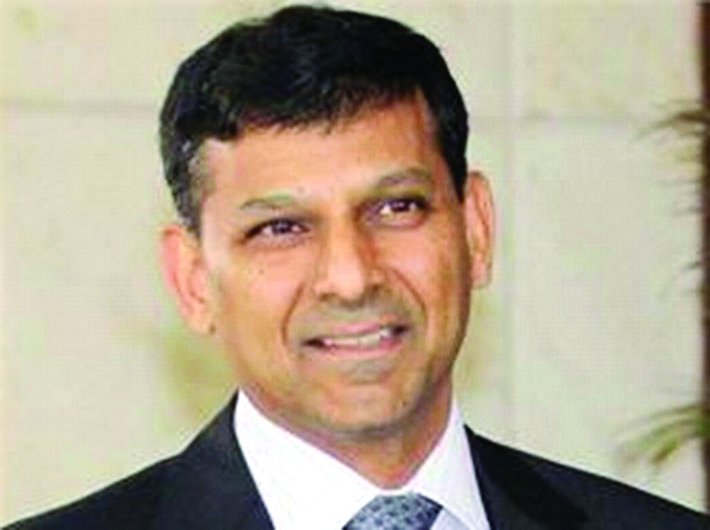


Giving more choice to people, Reserve Bank of India (RBI) on Thursday allowed the commercial banks to undertake insurance business.

Under existing bancassurance guidelines, a bank can act as a corporate agent and sell policy of only one life insurer and one non-life insurance company. The new guidelines issued on Thursday will allow banks to act as brokers and sell insurance policies of different insurance companies.

There are about 87 commercial banks in the country with 1.2 lakh branches.

ALSO READ: Rajan goes halfway, cuts repo rate

Following the finance minister’s (P Chidambaram) announcement in the budget of 2013-14, the IRDA had notified the Licensing of Banks as Insurance Brokers Regulations, 2013, to enable banks to take up the business of insurance broking departmentally.

The reason for allowing banks to enter insurance market as stated by the finance minister in his budget speech was to “use the wide network the bank branches for increasing insurance penetration.”

There has been a long pending demand from the insurance industry to allow banks to act as insurance brokers. Regulator IRDA has already issued guidelines in this respect.

According to reviewed guidelines of the RBI, banks may undertake insurance business by setting up a subsidiary or joint venture, as well as undertake insurance broking or insurance agency or either departmentally or through a subsidiary.

Banks who qualify following criteria can apply for setting up a subsidiary or joint venture company for undertaking insurance business with risk participation:

a) The net worth of the bank should not be less than Rs.1000 crore.

b) The Capital to Risk (Weighted) Assets Ratio (CRAR) of the bank should not be less than 10 per cent.

c) The level of net non-performing assets should be not more than 3 percent.

d) The bank should have made a net profit for the last three continuous years.

e) The track record of the performance of the subsidiaries, if any, of the concerned bank should be satisfactory.

Further, banks who intend to set up a subsidiary for undertaking insurance or broking have to qualify following eligibility norms:

a) The net worth of the bank should not be less than Rs.500 crore after investing in the equity of such company.

b) The Capital to Risk (Weighted) Assets Ratio  CRAR of the bank should not be less than 10 per cent.

c) The level of net non-performing assets should be not more than 3 per cent.

d) The bank should have made a net profit for the last three continuous years.

e) The track record of the performance of the subsidiaries, if any, of the concerned bank should be satisfactory.

However banks need not obtain prior approval of the RBI to act as corporate agents on fee basis, without risk participation or undertake insurance broking activities departmentally.

Comments


Other News

Why foundational literacy and numeracy is key to school education

Foundational Literacy and Numeracy (FLN) are often described as the building blocks of education. Yet, their significance goes well beyond a child’s ability to read a sentence, write a response or solve a basic mathematical problem. These foundational skills shape how children understand the world,

When police data becomes the algorithm

For decades, policing has followed a familiar sequence: a crime occurs, the police respond, an investigation produces records and those records become part of the institutional memory of the criminal justice system. Artificial intelligence is beginning to alter that sequence. Instead of merely recording

Before India voted, the framers worried about the referee

“We are making a Constitution forever and not only for today.” Shibban Lal Saksena said this in the Constituent Assembly on June 15, 1949. He was warning that a ruling party might one day choose a loyalist to run India’s elections. Seventy-seven years later, the Supreme Court is wrestli

Delhi moves to real-time traffic management

The Cabinet Committee on Economic Affairs (CCEA), chaired by prime minister Narendra Modi, has approved implementation of the ITMS Project by Delhi Police at an estimated cost of Rs.1,789.52 crore, inclusive of taxes. The project will cover 42 identified traffic corridors and will be implemented in three

MDR on UPI: Can sustainability come without weakening the network?

The extraordinary transaction volumes and value (₹29.82 Lakh crore in August 2026 alone) of the Unified Payments Interface (UPI) have made it not only an Indian success story, but a global one. In 2024, UPI accounted for nearly 49% of the world’s real-time payment transaction volume, with more th

The Xi-Trump summit: The unending rivalry

Diplomacy is akin to an art, wherein the summitry, conflict resolution and negotiations form apt constituents of the entire context of deal making and “playing for keeps” in the international arena. The Xi-Trump summit in Washington last week, in which the American president broke all conside


Upcoming Conferences


-->

Archives

Current Issue

Opinion

Facebook Twitter Google Plus Linkedin Subscribe Newsletter

Twitter





