
Cabinet nod for amendment to Juvenile justice Act

Cabinet clears proposal to try minors above 16 years of age under IPC, discretion to lie with juvenile board in heinous crime cases

GN Bureau | August 7, 2014
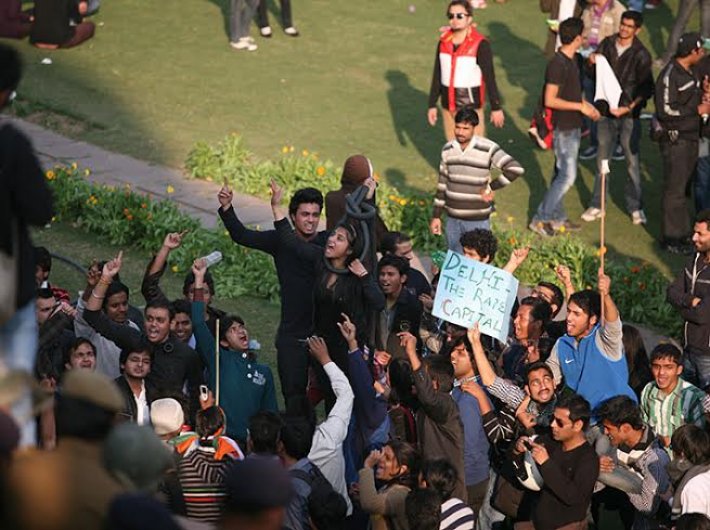

Protests after Delhi gang rape in December 2012

Notwithstanding opposition from child rights activists, the union cabinet on Wednesday approved an amendment bill that proposes Juvenile Justice Board can decide if a minor above 16 years of age should be tried in a regular court or sent to correction homes.

Such discretion, the proposal states, is allowed to the board in cases involving heinous crimes such as rape and murder. (Also read: Juvenile laws in India: need for uniformity)

Changes in the juvenile justice (care and protection of children) Act, 2000, were discussed by the cabinet after all the central ministries gave their nod for the amendment, media reports suggest.

The amendments, however, do not allow life imprisonment or capital punishment for the minor accused, irrespective of his trial under the juvenile Act or under the Indian penal code (IPC).

So far, irrespective of the gravity of the crime, accused up to the age of 18 are sent to correction homes and the maximum punishment provided for in the Act is three years confinement.

Proposals to bring changes in the Act comes in the wake of the unprecedented public outrage arising out of the conviction of one of the accused in the December, 2012 gang-rape of a young physiotherapist in a moving bus in Delhi.

Women and child development minister Maneka Gandhi herself had been advocating the move lately suggesting it would act as a deterrent for child offenders.

Child rights activists on the other hand have been pointing that such changes would prove counter-productive instead of acting as deterrents.

In a statement to Governance Now, a spokesperson of ‘Save the Children’ that works for child protection and child education in India said, “Let us all focus on operationalizing juvenile systems, in accordance with the spirit of rehabilitating child offenders. We have to work with children to ensure that they become more responsible instead of only punishing them.

Nishit Kumar, head, communication and strategic initiatives, Childline India Foundation, Mumbai, said: “The decision of the exact term for such reformation process must be left to the JJB and should be based on detailed psychological examination and observation of the Juvenile.”

In a representation to late supreme court justice (retired) J S Verma who was heading a panel to amend anti-rape laws in the wake of the December, 2012 Delhi incident, a group of activists had highlighted that the minor accused in the case had a troubled childhood himself, after being separated from his family at the age of five. Instead, they pointed that the state should lay emphasis on protecting the childhood of such juveniles who end up being offenders.

Meanwhile, the amendment approved by the cabinet also has provisions for faster child adoption procedures and setting up foster care homes.

The government plans to introduce the bill in the current session of the parliament.

Comments


Other News

Food inflation: Not a macroeconomic statistic but a developmental indicator

India`s retail inflation shows a reassuring picture at first glance. According to the latest data, Consumer Price Index (CPI) inflation edged up to 4.38% in June 2026 from 3.93% in May 2026, but continued to remain within the Reserve Bank of India`s (RBI) target band of 4% (+/- 2%). However, beneath this

Skin in the game or masterful market timing?

When a company founder opens their personal chequebook to buy shares in their own business, stock markets usually applaud. To the average retail investor, it feels like the ultimate vote of confidence, a sign that the people running the show have real skin in the game and believe brighter days are ahead.

India’s freedom struggle was shaped by wider Asian political thought

As we mark 80th anniversary of independence, ‘Asianism and the Fall of Empire’ (HarperCollins India) by historian Mithi Mukherjee offers a new perspective on Ind

What is colonialism? A relook at modern history

The Chromatic World Order: The Fiction That Rules Our World  By Sajid Mohamed Aakar Books  

Monsoon session of parliament adjourns sine die

The Monsoon Session, 2026 of Parliament which commenced on July 20 was adjourned sine die on Thursday. The session provided 19 sittings spread over a period of 25 days.   During the session 11 Bills were introduced in Lok Sabha and 2 Bills were introduced in Rajya Sabha. 12 B

Consumer Justice at a Crossroads

Over the past four decades, India`s consumer protection landscape has undergone a remarkable transformation. What began with the Consumer Protection Act, 1986 as a simple mechanism to empower ordinary citizens has evolved into a comprehensive framework capable of addressing challenges ranging from mislea

Upcoming Conferences


-->

Archives

Current Issue

Opinion

Facebook Twitter Google Plus Linkedin Subscribe Newsletter

Twitter






