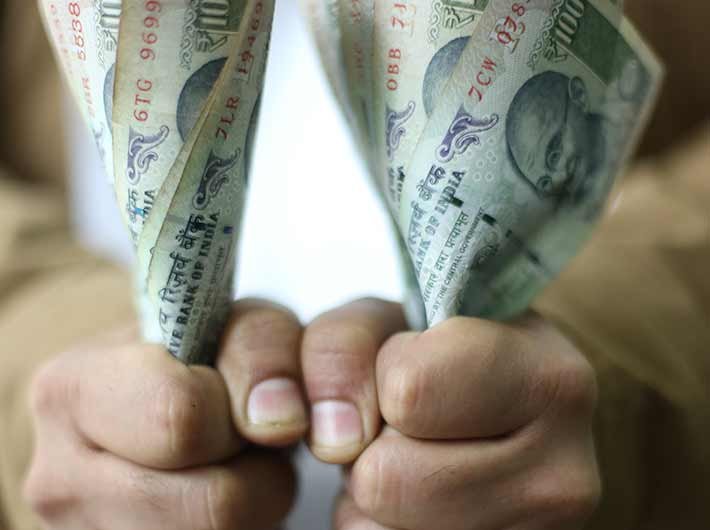
Discussing the idea of universal basic income in the Economic Survey is a step in right direction
Before one takes a call on whether or not India should go down the universal basic income (UBI) route, some myths about the UBI need to be addressed. A universal basic income is an unconditional, regular, payment by the government to every individual, regardless of their wealth, age, ability, gender, health or skill level. It is universal in that it is paid to all individuals (note, not households). It is unconditional in that it does not require the individual to fulfil any condition, for example, enrol his or her child in school, go for a mandated health check-up or work or demonstrate willingness to work. And it is regular in that a fixed sum is given to every individual at regular intervals, say every month.
READ: Free money? Seriously?
The idea of UBI as a social security cover has been in currency in the developed world for long. In India too, we have had a tradition of unconditional, regular payments (in cash, such as pensions or in kind, such as food distributed through the PDS). These, however, have been targeted to specific individuals or households using some metric of deprivation (usually the poverty line).
However, we all know about problems with targeting systems, especially ones that rely on household poverty as a measure, resulting in both inclusion of the ineligible and exclusion of the eligible. Furthermore, not everyone who is poor today may be poor tomorrow and vice-versa. No targeting system is sacrosanct at any given point in time.
A universal scheme in comparison does away with targeting errors. Sceptics, however, have raised many concerns about UBI: should all Indians be guaranteed (and should all receive) a basic income, starting from an industrialist in Mumbai to a street dweller? Wouldn’t it be akin to charity? Would it lead to misuse, especially by men on vices such as alcohol? Would it encourage sloth? And finally, even if the government announces it, will it be able to afford and implement it?
I happened to be involved in what to my mind are the only two pilots on UBI in India. Funded by UNICEF and coordinated by the Self-Employed Women’s Association (SEWA), in the first pilot, eight villages were chosen in Madhya Pradesh (MP) wherein every adult and child was provided with a monthly payment of Rs 300 and Rs 150, respectively. The second pilot was held in a tribal village, also in MP, wherein similar amounts were paid. In both pilots, the payments were made for 12 months, and other villages were visited and interviewed for comparison.
We undertook the experiment, without conditions, because we believed that people are generally capable of making their own decisions, and do so in the best interests of themselves, their children and their families. No evidence was found of an increase in spending on alcohol. In fact, we found people spending on their children’s food, their education, on their household food requirements, on household repairs. The elderly said that the UBI had helped them buy medicines more regularly. Tribal women increasingly approached government hospitals instead of relying on home remedies. Household members pooled their money to buy productive assets like livestock and farm equipment. We also saw an increase in income earning and production, with many individuals shifting from wage labour to working on their own farms, now that the money allowed them some extra funds to buy seeds and fertilisers. People worked more hours, and branched out into secondary activities. The dole or charity was seen by them as a rare chance to invest money wisely, so it would pay them later. Interestingly, even though some better-off households refused the transfer saying that they did not want a handout, women in these families came forth and said they wanted their own individual payments, so they could spend it on themselves and their children.
There were, admittedly, implementation challenges. Despite Jan-Dhan, many of our beneficiaries, especially women, did not have an individual bank account. These had to be opened by the SEWA team, in coordination with local banks, before we could implement the pilot. Then there is the contentious issue of affordability. It is estimated that paying a UBI equivalent to the poverty line to each and every adult in India would cost anywhere between 3.5-10% of GDP. This is significantly more than the expenditure incurred on subsidies, welfare schemes like PDS and MGNREGA, or even basic health and education. Clearly, some fiscal space will have to be created. Some economists such as Maitreesh Ghatak have recommended cutting down subsidies to the rich. Yet others have called for raising or improving collection of additional taxes which are applicable to the rich (e.g. property tax). There has also been concern that the UBI may warrant the government to do away with other welfare schemes such as the PDS, mid-day meal or MGNREGA.
Let me conclude by saying that we never recommended a complete withdrawal of welfare systems. In fact, in our study villages, people saved cash to buy food and non-food commodities at PDS shops, when they became available because their supply was irregular. The UBI in our experiment was always something over and above the existing welfare schemes. But we also saw the results that we did, with only a fraction of the amount being recommended for UBI (Rs 10 per day, much below the rural poverty line of Rs 32 per day). The basic income therefore was really quite basic.
One could argue that this is a pittance, just like the pithy pension amounts received by the elderly, widows and disabled in our country (about Rs 200 per month, with some state-level variation). However, we ensured that these amounts were paid regularly, not as lump-sum payments as some states pay pensions. Further, the small amounts when added up for the entire household per month were substantial, empowering them to take decisions like investing in repairs or buying livestock or affording healthcare.
Second, we recommended a geographically phased rollout of the UBI starting from the most impoverished blocks and districts in the country. Finally, and to create fiscal space, we suggested dovetailing or converging some small, state level schemes, many of which were found to be defunct or where money was not reaching the targeted beneficiaries (in a general village in MP, we found as many as 300-plus schemes, all aimed at addressing poverty!).
Whether or not spending money on UBI is better than spending money on other direct cash transfers like pensions or maternity entitlements is a call that the government will have to take. Debating these issues (and math) in the Economic Survey is a step in the right direction.
Soumya Kapoor Mehta is a development economist and a co-author of Basic Income: A Transformative Policy for India.