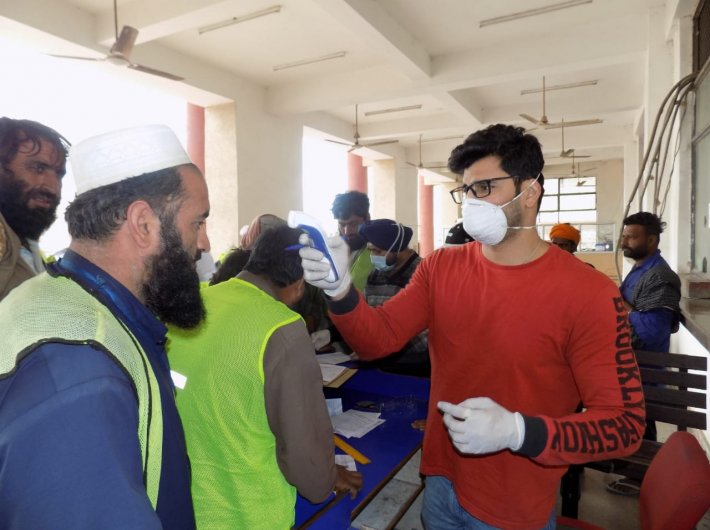
The scare of the Covid-19 is rising in India, with the total number of positive cases touching 30 and some cases of community transmission coming to light, even as the authorities have stepped up precautionary efforts to contain the spread of Novel Coronavirus.
The 30 positive cases include the previous three from Kerala who have now been discharged. In addition, by late Thursday, there were three from Delhi/NCR (two with travel history from Italy, and one with travel history of Iran), six contacts of the first Delhi case with travel history of Italy, one rom Telangana with history of Dubai travel and Singapore contact, 16 Italians and one Indian driver who was with the Italian tourist group.
In addition, the earlier two suspected cases from Telangana have tested negative at the National Institute of Virology (NIV), Pune. Also, the 14 Italian cases, and all the Indian patients are stable and being monitored, an official note said.
Since, in addition to Covid-19 cases related to travel, some cases of community transmission have also been observed, it has been decided to involve district collectors and states have been asked to form rapid response teams as the district, block and village levels.
A total of 6,49,452 passengers have been screened at the airports till date from 6,550 flights. In addition, there are 29,607 persons who are under the IDSP community surveillance and contact tracing. India made universal screening mandatory from March 4, which was started at most airports from Thursday evening.
Home secretary holds video conference
Union home secretary Ajay Bhalla on Thursday reviewed the status of the screening of people coming to India from neighboring countries. He held a video conference with the chief secretary/additional chief secretary and DGP/ additional DGP of states Uttar Pradesh, Bihar, West Bengal, Sikkim, Uttarakhand and Punjab, besides the secretary, Border Management and DsG of BSF/SSB.
The states informed them that regular screening was being done by doctors at various transit points and the community in border areas has been sensitized in respect of precautions to be taken to avoid getting infected by the virus, through gram sabhas.
The home secretary urged all the officials to ensure that round the clock deployment of doctors, with requisite testing kits and other medical supplies, be done so that hundred percent screening is done without fail.
Visa restrictions
In addition to visa restrictions already in place, passengers traveling from or having visited Italy and the Republic of Korea and desirous of entering India will need a certificate of having tested negative for Covid-19 from the designated laboratories authorised by the health authorities of these countries. This will be enforced from March 10 and is a temporary measure.
Health minister chairs meet to involve pvt sector
To involve the private sector healthcare providers in the fight against the new threat, union health minister Dr. Harsh Vardhan Thursday chaired a high-level meeting with the owners and heads of leading private hospitals of Delhi/NCR. Dr. V K Paul, member (Health), NITI Aayog and Preeti Sudan, secretary, health ministry, were also present at the meeting.
“It is time for the public and private sectors to come together and work as an alliance in the spirit of collaboration and coordination for collective efforts towards Covid-19 management,” he said.
A presentation was made about the current situation and ongoing virus management activities. After the presentation, Dr. Harsh Vardhan stated that with the collective efforts of the central ministries and states/UTs, ample timely precautionary measures have been taken. He also asked the states to continue to be on high alert regarding prevention, community surveillance and effective hospital management.
He stated that it is during times like these, when the public and private sector can form an alliance and work towards shared goals in public interest pooling in collective resources, and building on the strengths of each other.
The owners and heads of Medanta, Apollo Hospitals, Max Hospitals, Fortis Hospitals, Cygnus Healthcare, Artemis Hospitals, Asian Hospital (Faridabad), Metro Hospital, Paras Hospital, Sarvodaya Hospital, VPS Healthcare, and Nayati Hospital, as well as representatives of FICCI and IMA were present at the meeting.
No shortage of medicines
Union minister for chemicals and fertilizers V Sadananda Gowda has said that there is no shortage of medicines in the country to deal with the outbreak of Novel Coronavirus.
Inaugurating the ‘India Pharma & Medical Device 2020’ conference in Gandhinagar, Gujarat, Gowda assured that the government has been able to successfully restrict its spread in India so far due to a strong surveillance and monitoring system. He said the preparedness of government, hospitals, medical institutions and pharma sector to deal with Coronavirus in any eventuality have been strong and firmed up.
Gowda also said that there is a need to reduce our dependency on active pharmaceutical ingredient imports by making India self-sufficient in API manufacturing. He said that pharma companies should take a cue from this emerging situation and take steps to increase their capacity in API manufacturing.