The cooperation between India and the United States goes back quite a time. We need to relegate that era to the backburner when Pandit Jawaharlal Nehru visited US in the times of president Dwight Eisenhower and called the American let-off of 10 million dollars in defence aid to Pakistan as a “gun which can fire in both the directions.” But, the relationship improved despite the nuclear apartheid on India by the visit of president Bill Clinton to India. It was with the inking of the India US Nuclear Cooperation agreement, also known as the 123 Agreement, that the entire swathe and landscape of geopolitics changed for the better. The India-US Strategic Partnership agreement was inked in 2005 and it was strengthening further into fruition in 2015 with the deft inclusion of the commercial and the industrial element inside the rubric of the larger relationship in reference to the defence partnership between the two democracies.
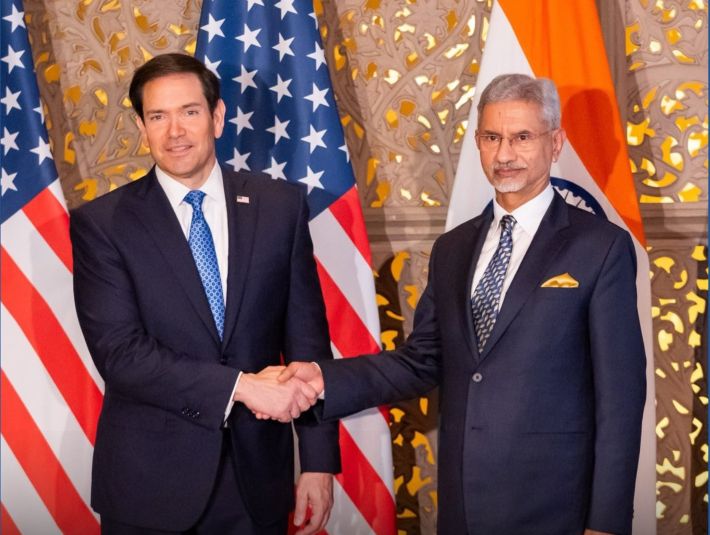
With the world being ravaged by two wars being fought in the West Asia and the Russian steppes, the last week’s visit of secretary of state Marco Rubio attained a significant kosher diplomatic station in the light of both the nations striving to iron out a bilateral trade pact. Still, in one of his statements the secretary of state did hint a Trumpish mannerism, to the effect that we are walking the whole hog now and the Indian leadership too has to do enough.
As the IMF has completely pruned Pakistan’s economic stricture and its trade and revenue related order, the US might be looking askance with a similar diplomatic perspective. India has expressed vehement objection to Rubio’s visit being hyphenated with Pakistan – a strategic and geopolitical mistake which the White House always commits, leading to domestic consternation and palpable discomfiture in New Delhi and its trade constituents, that is, the corporate and business world. In the light of the trade deal, as Trump calls it, “Oh yeah, the deal is coming through”, India has raised the question: how can the nations with which the US has signed bilateral trade treaties pay the same quantum of tariffs as the countries with whom the Capitol Hill does not have trade pacts? New Delhi finds this is one last hitch in the still being negotiated trade deal.
In the light of the Regimes (Collective Global alliances on Global issues) of the day, it can be contended that apart from developing a global alliance in the spheres of drug trafficking, arms trade, climate change, women empowerment and immigration, the nations in the contemporary context have latched on to a present trend of inking bilateral trade pacts and the EU’s BIT and the trade pact being envisioned between India and the US is too akin to taking a leaf out of the similar trade and investment book. It’s not yet celebration and gloating time for the two countries but with Trump declaring that the 99% work on the trade deal has been done handsomely, surely it’s a beacon in the light of his multiple tariff tirades. It’s not yet a makeover of the American trade policy as the US still stands ready with glaring demands of the Indian establishment in relation to agriculture, pharmaceuticals and dairy sectors which New Delhi finds as a significant fly in the ointment against which now India’s minister of external affairs has been raising a discordant voice in various fora. In his address to the Asiatic Society on the occasion of the UNGA meeting in September too, he referred to the twin genres of India’s foreign policy: reformed multilateralism and strategic autonomy. The developments have come to such a passe that Rubio ventured into diplomatic exploration in order to search for a conduit and a stable and lucrative market for the Venezuelan oil and energy conduits, which have been usurped after a coup.
Trump in his characteristic verbiage terms the India-US trade deal as a “much different variant of a trade deal” as, according to him, the two democracies are “pretty close” to reach a much awaited agreement. This statement is categorically placed to coincide with the visit of Rubio, during which he engaged with the external affairs minister on a plethora of themes ranging from energy and supplies chains to defence deals and the all significant “people-to-people ties” which have always been there with the fruitful contributions of the Indian diaspora in the American society and polity as they truly live the grandiose “American Dream”.
The bigger question is: Can New Delhi breathe easy now after the American demarche was beautifully tackled by New Delhi by walking the stiff tightrope walk between the US and the Kremlin when Washington berated New Delhi not to buy oil from Moscow? The new trade deal may include a better, camaraderie-bedecked comprehension between the two countries in the context of electronic equipment, information technology related services, engineering goods and of course pertinent Indian exports of textiles.
Apart from trade, what coalesces the two democracies closer is a mutually shared understanding on GWOT (Global War on Terror) which can be a complex cup of tea in the light of the Iranian factor in the relationship. What most hoi polloi fail to comprehend is that the India can never be compared to Pakistan, Afghanistan and Iraq as these nations some years back had been the pet poodle of the American system, military, media and industry complex and the larger American intent premised on national interest and now the policy.
Dr. Manan Dwivedi is Faculty, IR and IO, IIPA.