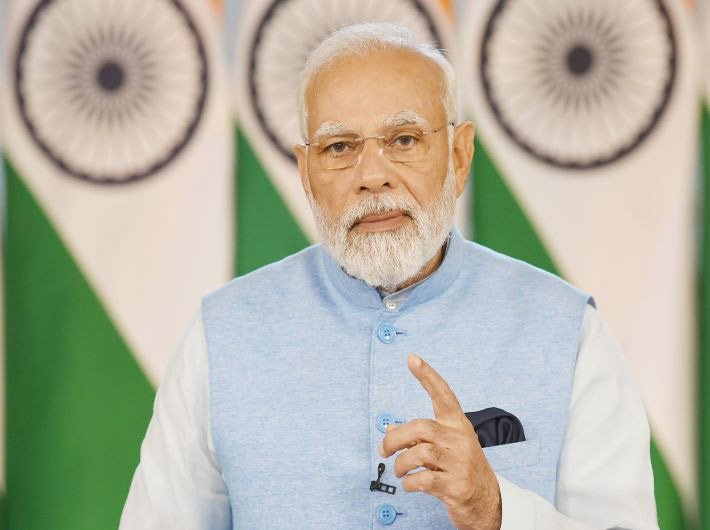
Addressing FM meet, PM underlines why India chose the theme of One Earth, One Family, One Future
As prime minister Narendra Modi on Thursday addressed a meeting of the Foreign Ministers of G20 via video message, he underlined why India had chosen the theme of ‘One Earth, One Family, One Future’ for its G20 Presidency. He explained that it signals the need for unity of purpose as well as the unity of action. He expressed the belief that this meeting will reflect the spirit of coming together for achieving common and concrete objectives.
Acknowledging that multilateralism is in a state of crisis in the world today, the PM pointed out the two main functions that were meant to be served by the architecture of global governance created after the Second World War. He explained that firstly, it was to prevent future wars by balancing competing interests, and secondly, to foster international cooperation on issues of common interests.
Referring to the financial crisis, climate change, pandemic, terrorism, and wars in the past few years, Modi noted the failure of global governance in both its mandates. He further added that the tragic consequences of this failure are being faced mostly by all the developing countries and the world is at risk of rescinding on sustainable development after years of progress.
He also noted that many developing countries are struggling with unsustainable debt while trying to ensure food and energy security for their people. He said it is developing countries that are most affected by global warming caused by rich countries.
“India's G20 Presidency has tried to give a voice to the Global South”, Modi remarked as he pointed out that no group can claim global leadership without listening to those most affected by its decisions.
The PM underlined that this meeting was taking place at a time of deep global divisions and as foreign ministers, it is only natural that their discussions are affected by the geo-political tensions of the day. “We all have our positions and our perspectives on how these tensions should be resolved,” he said.
He emphasized that as the leading economies of the world, the responsibility towards those who are not in this room lies with us. “The world looks upon the G20 to ease the challenges of growth, development, economic resilience, disaster resilience, financial stability, transnational crime, corruption, terrorism, and food and energy security,” the PM remarked as he noted that G20 has the capacity to build consensus and deliver concrete results in all these areas.
He emphasized that resolutions for issues that cannot be addressed together should not come in the way of those that can be resolved. Underlining that the meeting is taking place in the land of Gandhi and the Buddha, the PM urged the excellencies to draw inspiration from India's civilizational ethos of focusing not on what divides us, but on what unites us all.
Throwing light on the thousands of lives lost in natural disasters and the disastrous pandemic that the world faced, Modi noted how global supply chains have broken down during times of stress and turmoil. Observing that stable economies were suddenly overwhelmed by debt and financial crisis, he stressed the need to show resilience in our societies, economies, healthcare systems and in infrastructure.
“The G20 has a critical role to play in finding the right balance between growth and efficiency on one hand and resilience on the other,” the PM remarked. He suggested that this balance can be achieved more easily by working together. Concluding the address, he expressed confidence in the collective wisdom and ability and hoped that today's meeting will turn out to be ambitious, inclusive and action-oriented where resolutions are made while rising above differences.