
Many electronic companies still have no take-back system: Report

According to the latest study by Toxics Link, the unmanaged e-waste is increasing due to disoriented take-back and collection system by producers

rahul-trivedi

Rahul Trivedi | February 21, 2019 | Delhi

#waste generation   #electronic waste   #e-waste   #Toxics Link   #extended producer responsibility  


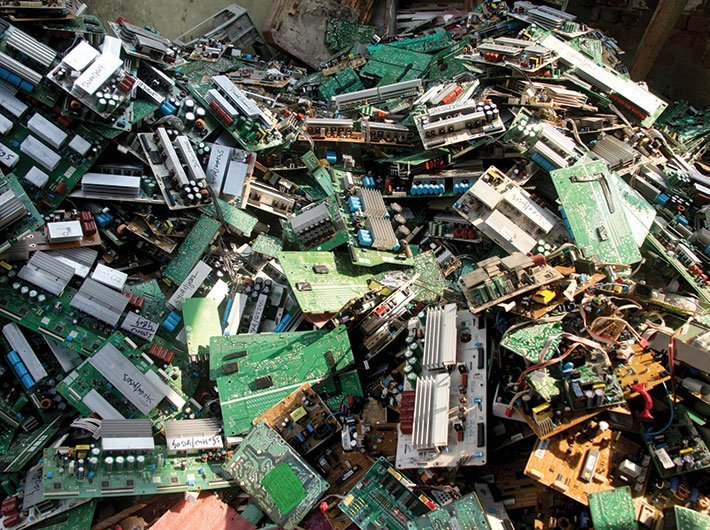
In 2016, 44.7 million tonnes of e-waste was generated globally which is expected to increase to 52.2 million tonnes in 2021. As of 2016, it was found out that India is the second and fifth highest generator (in Asia and globally respectively) of e-waste with 2 million tonnes. The mounting pile of e-waste has become one of the major concerns globally.

Toxics link, an environmental research and advocacy organisation, has released, ‘Time to Reboot-III’, its latest report which says that eight years after the first e-waste rules were notified in India in 2011, the producers are still shying away from fulfilling the responsibility under extended producer responsibility (EPR). The report raises a question that whether the electronic giants, many of them multinationals, are even doing their bit to manage the end of use electronics?
 
The report assesses and rates 54 major electrical and electronics brands on implementation of EPR. It has grouped companies into four categories based on their initiatives and systems. It reveals that out of 54 companies only seven have been put up in the good category and have initiated measures for implementing efficient take-back systems. 13 brands have been assessed as average while 29 brands have performed below average. Still, five companies have been put up in the poor category as they have performed very poorly on their EPR compliance.
 
Most of the companies in this category are from the lighting industry.
 
The findings of the report suggest that most of the companies are probably making attempt to be seen as complying but not making any serious efforts to ensure that e-waste is collected and channelised in a sound way.
 
Satish Sinha, associate director, Toxics Link, says, “Things have been better since our first report came out in 2014 where performances of top 50 electronic and electrical brands were tested and out of those 17 were poor performers but it is not enough.”
 
The several criteria on which companies were assessed and rated include take-back policy, restrictions of hazardous substances (RoHS) compliance, e-waste collection target achieved and consumer awareness. The ground collection system and information provided by the company representatives on company’s take-back were also looked at.
 
Priti Mahesh, chief coordinator, Toxics Link, who has worked closely on the entire study says, “We are really disappointed to see that the companies are still reluctant to set up effective take-back systems. Helplines with no information and so may non-functional collection centres are clear indications that companies are not making any serious effort.”
 
Ravi Agarwal, director, Toxics Link said, “The need of the hour is to strengthen the regulatory bodies and improve monitoring and enforcement and companies with no take-back system on ground should not be allowed to sell within the country.”
 
Key findings
  • 54 producers rated in four categories; red, yellow, blue and yellow with red as worst and green as good.
  • 5 out of the 52 producers feature in red category, suggesting minimal or no effort towards e-waste management.
  • 3 producers scored zero in the rating system.
  • Almost 60 percent of the companies’ helpline numbers had no information on take-back systems.
  • Only four companies had an operational collection centre or pick up service.
  • EPR roll out still remains unsatisfactory, especially on ground.
 

Comments


Other News

New pathways for tourism growth

Traditionally, India’s tourism policy has been based on three main components: the number of visitors, building tourist attractions and providing facilities for tourists. Due to the increase in climate-related issues and environmental destruction that occurred over previous years, policymakers have b

Is the US a superpower anymore?

On April 8, hours after warning that “a whole civilisation will die tonight,” US president Donald Trump, exhibiting his unique style of retreating from high-voltage brinkmanship, announced that he agreed to a two-week ceasefire with Iran. The weekend talks in Islamabad have failed and the futur

Machines communicate, humans connect

There is a moment every event professional knows—the kind that arrives without warning, usually an hour before the curtain rises. Months of meticulous planning are in place. And then comes the call: “We’ll also need a projector. For the slides.”   No email

Why India is entering a ‘stagflation lite’ phase

India’s macroeconomic narrative is quietly shifting—from a rare “Goldilocks” equilibrium of stable growth and contained inflation to a more fragile phase where external shocks are beginning to dominate domestic policy outcomes. The numbers still look reassuring at first glance: GDP

Labour law in India: A decade of transition

The story of labour law in India is not just about laws and codes, but also about how the nation has continued to negotiate the position of the workforce within its economic framework. The implementation of the Labour Codes across the country in November 2025 marks a definitive endpoint in the process. Yet

Time for India to build genuine resilience in energy security

There is a strip of water barely 33 kilometres wide between Iran and Oman that connects the Persian Gulf to the rest of the world`s oceans. For most of India`s history, it was a distant geographic fact. Since late February, it has been a kitchen problem.   The Strait of Hormuz. T


Archives

Current Issue

Opinion

Facebook Twitter Google Plus Linkedin Subscribe Newsletter

Twitter
