
Mumbai: Guidelines issued for school reopening from October 4

Attendance not mandatory; subject to parents’ consent

geetanjali

Geetanjali Minhas | October 1, 2021 | Mumbai

#Covid-19   #pandemic   #Mumbai   #education   #schools  
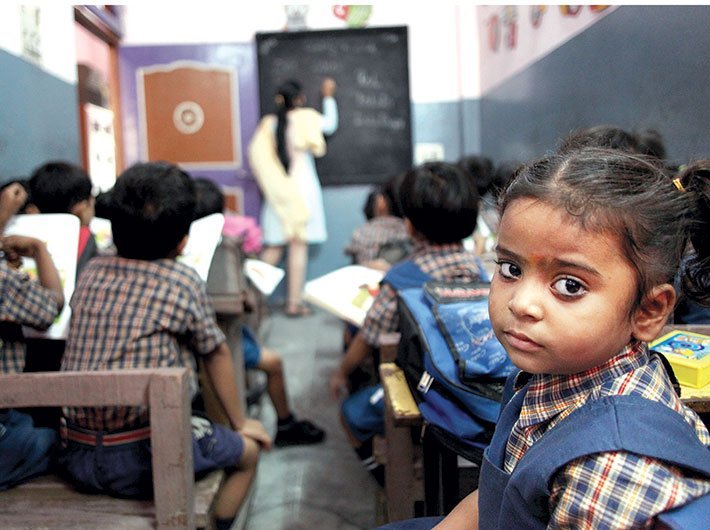
The last time children went to school was in the happy pre-Covid period. (File photo: Governance Now)

With the government announcing the reopening of schools 18 months after the outbreak of the pandemic, the Mumbai municipal corporation (BMC) has issued SOPs for resuming in-person schooling. From October 4, all schools in the Greater Mumbai Municipal Corporation area will open for Class 8 to Class 12 for the academic year 2021-22.

For reopening the management committee of the school will discuss with parents-teachers association (PTA) its detailed plans. Parents’ consent is necessary for students to attend school. Hundred percent attendance is not mandatory.  

School managements are required to link their respective schools with nearest Primary Healthcare Centre so that health facilities can be made available to the students as and when required.    

Before starting school it necessary that all teachers and non-teaching staff are vaccinated  in that school or else RTPCR test for Covid-19 should be done. The certificate / report issued by the laboratory should be verified by the school management committee. As per MoHFW, all employees who are at higher risk level like elderly, disabled employees, pregnant women and employees undergoing medical treatment should be more careful to not to come in contact directly with students. Schools must have separate entry/ exit points for employees without congesting. Schools must ensure congestion and gatherings do not take place children without congesting.

 A student whose family member is Covid positive should be placed under home quarantine. Thermal scanning of every student entering school must be done. Masks are mandatory to wear with a daily habit of washing hands with soap when needed. There should be strict enforcement of ban on spitting with regular cleaning and disinfection of schools classrooms, toilets, toilet handles, study and teaching materials, desks and chairs.

AC should not be used in classrooms and in case it is used, temperature should be set at 24 degrees with window and doors open. Waste in and around school should be disposed regularly. The number of people using lifts should be restricted.  

Each class should have between 15-20 students at a time. Only one student should be seated on one desk/bench in a zigzag manner following the criteria of social distancing with possibly a fixed place to sit. Students can be called in two sessions and duration of class not to exceed three-four hours. There would be no lunch break.

Students should be encouraged to learn using Diksa App and educational videos available on the BMC YouTube channel/ MCGM website. Every week each teacher should hold online meeting of parents to inform them of topics taught during the week, discuss and provide help required. Students should be encouraged to submit homework online and teachers should ensure there is no exchange of books.

Only one student is allowed to sit on a seat in school / private bus and cloth masks should be washed regularly.

Checklist of all activities to be followed should be displayed at school with daily checking of daily action taken.

Supervisory staff of the school should ensure following of guidelines and provide guidance if needed, coordinate with respective assistant commissioners and health department officials.    
 

Comments


Other News

Trump’s China setback pushes US to woo India

A week after Donald Trump’s visit to China – the first by an American president in nine years, US secretary of state Marco Rubio arrived in India on May 23 on a four-day visit aimed at resetting Washington DC’s relations with New Delhi and attending the third Quad ministerial meeting.

EU–India FTA 2026: A high‑stakes prescription for Indian pharma and healthcare

India’s pharmaceutical industry stands as one of the world’s market leaders of generic pharmacy with market valuation of USD 50 billion in 2026. Characterised by high volume, low-cost generic manufacturing, with an annual growth rate of 10-12% primarily propelled by exports and domestic demand,

Legends, vignettes and tales from the freedom movement

Robin Hood of Kathiawar and Other Extraordinary Stories from India’s Freedom Movement By The Paperclip  HarperCollins, 348 pages, Rs 499  

Solicitor General Tushar Mehta tells quirky tales from the world of law

The Lawful and the Awful: Quirky Tales from the World of Law By Tushar Mehta Rupa Publications, 336 pages, Rs 995  

Cabinet meet discussed `Ease of Living`, `Ease of Doing Business`

The Council of Ministers has deliberated upon valuable perspectives and best practices relating to boosting ‘Ease of Living’ and ‘Ease of Doing Business’, prime minister Narendra Modi said on Friday.   As he shared details of the Council meeting held the d

India should deepen energy partnerships with Africa

The vulnerability of Strait of Hormuz continues to influence energy politics globally. India is highly dependent on imported crude oil as a significant portion of its oil imports still come from the Gulf ultimately making such disruptions particularly consequential and has immediate economic ramifications


Archives

Current Issue

Opinion

Facebook Twitter Google Plus Linkedin Subscribe Newsletter

Twitter






