
“New generation not being taught to be responsible journalists”

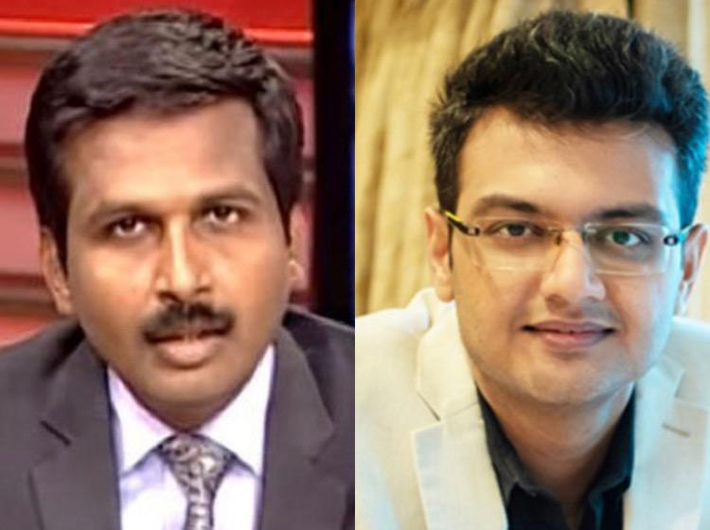
Nilesh Khare, Business Head and Editor-in Chief, Zee 24 Taas, in conversation with Kailashnath Adhikari, MD, Governance Now

GN Bureau | February 1, 2021

#Nilesh Khare   #news   #social media   #journalism   #Media   #Zee 24 Taas  


The new generation entering the field of Journalism is not being taught to be responsible journalists and also denied the opportunity to present their point of view which is detrimental to their growth in the profession, says Nilesh Khare, Business Head and Editor-in Chief, Zee 24 Taas.

Speaking to Kailashnath Adhikari, MD, Governance Now, in an episode of ‘Masterminds: Masterclass on Journalism’ held by the public policy and governance analysis platform last week, Khare said, “We are not teaching new generation entering the field of journalism to have social and civic responsibility and only teaching them how to sell news. This is emerging to be a huge problem.”

Watch the video:


Khare added that earlier editors gave opportunity to reporters to give their views but “nowadays if an expert opinion or a point of view is required they invite experts. This is demotivating young journalists entering the field today who are unable to give their point of view and grow in the profession.”

He underlined that it is very important to recognize individual skills of young journalists while also adding that new entrants in the field of television news must harness their technical skills and understand technology.     

While speaking on the changing definition of news when news channels have become more of entertainment channels, the senior journalist said with ushering in of technology, internet, mobile phones and availability of different platforms over the years, viewers are spending less time to watch news channels. To present news properly it is important to understand that psychology of viewers has changed. Because viewers have very short attention span and want quick information so ‘Speed News’ is successful.

“As viewers want both entertainment and information news is being provided as info-entertainment. This is the need of the hour and not done for TRPs. Though viewers are mature they are not able to accept news as it is and want to watch it in 30 seconds for which you need to do gimmicks and that is what is happening in media today. Despite this you can do good journalism and still get required TRPs. Television now has to think beyond digital and create content accordingly else it will be worse off than print which unlike television has a long history,” he said.

Comments


Other News

Not just politics, let`s discuss policies too

Why public policy matters Most days, India`s loudest debates stop at the ballot box. We can name every major leader and recall every campaign slogan. Still, far fewer of us can explain why a widow`s pension is delayed or how a government school`s budget is actually approved. That

When algorithms decide and children die

The images have not left me, of dead and wounded children being carried in the arms of the medics and relatives to the ambulances and hospitals. On February 28, at the start of Operation Epic Fury, cruise missiles struck the Shajareh Tayyebeh school – officially named a girls’ school, in Minab,

The economics of representation: Why women in power matter

India’s democracy has grown in scale, but not quite in balance. Women today are active participants in elections, influencing outcomes in ways that were not as visible earlier. Yet their presence in legislative institutions continues to lag behind. The Nari Shakti Vandan Adhiniyam was meant to addres

India will be powerful, not aggressive: Bhaiyyaji

India is poised to emerge as a global power but will remain rooted in its civilisational ethos of non-aggression and harmony, former RSS General Secretary Suresh `Bhaiyyaji` Joshi has said.   He was speaking at the launch of “Rashtrabhav,” a book by Ravindra Sathe

AI: Code, Control, Conquer

India today stands at a critical juncture in the area of artificial intelligence. While the country is among the fastest adopters of AI in the world, it remains heavily reliant on technologies developed elsewhere. This paradox, experts warn, cannot persist if India seeks technological sovereignty.

RBI pauses to assess inflation risks, policy transmission

The Reserve Bank of India (RBI) has begun the new fiscal year with a calibrated pause, keeping the repo rate unchanged at 5.25 per cent in its April Monetary Policy Committee (MPC) meeting. The decision, taken unanimously, reflects a shift from aggressive policy action to cautious observation after a signi


Archives

Current Issue

Opinion

Facebook Twitter Google Plus Linkedin Subscribe Newsletter

Twitter






