
UN panel criticises Pakistan’s military courts

The committee expressed concern over the very broad powers given to the army to detain people suspected of involvement in terrorist activities without charge or judicial supervision

GN Bureau | May 16, 2017

#UN Panel   #Kulbhushan Jadhav   #Pakistan   #Kulbhushan Jadhav Case  


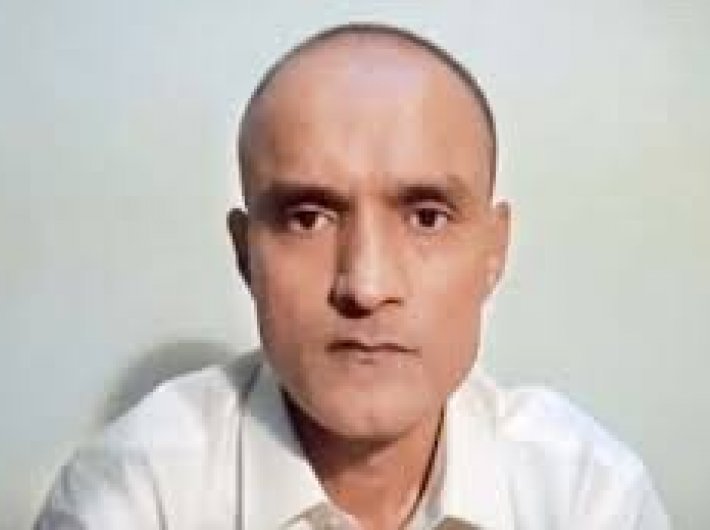
A UN report has come down heavily on Pakistan’s military courts, one of which had awarded death sentence to Kulbhushan Jadhav.
India and Pakistan on Monday were pitted against each other at the International Court of Justice (ICJ) over the case of Jadhav, a former Indian naval officer found guilty by the military court of being an Indian spy. India has strongly denied the claims.

United Nations Committee against Torture said that the committee is seriously concerned at reports that members of the State party’s military forces; intelligence forces, such as the Inter-Service Intelligence agency; and paramilitary forces, such as the Frontier Corps and the Pakistan Rangers, have been implicated in a significant number of cases of extra-judicial executions involving torture and enforced disappearances.

The committee is also concerned about the possibility that the State party’s laws provide for retroactive immunity for torture by members of the military and paramilitary forces, under provisions of the Actions in Aid of Civil Power Regulation of 2011, for events after February 2008; as well as the amendment to the Army Act of 2015 which grants all personnel associated with military courts complete retrospective immunity from prosecution for actions taken in “good faith”.

The committee is also concerned by the exclusive jurisdiction of the military justice system over soldiers accused of offences against civilians. It regrets that the State party provided no information suggesting that members of the military, intelligence services, or paramilitary forces have been prosecuted and punished for acts amounting to torture as defined by the Convention.

The report said that the committee is seriously concerned that the State party has authorized military courts to try civilians for terrorism-related offences, most recently in the 23rd amendment to the Constitution of Pakistan, approved in 2017, particularly in view of the lack of independence of military court judges, which are within the military hierarchy, and practices of such courts including holding closed trials.

The committee is also concerned by the very broad powers given to the Army to detain people suspected of involvement in terrorist activities without charge or judicial supervision in internment centres under the Actions in Aid of Civil Power regulations 2011.

It said: “End the resort to military courts for terrorism related prosecutions, transfer criminal cases against civilians from military courts to civilian courts and provide the opportunity for appeal in civilian courts of cases involving civilians already adjudicated under military jurisdiction.”

Read: UN committee’s observations on Pakistan
 

Comments


Other News

Beyond toilets: Why open defecation persists in rural India

Despite the awareness campaigns on sanitation across India, open defecation (OD) is practised openly and widely in both rural and urban areas. Research shows that rural respondents are well aware of the negative impacts of OD, yet this awareness does not lead to toilet construction or use. In rural North I

What unpaid nation builders want from policymakers

The Supreme Court recently described homemakers as “nation builders” and fixed a notional monthly income of Rs 30,000 for them in motor accident compensation cases. The judgment was not about wages. It was about compensation. Yet it inadvertently raised a larger economic question: If a homemake

What the US–Iran peace deal means for India

After months of rising tensions, the United States and Iran have reached a memorandum of understanding called the "Islamabad Agreement." This agreement allows for the immediate reopening of the Strait of Hormuz without tolls and provides Iran with relief from sanctions, depending on its complianc

V. M. Tarkunde: A legal luminary par excellence

14 Lawyers: Portraits from The Bar By Raju Ramachandran  Juggernaut, 248 pages, Rs. 799  

The Cost of Obesity

The latest episode of Checks and Balances focuses on the ticking time bomb of obesity in India, and Geetanjali Minhas of Governance Now spoke with a panel of experts. You can watch the episode here: https://youtu.be/mH

US-Iran deal: Path to peace or prelude to deeper regional quagmire?

In the midst of deep mistrust, the US and Iran are reported to have reached a framework deal for ending the West Asian conflict. But whether it will result in any meaningful breakthrough or pave the way for any lasting peace in the region, is in the realm of speculation.   During


Archives

Current Issue

Opinion

Facebook Twitter Google Plus Linkedin Subscribe Newsletter

Twitter







