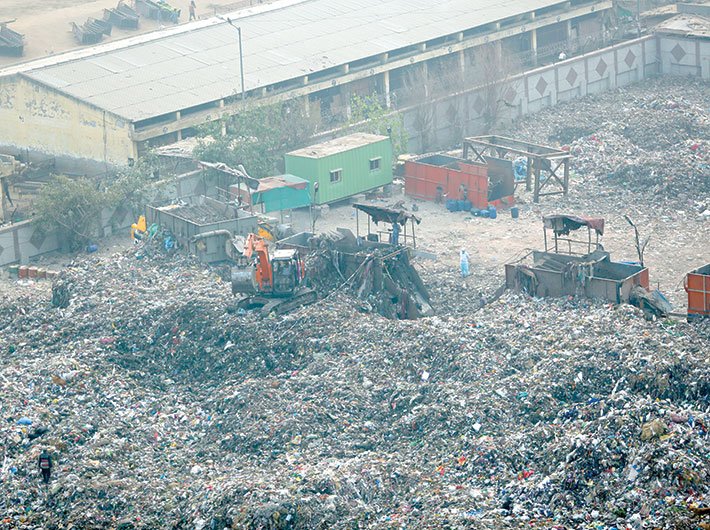
The Solid Waste Management Rules, 2026 ask cities to integrate waste pickers. Whether that happens will be settled in the by-laws and contracts now being drafted
India’s cities have until March 2027 to rewrite their waste by-laws. The Solid Waste Management Rules, 2026, in force since April 1, require every urban local body to frame by-laws incorporating them by March 31, 2027. Most of the attention has gone to the headline changes, such as four-way segregation at source and online tracking of waste from household to landfill. Far less has gone to the people who already do much of this work.
On paper, the rules do not forget them. They ask urban local bodies to build a ward-wise database of waste pickers and to set up a system to recognise them. What they do not say is what recognition should mean on the ground. Does a waste picker get first claim on a neighbourhood’s dry waste? A place at the city’s sorting centre? A share of the user fee? Those answers will be written, or left out, in hundreds of municipal by-laws over the coming months.
It matters because in almost any Indian city, somebody has been through the bins before the municipal truck arrives, pulling out plastic, paper, metal and glass. By the time the garbage reaches a landfill, much of what could be recycled is already gone, taken out by people who rarely appear in a municipal budget.
Two counts, no common list
Nobody knows exactly how many waste pickers India has. WIEGO puts the figure at about 2.2 million, and the International Alliance of Waste Pickers says they collect 15 to 20 per cent of the municipal solid waste Indian cities produce. Cities would otherwise have to pay for that work.
The government has started counting, but in two places at once. Under the NAMASTE scheme, the Ministry of Social Justice and Empowerment had profiled about 3.8 lakh waste pickers by April this year, a fraction of even the lowest estimates. Data placed before Parliament in February showed that 84.5 per cent of those enumerated belonged to Scheduled Castes, Scheduled Tribes or Other Backward Classes. The new waste rules, meanwhile, ask urban local bodies to build ward-wise databases of their own on a central portal. Unless the two lists are joined up, a woman could hold a NAMASTE card and still be turned away at her own city’s sorting centre.
What Pune and Bengaluru got right
A few cities have already shown what real integration looks like. Pune’s waste pickers, organised since the 1990s, went on to form SWaCH, a cooperative owned by its members that runs door-to-door collection with the Pune Municipal Corporation. Its 3,900-odd members, most of them women, cover about ten lakh homes and businesses. Because the waste reaches them segregated at source, much of it goes to recyclers instead of the landfill.
Bengaluru took another route. In 2011, after a Lok Adalat intervention, its municipal corporation became the first urban local body in India to issue occupational identity cards to waste pickers. It then set up dry waste collection centres across its wards, many of them run by waste picker organisations. In Hyderabad, the municipal corporation documents the wages paid to waste pickers at its material recovery facilities. None of this came easily, and the fight over pay and job security goes on. But these cities have accepted something most others have not. Waste pickers are part of the system, and often the part that works best.
How contracts push them out
Delhi shows what happens when that is forgotten. When private concessionaires took over collection in parts of the capital from 2005 onwards, waste pickers who had long worked the dhalaos and neighbourhood routes found themselves locked out. Contractors paid by the tonne had every reason to treat them as lost revenue and to haul waste away unsorted. The city called it modernisation. For the workers, it meant being written out.
The 2026 rules could repeat that mistake on a larger scale. They require industries that burn solid fuel within a set distance of a waste-to-fuel plant, cement kilns among them, to draw at least 6 per cent of their fuel from processed municipal waste, rising to 15 per cent in six years. Such fuel is meant to come from waste that cannot be recycled. But where waste still arrives mixed, as it does in most cities, that line blurs quickly. A guaranteed buyer for anything that burns gives contractors a reason to send to the kiln the paper and plastic a waste picker could have sold to a recycler.
The trouble lies in what cities pay for. Pay for tonnes moved or burnt, and that is what a city will get. Pay for material recovered and recycled, and waste pickers become partners instead of competitors.
What a climate budget should measure
Climate budgets raise the same question. In February 2025, Ahmedabad became the first Indian city to add a separate climate chapter to its municipal budget, setting aside ₹5,619.58 crore, more than a third of the total, for climate action. Yet the size of a climate budget says little about who gains and who pays. A city can spend heavily on processing plants and cleaner trucks, improve its efficiency figures, and still lose the workers who do the most basic job in a circular economy, which is keeping useful material out of landfills.
What the by-laws should say
Cities drafting their by-laws can turn a line in a national notification into something waste pickers can hold them to. Four provisions would go a long way.
First, link registration under the new rules to the NAMASTE count, so that a waste picker is counted once, recognised everywhere and given an identity card to show for it.
Second, give registered waste pickers and their organisations a written first claim on dry waste, before any collection or fuel contract is signed.
Third, pay contractors for what is recovered and recycled, not for what is carried or burnt, and require them to work with waste picker groups instead of around them.
Fourth, consult those groups before new technology arrives, and report every year on waste pickers’ access, earnings and safety, alongside tonnage and coverage.
Decisions about India’s waste will be made in municipal meetings and at processing plants. Their effects will be felt first in the lanes where waste pickers sort through what the rest of the city throws away. A green budget that leaves these workers more insecure can hardly be called green.
The writers are Junior Research Fellows at the School of Public Policy and Governance, Tata Institute of Social Sciences, Hyderabad. Views are personal.