
A new book from the Oxford India Short Introduction series explains why and how public policymaking is no longer confined to the legislature

Jasleen Kaur | February 11, 2017 | New Delhi
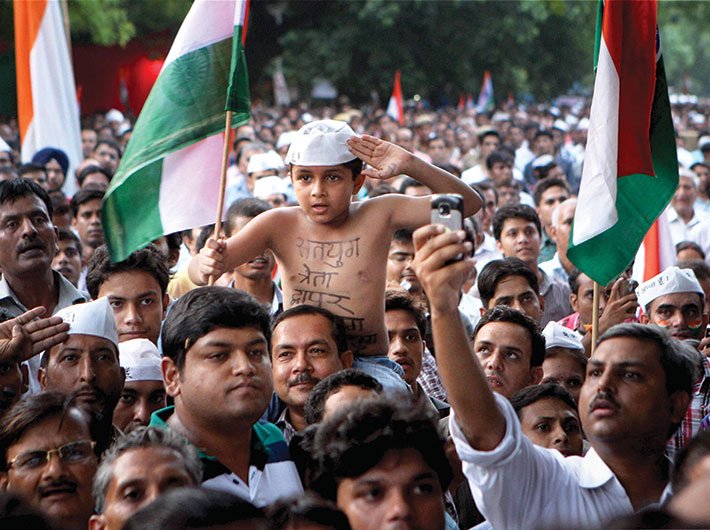

Democracy today is changing. It is not a passive exercise anymore where the only participation from citizens was electing governments periodically. Rather, it is proactive today – citizens know more and demand more. In the process, policy formulation is evolving as well.
Recently, many incidents of public outrage in the country forced governments to take radical steps for welfare of the society. For instance, the public outcry on lack of women’s safety after the December 2012 gang-rape case forced the centre to set up a commission for recommending changes in laws meant to safeguard women. Similarly, campaigns and agitation spearheaded by Arvind Kejriwal and Anna Hazare against corruption forced the government to pay attention on formulation of Jan Lokpal.
Governance today, thus, involves various stakeholders including advocacy groups, NGOs, media, judiciary and think tanks, which are not just articulating new ideas but are also assessing the impact of decisions taken in the corridors of power.
Public policy has therefore become a critical field. It is a relatively young discipline, although “its practice could be as old as civilizations itself”. The book, Public Policy in India, defines the contours of public policy, how it has evolved so far and is still evolving. Written by Rajesh Chakrabarti and Kaushiki Sanyal, co-founders of Sunay Policy Advisory, a policy research and consulting startup based in Gurgaon, the book is part of the Oxford India Short Introductions – a series of guides to different aspects of India.
The book addresses the policymaking process and the role played by various institutions, and also brings together relevant information on the emerging field of public policy. They points out that public policy is broader than a “pure rational search and managerial execution of an optimum strategy for a clearly defined problem”. The book covers relevant case studies and examples.
While the authors have not mentioned about certain phenomena such as policy paralysis, they say it would be unfair to compare the effectiveness of implementation of a programme with that in the private sector. Any national programme faces implementation challenges given the scale and coordination across agencies. It also has to escape possible harassment at the hands of audit and vigilance agencies like the comptroller and auditor general and central vigilance commission.
Changing scenario of public policy
In any democracy the ultimate authority of policymaking remains with the elected legislature.
The authors observe that while the Nehruvian era was open in seeking scholarly policy inputs from intellectuals like Homi Bhabha and
VKRV Rao, the connection between academic experts and actual policymakers grew weaker thereafter.
The establishment of the planning commission in 1950 was seen as the ‘brain trust’ for policymaking, but it was singularly focused on issues of economic matters and was highly ‘centralised’. The political class is often not formally educated enough to handle the complex matters of policy debates. Thus, ideation of policymaking has been left largely to the bureaucracy.
But the authors assert that today the system is evolving and the government’s monopoly over public policy thought is gradually reducing.
With a significant increase in the number of global non-government organisations working on public policy advocacy, the government is becoming receptive to the ideas from these advocacy groups. Also, to some extent, the government has accepted the superiority of the private sector in management of large initiatives and is even getting into partnerships with them for implementing policies. Even multinational companies are undertaking research and analysis in order to convince policymakers towards undertaking policy measures.
In the last few years, the government has also approached independent experts for consultations before drafting a bill. In this way public policymaking is becoming more informed and is progressively getting based on evidence. Even the judiciary has been playing a significant role in raising concerns over various rights. Through its response to public interest litigations, it had forced the government to formulate rights-based laws such as the National Food Security Act and the Right to Education Act.
Policy analysis
Independent evaluation of policy is a key element of ‘healthy policymaking’. But this is an area where India has been weak. The authors say that Indian bureaucracy has been “insecure of getting policy outcomes independently evaluated”.
In a large democracy like India, delivering a developmental programme is not a simple affair. It becomes important for policymakers to anticipate abuse and plug gaps which can exploit the system. The analysis and evaluation of policy outcomes play a significant role in this.
The planning commission had instituted an independent evaluation office only in the final year of its existence. But this is one of the key objectives of its successor NITI Aayog.
Challenges with policymakers
India differs in income levels, needs and has diverse aspirations and expectations from policymakers.
For more informed policy formulation, it is important to add to the legislative capability. In our system, members of parliament have little incentive to examine bills and form their own opinion. Also, they have to mandatorily vote along the party line because of anti-defection law.
The time spent discussing the budget has significantly reduced over the years. The demands for grants, amounting to Rs 16,600 billion, were voted without any discussion in the house.
The legislatures thus need extensive and high-quality research support to debate on various issues. Though independent think tanks like PRS Legislative Research, Swaniti and Centre for Legislative Research and Advocacy are working to fill that gap, more resources are required. In comparison, many countries like the US, Australia and the UK provide the staff to the legisators and also reimburse their salaries.
The authors say that policymakers have to grapple with the rapid change and the continuously evolving technology. “Their mindsets, stereotypes and most importantly, working style needs to change for the India of their textbooks is fast disappearing.”
Kaur is a consultant at IMS Health Information and Counsulting Services India.
About forty people walked the roundabout on Teen Murti Marg to the gate of Chanakyapuri police station, a distance you could cover in under a minute, on Friday to protest against Elon Musk’s Starlink. The walk was called by the Swadeshi Jagaran Manch. Nobody joined them on the way, and nobody seeme
The Golden Chisel: The Story Behind the Making of Ram Lalla By Seethalakshmi S. and Rahul Nandan Rupa Publications, 168 pages, Rs 395
Mumbai’s real estate market keeps growing, yet homeownership remains out of reach for much of its population. Three experts – urban researcher Hussain Indorewala, urban planner Vidyadhar Phatak and developer Kamlesh Thakur of NAREDCO Maharashtra, agree that simply constructing more apartments
US secretary of state Marco Rubio has said he was unfamiliar with the Wall Street Journal report suggesting Elon Musk had decided to throttle Starlink services in Ukraine, but rejected claims that Washington had ordered the restrictions to pressure Kyiv. “There was no
Breast cancer has become a public-health challenge in India. The greatest opportunity is to find cancers earlier. Artificial intelligence (AI) is opening a new era in breast cancer detection. AI systems can analyse mammograms and other breast-imaging studies, identify subtle abnormalities and assist radi
Indian agriculture is experiencing significant climate volatility, while the world economy seems to be in a highly volatile situation. Economic indices from various countries show that they need to recalibrate their strategies to withstand economic headwinds. In such a challenging situation, a country li










