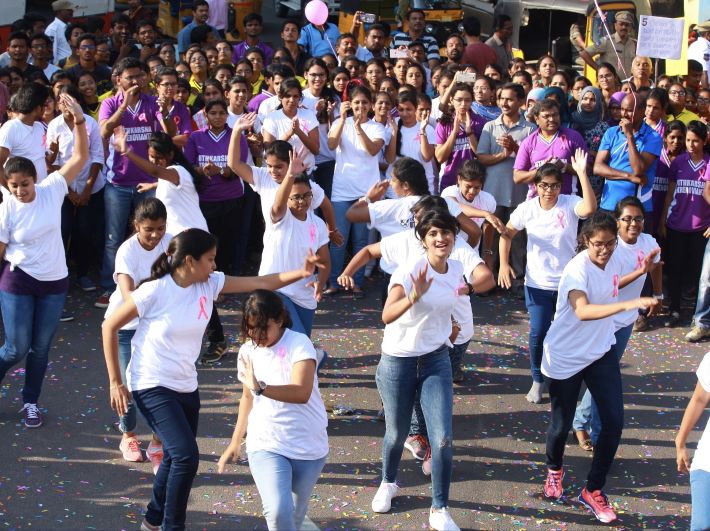
Success will be measured by the number of women whose cancers are detected earlier, treated appropriately and lives saved
Breast cancer has become a public-health challenge in India. The greatest opportunity is to find cancers earlier. Artificial intelligence (AI) is opening a new era in breast cancer detection. AI systems can analyse mammograms and other breast-imaging studies, identify subtle abnormalities and assist radiologists in prioritising suspicious examinations.
AI should augment healthcare professionals, not replace them. Suspicious findings still require clinical assessment, appropriate imaging and, when indicated, tissue diagnosis. Its opportunity is to extend scarce specialist expertise to millions of women.
The real challenge is scale
For India, the question is not whether we have technology; it is how we take early detection to millions of women, including those who may never enter a cancer centre.
For women at appropriate ages and risk levels, organised mammographic screening has an important role where the infrastructure, expertise and follow-up systems exist. But screening requires personnel, quality assurance, interpretation, recall, diagnostic confirmation and access to treatment.
Where mammography facilities are not readily available, particularly in rural India where 70% of the population resides, Clinical Breast Examination (CBE) by healthcare workers can provide a route for early detection and referral. India's National Health Mission recognises CBE as a screening tool at the primary-care level, with women requiring further assessment referred for imaging and tissue diagnosis.
Our experience in Telangana and Andhra Pradesh demonstrated what is possible when early detection is taken to the community. Between 2012 and 2016, more than 200,000 underprivileged women across 4,000 villages underwent CBE through 3,750 healthcare workers. The experience informed the national adoption of CBE as a breast cancer screening strategy under the National Health Mission.
The lesson is: the first step towards saving lives is taking healthcare to the woman, rather than waiting for the woman to come to the healthcare system.
Early detection through AI
AI could support several stages of the pathway — from interpreting mammography and helping triage abnormal studies to identifying women who may require closer assessment. In some European countries, AI is being used as a second reader of mammograms, working alongside radiologists to identify suspicious findings and reduce the risk of abnormalities being missed. Its role is to augment the radiologist’s expertise, not replace it. This could also help address one of the bottlenecks in screening: the shortage of specialists able to interpret large numbers of images.
This means creating clear referral pathways from primary care to diagnostic centres, ensuring access to biopsy, pathology, surgery, systemic therapy and radiotherapy. Screening without diagnosis and treatment is not a successful cancer-control programme.
Democratising knowledge & creating awareness through AI
There is a role for AI that is important: health education. AI-enabled platforms can make breast-health information available in multiple Indian languages, allowing women to ask questions and receive evidence-based information.
This is the thinking behind NARI — the National Awareness & Resource Initiative for Breast Health, a not-for-profit public-health initiative of the Ushalakshmi Breast Cancer Foundation (https://nariai.in/). NARI uses an AI-enabled digital educator to provide information on benign breast diseases, breast cancer, screening, early detection and prevention. Its purpose is to democratise access to breast health information. Such technology should not be presented as an AI doctor, but as a digital public-health educator helping women understand breast health, recognise warning signs and know when professional assessment is necessary.
Prevention must remain central
Early detection is one part of the solution. We must also address factors that can reduce breast cancer risk. Maintaining a healthy weight, exercising regularly, avoiding tobacco, limiting alcohol, adopting healthy dietary patterns and breast feeding are important components of cancer prevention. At the same time, breast cancer cannot always be prevented. Prevention and early detection must therefore go hand in hand.
India needs a national ecosystem, not isolated innovations
The future of breast cancer care in India should not be a choice between AI and human healthcare. It should be AI + healthcare workers + primary care + imaging + pathology + specialist care + public awareness + prevention.
We need to find Indian solutions to Indian problems — solutions designed around our realities of numbers, geographical diversity and unequal access to specialists. Digital platforms can democratise knowledge. Community-based CBE can take early detection closer to the woman. Mammography and other imaging technologies, supported by AI, can help detect disease earlier in appropriate populations. And robust referral systems can ensure that women with abnormalities move from detection to diagnosis and treatment.
Success will not be measured by AI systems deployed, algorithms developed or women screened. It will be the number of women whose cancers are detected earlier, treated appropriately and lives saved. India has the technology and expertise. What we need is the vision and coordination to take these innovations from individual projects to population scale.
Dr. P. Raghu Ram OBE, a Padma Shri awardee, is founder and chairman, Ushalakshmi Breast Cancer Foundation, Hyderabad.