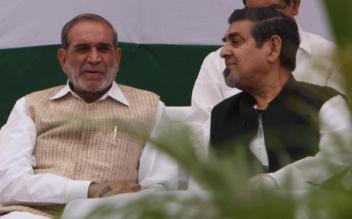
Two days after a Delhi court acquitted Congress leader Sajjan Kumar, seen by many as having incited anti-Sikh riots in Delhi in 1984, member of a post-riot generation ruminates on what the violence means to her — not because she is a Sikh, but a human being
I was born a year after the anti-Sikh riots in 1984, which had claimed a distant relative, an incident I was to learn much later in life.
Besides the few times someone in my family would talk about it, I had no knowledge or understanding of what it had been for Sikhs in those three days in November 1984. For me, the riots were, and will remain, a second-hand memory, gleaned from the accounts of others. In fact, for a long time my parents had not even told me about it.
Then one day, when I was in Class VIII, a teacher of Divinity, a part of which talks about the Sikh history, told us about the 1984 riots. That day, I returned home and for the first time asked my father about the riots.
My father told me that within hours of prime minister Indira Gandhi’s assassination on October 31, 1984, mobs were out on the streets in many parts of Delhi and other north Indian cities. They had heard that Indira Gandhi was gunned down by her Sikh security guards, and so their target was clear: turbaned Sikhs.
I learnt, for the first time in my well-ensconced life, that many Sikh men cut their hair and took off their turbans to hide their identity. Younger boys were made to wear girls’ dresses to escape the wrath of the mob. And that lists of Sikh families were distributed among rioters to target them.
My father said though the official figure is quite low, somewhere around 3,000 or more Sikhs, including young children, were killed. The violence raged for three days and in some areas mob was incited by Congress leaders. He told me that names of four Congress leaders were invoked by victims and witnesses as the leading instigators: HKL Bhagat, Jagdish Tytler, Sajjan Kumar and Dharam Dass Shastri.
He also told me that Rajiv Gandhi, the then prime minister, later justified the killings, saying, "when a big tree falls, the earth shakes.”
I had asked my father how they had protected themselves. He said for a week’s time all young men in the colony, which is largely Sikh populated, were vigilant and guarded the streets with rods and swords.
The police, he said, did not react to the calls for help and did not file FIRs later. He then said that was the reason many young men in the community were sympathetic to the idea of ‘Khalistan’.
Meanwhile, I kept reading about the trials as it appeared in the newspapers.
Moved by the horror
But the first time I was moved by the horror of the riots was in 2009, when I was asked to do a special story on the riots for the news channel I worked for at the time. That was the first time I also met several families, rather widows, left to nurse their bereavement, and rage at justice somehow eluding them. I heard their testimonies and felt the pain they have lived with for over 25 years.
I remember talking with Harbai Kaur, now a resident of the widows’ colony in west Delhi’s Tilak Vihar area. She first saw her husband killed, before the rioters turned to her four young sons, burning them alive one after the other. Harbai lived with her family in east Delhi’s Trilokpuri at the time. She was later given a one-room house in Tilak Vihar.
I was numb long after she had finished telling me her story — I couldn’t understand what I was to ask her. Slowly, the journalist in me took charge; I asked, slowly, what she wants now. Eyes moist, Harbai asked me back, just as slowly, “What do you think I want? I have lost everything. But I am still alive just to see those responsible for killing my family being punished.
“I have testified in court but no action has been taken yet.”
Harbai said she had mulled the idea of suicide on multiple occasions but couldn’t. “Who would then fight for justice for my family?” she asked me.
Harbai was 40 in 1984.
In the same colony I net another woman whose five-year-old-son was burnt alive minutes after a mob had killed her husband. She said the rioters had asked her to cut her son’s hair if she wanted to save him. She did not think twice and cut the hair. But within seconds the rioters put a burning tyre around the boy’s neck… “and I couldn’t do anything to save him. She said she regrets till date cutting his hair: “More than his real killing, the fact that I had killed his religion pains me till date.”
All the testimonies I heard changed my perspective toward the incident. In a single day, I could relate to it — I felt the pain; the pain of widows, mothers and families who had lost everything, and, in many cases, everyone. I wanted to know why there has been such a delay in giving justice to these families.
During the trial, the CBI had called the 1984 riots a clear conspiracy to target Sikhs. The probe agency said there was a nexus between the police and local politicians to shield the perpetrators. But still no action has been taken.
And now Sajjan Kumar has been acquitted by the trial court 29 years on in one of the three cases originally booked against him. He has got the benefit of doubt since victims didn't name him in 1985. So should we believe that the genocide and murder of more than 3,000 Sikhs was a fiction? That nothing really happened? That no one led the riots, inciting people to go after the Sikhs?
Yes, Sajjan Kumar has been acquitted by a trial court and ‘reasonable’ voices say that the victims can fight against the decision in a higher court. But that is easier said than done. This acquittal came after 29 years. How long will it actually take to get justice? Will the likes of Harbai Kaur live to see that day?
The anti-Sikh riots were a distant issue for me, but not anymore. Perhaps every new generation would be a shade less sentimental about it. But the memories of anti-Sikh riots are still alive in the hearts of the families — whether affected or not. Just an apology from prime minister Manmohan Singh is not enough.
We want justice for hundreds of families who were killed. Not because we are Sikh, but because we are human.