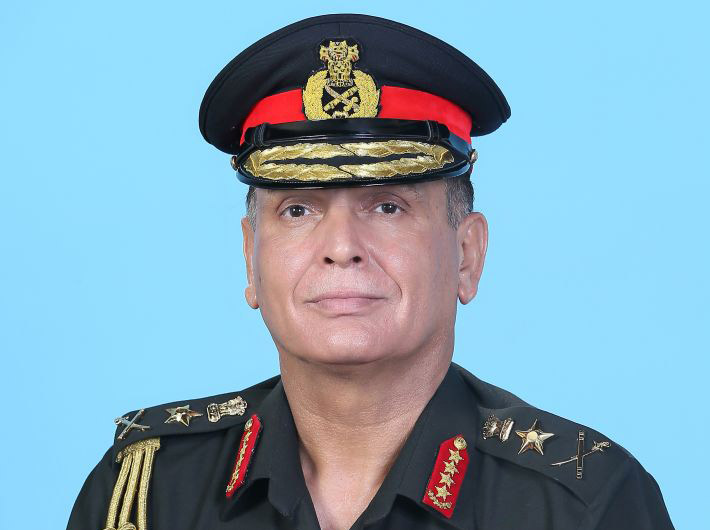
Gen. Upendra Dwivedi superannuated after more than four decades of distinguished service
General Dhiraj Seth, PVSM, UYSM, AVSM, took over as the 31st Chief of the Army Staff (COAS) from General Upendra Dwivedi, PVSM, AVSM, who superannuated after more than four decades of distinguished service to the nation on Tuesday.
General Dhiraj Seth is an alumnus of the National Defence Academy, Khadakwasla, and was commissioned into the Armoured Corps in December 1986. Over a distinguished military career spanning nearly four decades, he has had extensive experience across the operational, strategic, capability development and institutional domains, contributing significantly to the Indian Army's combat effectiveness and long-term transformation.
The General Officer has commanded at every level in diverse operational environments. His command assignments include an Armoured Regiment in the Desert Sector, an Armoured Brigade in the Western Theatre, and a Counter-Insurgency Force in Jammu & Kashmir. As a Lieutenant General, he commanded the Sudarshan Chakra Corps, one of the Indian Army's premier strike formations. He subsequently served as General Officer Commanding, Delhi Area, overseeing key national and international military engagements and ceremonial responsibilities.
On elevation to the rank of Army Commander, the officer commanded South Western Command and Southern Command, earning the rare distinction of commanding two operational Army Commands and providing strategic oversight across critical theatres for over a period of two and half years. He has held several key staff and strategic appointments that have significantly influenced operational planning, force management and capability development.
Widely recognised for his contributions to force modernisation, the General Officer has tenanted pivotal appointments in the Strategic Planning and Capability Development verticals of the Army Headquarters, shaping its modernisation trajectory, capability roadmap and long-term force structuring initiatives. His contributions have been instrumental in aligning operational requirements with emerging technologies and future battlefield imperatives.
An accomplished military professional, General Dhiraj Seth has consistently excelled in professional military education, securing top positions in courses of instruction. He is a graduate of the Higher Command Course and the National Defence College and has also attended the prestigious Command & Staff Course in Paris, reflecting his broad strategic outlook and understanding of contemporary military affairs.
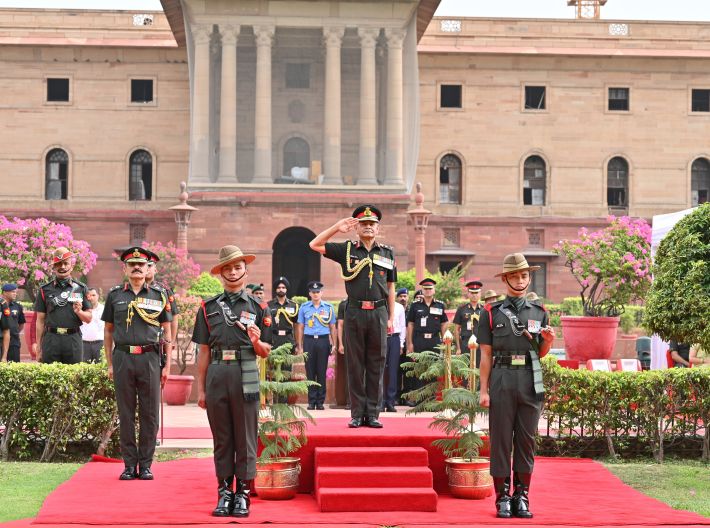 General Upendra Dwivedi, PVSM, AVSM,
 superannuated on Tuesday after more than four decades of distinguished service and relinquished the appointment of the Chief of the Army Staff (COAS). His tenure will be remembered for maintaining a high state of operational preparedness, strengthening jointness among the Services, accelerating the process of transformation and giving focused impetus to technology absorption, force restructuring and soldier-centric initiatives.
General Upendra Dwivedi, as COAS, accorded high priority to operational readiness across all theatres. Under his leadership, the Indian Army maintained a robust and vigilant posture along the Northern Borders under OP SNOW LEOPARD and discharged its responsibilities on the Western Front with resolve, restraint and professionalism. OP SINDOOR was a defining moment of his tenure, reflecting the Army’s preparedness, precision and calibrated response in the emerging security environment.
The General Officer provided strong direction to the Indian Army’s ongoing Decade of Transformation. Under his guidance, the Indian Army pursued reforms in force restructuring, modernisation, technology absorption, jointness, systems reform and human resource management. Initiatives such as Rudra Brigades, Bhairav Battalions, Ashni Drone Platoons, Shaktibaan Regiments, Divyastra Batteries, Electronic Warfare Brigades and Integrated Battle Groups were progressed as part of the larger effort to build a modern, agile and future-ready force.
General Upendra Dwivedi also laid emphasis on enhanced synergy among the three Services. He consistently encouraged greater integration, common operational thinking and improved coordination among the Army, Navy and Air Force, in keeping with the requirements of future joint, integrated and theatre-oriented operations.
The welfare of serving personnel, veterans, Veer Naris and families remained a key priority during his tenure. He steered several initiatives aimed at strengthening the Army’s connect with its soldiers and veterans, including meaningful recognition of their contribution through initiatives such as the Veterans Achievers Award. He also continued to underline that the Army’s responsibility towards its personnel and families extends beyond active service.
The General Officer also guided the formulation of Strategic Security Guidelines @ 2047, inspired by Viksit Bharat Vision @2047 and Armed Forces Vision @2047, to provide a long-term outlook for the Indian Army’s future preparedness.
For his illustrious service, General Upendra Dwivedi has been conferred with the prestigious awards of Param Vishisht Seva Medal and Ati Vishisht Seva Medal.