The groundwork — cleaner fuels, diversified sourcing, stronger reserves — is neither beyond India's capacity nor beyond its means
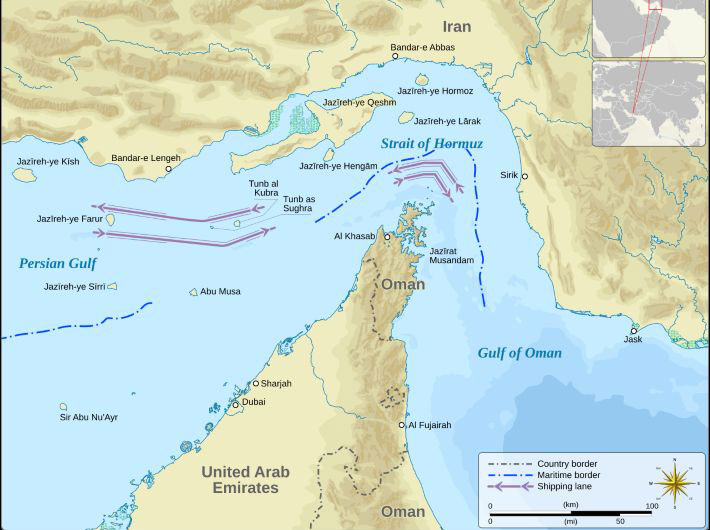
There is a strip of water barely 33 kilometres wide between Iran and Oman that connects the Persian Gulf to the rest of the world's oceans. For most of India's history, it was a distant geographic fact. Since late February, it has been a kitchen problem.
The Strait of Hormuz. The U.S. Energy Information Administration says a fifth of the world's oil passes through it. So does a significant share of global LNG. And so, it turns out, does a very large portion of the cooking gas that powers Indian kitchens.
Iran, retaliating against American and Israeli strikes, effectively closed the strait in early March — creating enough uncertainty to make insurers and captains deeply unwilling to take the risk. The result was swift. Twenty-two tankers carrying LPG, crude and LNG bound for India sat stranded west of the strait as of March 14. Reuters reported that Iran allowed two Indian-flagged vessels selective passage. But selective allowance is not open passage, and the costs were already spreading.
India imports 60 percent of its LPG consumption. Of those imports, 90 percent come from the Middle East, through Hormuz. When the strait closed, India's LPG storage buffers — limited relative to monthly demand — were exposed for what they were. The government moved quickly: redirecting refinery output, extending cylinder booking intervals, prioritising LPG carriers at ports. The National Restaurant Association warned of severe disruption to commercial kitchens. The rupee hit a record low past 94 per dollar in late March. Brent crossed $100 a barrel — a rise of nearly 30 percent in a matter of days. Foreign investors pulled over $5.5 billion from Indian equities in a matter of weeks. Diesel and jet fuel prices surged sharply, pushing through into trucking, aviation and manufacturing costs before most people had registered what was unfolding.
This is what concentrated dependence looks like when it breaks, all at once.
And here is what makes India's exposure especially wide. The Gulf is not just where we buy our fuel. Nearly 10 million Indians live and work across Gulf economies. They send home over $51 billion every year — money that supports families across Kerala, UP, Rajasthan, Tamil Nadu and beyond. The GCC is India's single largest trading partner. So a Hormuz disruption does not arrive as one problem. It arrives as several simultaneously: in energy, in trade, in remittances, in currency markets. That is the nature of having too many critical dependencies running through the same narrow corridor.
India's response deserves credit. The government acted fast, the RBI intervened in currency markets, and emergency procurement conversations were opened with alternative suppliers. This was not incompetence. But there is a real difference between managing a crisis well and being prepared enough that it does not become one in the first place. What this episode exposed is that India's energy system had been running lean on the assumption that the Gulf corridor would always remain open. It is a reasonable assumption in normal times. It is a dangerous one in a world that is becoming less normal by the year.
Six weeks in, the strait has not fully reopened. Iran initially shut it outright, then shifted to a politically selective approach — allowing passage for ships it deemed friendly or without US or Israeli links, while others remain unable to transit freely. As of late March, 18 Indian-flagged vessels were still in the Persian Gulf. A meeting of about 40 countries hosted by Britain this week ended without specific agreements. What began as a crisis is hardening into a prolonged disruption.
That selective access introduces a dimension this crisis has not yet been named plainly enough. A portion of India's fuel imports now moves only because Tehran permits it. Indian-flagged tankers cross because India has kept its diplomatic channels with Iran open, even as partners in Washington have taken harder positions. That pragmatism has paid off in the short term. But access that depends on another government's goodwill is not energy security. It is a different kind of dependency — one with political strings that no long-term energy strategy should be built around.
Some will argue that clean energy is the answer to this. And they are not wrong, just not entirely right either. India overtook Germany in 2024 to become the world's third-largest generator of electricity from wind and solar, with the two sources accounting for 10 percent of its electricity generation. Electric vehicle adoption is accelerating. The transition is real and the political commitment behind it is serious. But the honest version of that argument is that it will take a decade or more to move Indian households and Indian industry meaningfully off imported fuel at scale. The family that couldn't get a cylinder last month was not waiting for a solar panel. The trucker absorbing higher diesel costs is not switching to green hydrogen next quarter. Clean energy is the right long-term answer to import dependence. It is just not available fast enough to cover the exposure India carries today.
So what actually needs to change? Three things, and none of them require waiting for the next disruption to begin.
LPG storage capacity in India is limited relative to monthly national demand — a gap that strategic reserves for crude do not cover, because it is the refined products that reach households directly. A fuel used daily by over 300 million households deserves a reserve strategy as serious as the one we apply to crude.
Sourcing diversification also needs to become a normal-times reality, not just an emergency scramble. The Gulf will remain central to India's energy mix for years and that is fine. But there is a meaningful difference between a relationship and a single point of failure. India has a long-term LPG agreement with the United States that is being accelerated. But a tanker from the US Gulf Coast takes three weeks to reach an Indian port. From the Middle East, it takes five days. Building a genuinely competitive alternative sourcing base takes years of deliberate effort in peacetime. That effort needs to start being treated as a priority, not a contingency.
And the clean energy transition needs to be reframed, at least partly, as a security project. Every household that moves to piped gas or electric cooking is one fewer household exposed to the next Hormuz. That is a national security argument for accelerating that transition, not just an environmental one. The two are not in tension. They are the same argument.
India's technology ambitions are right and should be pursued hard. The AI summit, the semiconductor push, the digital infrastructure — these are serious investments in serious priorities. The point is not to choose between them and energy security. The point is that self-reliance cannot be applied selectively. A country that is genuinely serious about strategic autonomy has to build it across the full range of essentials. Not only in the sectors that define the future, but in the fuels that keep the present running.
The window to act is not some future moment after the crisis fades. It is now, while the costs are visible and the case requires no argument. India has built genuine resilience in many domains. Energy security can be the next one. The groundwork — cleaner fuels, diversified sourcing, stronger reserves — is neither beyond India's capacity nor beyond its means. It simply needs to be treated with the same seriousness that this crisis has, for six weeks and counting, demanded.
Self-reliance, properly understood, means not waiting to find out how bad it can get.
Eshita is a lawyer and diplomacy analyst based in Boston, Massachusetts.