The policy on tourism is reflective of an intent change but a reserved reformist approach
The Union Budget 2026-27 signifies a substantial transformation in how India regards tourism. The government proposes to treat the tourism sector not only as a cultural soft power but also as a catalyst for employment generation, regional development and economic growth. The specific strategies to transform India into an international tourist destination by focusing on infrastructural development, archaeological conservation, nature-based tourism and skill development.
Establishment of a National Institute of Hospitality
The budget proposes the upgradation of the National Council of Hotel Management into the National Institute of Hospitality to serve as an apex body, aligning academics with the needs of the industry. By doing so, the government recognises that tourism's productivity problem is fundamentally a skills problem. The hospitality industry requires a skilled workforce to meet global standards. The National Institute of Hospitality will fill this gap by designing a curriculum that reflect real world industry demands to provide world-class training to 10,000 tourist guides through a structured program in collaboration with the Indian Institutes of Management (IIMs). Through this programme, the government attempts to standardise hospitality education across the country.
The proposal correctly identifies a disconnect between current hospitality education and industry needs. Upgrading the National Council for Hotel Management gives the body the necessary statutory power and creates a standardised curriculum that private players often lack. The involvement of industry leaders in the curriculum ensures that graduates are employable immediately with the required skill set. This reduces the training burden on hotel chains.
Nature-Based Tourism
Development of ecologically sustainable trails is one of the most appealing proposals under the Budget. This includes mountain trails in Himachal Pradesh, Uttarakhand and Jammu and Kashmir, turtle trails in coastal states and bird-watching trails along Pulikat Lake. India needs to recognise its rich natural resources and endowments, and commerialise it through tourism in a way that is not detrimental to the environment or wildlife ecosystems.
This initiative raises awareness about biodiversity conservation while simultaneously generating revenue for local communities. However, without clear capacity limits, entry-fee pricing, fines and fees, eco-tourism turns into green-labelled mass tourism. The budget repeatedly emphasises sustainability, but it does not introduce clear regulations to internalise environmental costs.
Heritage Conservation
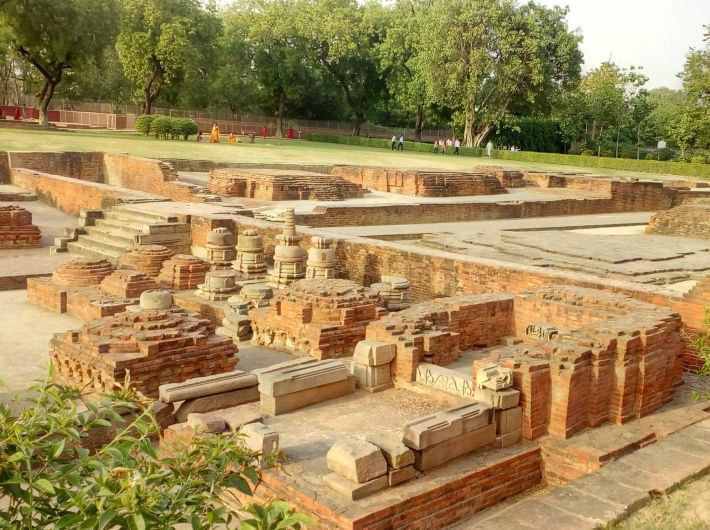
A similar gap appears in heritage tourism. The government proposes to develop 15 archaeological sites into culturally vibrant hubs. At present, these sites do not hold tourists’ attention for long. Virtual reality and augmented reality tools will be adopted to further immerse visitors.
This approach aligns with global trends where heritage preservation is linked to increasing tourism revenue, but increased footfall without strict guidelines can accelerate the degradation of these sites. This reveals a deeper policy problem. While this approach is politically convenient, it risks postponing sustainable restoration rather than resolving it.
Medical Tourism
The Budget supports the development of five regional medical tourism hubs. The strategy recognises the importance of health and wellness travel as a high-revenue sector. This moves the sector beyond isolated corporate hospitals into a standardised ecosystem, making it easier to market India as a reliable tourist destination. However, the success of the same depends entirely on regulatory standards, international accreditation, patient logistics and cross-border diplomacy. While India is following the steps of other medically-renowned economies, the budget’s outline does not specify how these hubs will be internationally competitive in the tourism market.
Digital Knowledge Grid
A major technological intervention proposed is the National Destination Digital Knowledge Grid. The Grid will digitally document cultural and spiritual sites to create a comprehensive database of India’s tourism assets. By centralising this data, the platform will reduce informational asymmetry and create new opportunities for the creative economy. The project will generate immediate employment for gig workers, researchers and content creators. It will lay the foundation for future tech applications like AR/VR without requiring the government to build those applications itself.
On the contrary, digital documentation is often treated as a one-time project rather than a continuous process. If the grid is not updated regularly, it becomes archaic within months. There is a risk of this becoming an exercise where data exists, but physical infrastructure remains poor. Implementation will struggle if it relies solely on government data entry.
Global Big Cat Summit
India will host the first-ever Global Big Cat Summit. This event marks a significant step in India’s wildlife diplomacy. The summit will bring together heads of government and ministers from 95 countries to deliberate on collective strategies for the conservation of big cat species. Hosting the summit cements India’s position as a global leader in conservation. Such high-level diplomatic events serve as a powerful marketing campaign and attract media advertisement for India’s wildlife reserves.
However, a summit is a diplomatic strategy, and it will generate temporary attention. There is a risk that the event will focus on protocol over actual policy changes. If the summit leads to a sudden spike in visitors to core tiger zones without increased capacity, it will cause more harm than good. The proposal does not address the real-world implications of the summit.
Buddhist Circuits
A suggestion to create Buddhist circuits in the North-Eastern part of the country encompassing the states of Arunachal Pradesh, Sikkim, Assam, Manipur, Mizoram and Tripura in the Budget is an effort to subsidised the spiritual tourism with the local development. By developing the North-East as a civilisational crossroads between Theravada and Mahayana culture, the policy acknowledges the potential of the area in terms of tourism and also strengthens the soft power of India in Asia. Better accessibility, maintenance of monasteries, and pilgrim facilities can create more local jobs in a region that was historically locked out of the mainstream tourism flows.
However, the initiative is susceptible to some policy issues. Spiritual tourism is prone to over-commercialisation, where the expansion of infrastructure erodes culture and even saturates delicate ecosystems. To avoid this, the Budget doesn’t clarify any governance frameworks, visitor caps and community ownership models, but it would benefit to include such measures. The Buddhist circuit, unless it is empowered by enabling the local institutions and monks as custodians, but not service providers, becomes more of a symbolic branding exercise, as opposed to a viable tourism ecosystem based on cultural custodianship.
The way forward
The policy on tourism is reflective of an intent change but a reserved reformist approach. The Budget views tourism in a strategic lens that has the potential and can be leveraged to create job opportunities, preserve heritage and enhance the image of India in the global market. The increased focus on skills, digital infrastructure, nature-based tourism and thematic circuits shows its policy perspective shifting from previous years to one that sees quality rather than quantity.
However, the policy never makes hard trade-offs. It values administrative solutions to economic tools, encouragement to regulation and symbolism to enforce structures. Social concerns like the environmental carrying capacity, labour security, international competitiveness and local governing issues are poorly tackled. Consequently, the Budget enhances tourism administration at its edges but falls short of structural transformation of the field. The policy also fails to address how these skills translate to sustainable livelihoods. While improved service quality may raise wages, there is no discussion of standard wage rates, career progressions and income instability during off-seasons. Whether it will succeed will not be determined by announcements, but by whether future reforms will be prepared to address the regulatory and institutional loopholes this Budget will leave.
Tanishq Halankar, Varsha Joshi, Saanvi Khorate are students and Dr. Barun Kumar Thakur teaches economics at FLAME University, Pune. Views are personal.