

In conversation with poet and critic Bhalchandra Nemade

geetanjali

Geetanjali Minhas | April 3, 2015

#Bhalchandra Nemade   #Bhalchandra Nemade writer   #Bhalchandra Nemade interview  


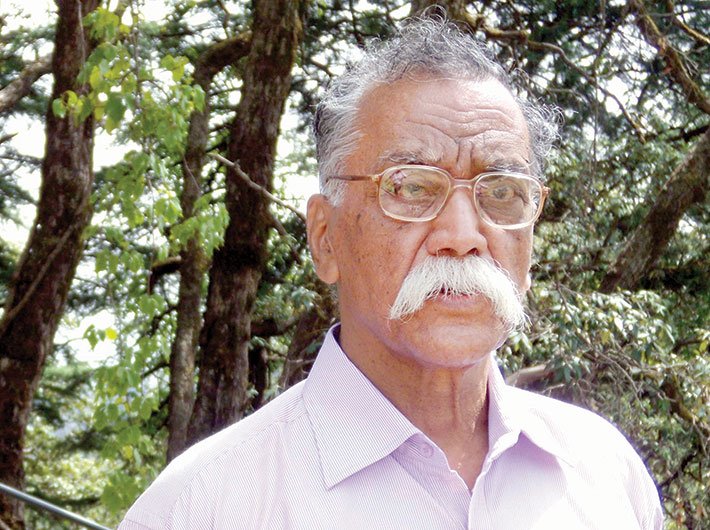
Recipient of Padma Shri and the Sahitya Akademi award, novelist, poet and critic Bhalchandra Nemade has taught English, Marathi and comparative literature at various places, including the School of Oriental and African Studies in London. Before retirement, he held Mumbai University’s Gurudeo Tagore chair for comparative literature studies. A proponent of ‘Deshivad’, Nemade endorses the theory that a writer must write in his or her native language and assert the value of native heritage to counter globalisation. Terming English as a “killer language”, Nemade advocates that primary and secondary education should be in the mother tongue. He has been conferred with the prestigious Jnanpith award this year. Excerpts:


The book I am reading right now
Prachin Bharat: Samaj ani Sanskriti by Madhukar Anant Mehedale, a Vedic Sanskrit scholar (Prajna Pathshala, Wai, 2001), in Marathi

The book I enjoyed most while writing
The Changadev quartet

My favourite pastime
Listening to all kinds of music, especially Indian and German

My inspiration to write comes from
My own experiences – seen and heard and felt; when they accumulate their pressure inspires me

If not a novelist, poet, academician, and critic, I would have been...

A traditional kind of farmer in Khandesh, where my forefathers were

Preserving our languages and nativism is important because...
These are the two crutches all colonised people need to maintain: one, their sanity; and two, stability in living

Can mother tongue and English language co-exist in a globalising world?
Yes, provided it is restricted to the individual only, social bilingualism always kills one language – usually the receiving one

Winning the Jnanpith award means to me
One more encroachment by recognition, this time from all sides, on my spindly privacy

An aspect of my personality that nobody knows
I am a very kind-hearted man

My advice to young generation
Read whenever you can and write only when you must. Translate at least one masterpiece relating to your trade into your mother tongue
At present I am busy with Preparing a teaching course for Goa University

I want to be remembered as
A teacher
 

Comments


Other News

AI: Code, Control, Conquer

India today stands at a critical juncture in the area of artificial intelligence. While the country is among the fastest adopters of AI in the world, it remains heavily reliant on technologies developed elsewhere. This paradox, experts warn, cannot persist if India seeks technological sovereignty.

RBI pauses to assess inflation risks, policy transmission

The Reserve Bank of India (RBI) has begun the new fiscal year with a calibrated pause, keeping the repo rate unchanged at 5.25 per cent in its April Monetary Policy Committee (MPC) meeting. The decision, taken unanimously, reflects a shift from aggressive policy action to cautious observation after a signi

New pathways for tourism growth

Traditionally, India’s tourism policy has been based on three main components: the number of visitors, building tourist attractions and providing facilities for tourists. Due to the increase in climate-related issues and environmental destruction that occurred over previous years, policymakers have b

Is the US a superpower anymore?

On April 8, hours after warning that “a whole civilisation will die tonight,” US president Donald Trump, exhibiting his unique style of retreating from high-voltage brinkmanship, announced that he agreed to a two-week ceasefire with Iran. The weekend talks in Islamabad have failed and the futur

Machines communicate, humans connect

There is a moment every event professional knows—the kind that arrives without warning, usually an hour before the curtain rises. Months of meticulous planning are in place. And then comes the call: “We’ll also need a projector. For the slides.”   No email

Why India is entering a ‘stagflation lite’ phase

India’s macroeconomic narrative is quietly shifting—from a rare “Goldilocks” equilibrium of stable growth and contained inflation to a more fragile phase where external shocks are beginning to dominate domestic policy outcomes. The numbers still look reassuring at first glance: GDP


Archives

Current Issue

Opinion

Facebook Twitter Google Plus Linkedin Subscribe Newsletter

Twitter

