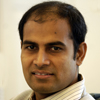
Valerian Rodrigues, Professor, political science, JNU in conversation with Governance Now
In a complex country like India, where imaginative leaders are needed to make the best of emergent realities, Manmohan Singh failed to provide that thrust. Prof Valerian Rodrigues, who teaches political science at the Jawaharlal Nehru University, tells Trithesh Nandan that the prime minister made everything centralised, leaving enormous burden on the next prime minister. Edited excerpts from the interview:
How will history assess the Manmohan Singh era?
It would be a mixed bag. There are some very credible achievements. He may not have been directly instrumental in those achievements but eventually he is the captain of the ship. There has been a great deal of institutional stability in India in the last 10 years. There has been a certain relationship between parliament and judiciary. Parliament has been troubled but there is no guarantee that turmoil in parliament is going to be less. There have been no major hiccups between the executive and parliament. When he (Singh) took charge in 2004 there was a charge that the Congress will not be able to work out a coalition government but we saw a fairly successful working of the coalition.
On the foreign policy front...
He started off extremely well. However, there have been several setbacks. Initially, everyone thought that he would break new ground with Pakistan since he comes from Punjab (Singh was born in west Punjab that is now in Pakistan). I think he made serious attempts but things did not fall in place for him. But he pushed India to the centre-stage of world politics. He pushed the idea of BRICS (a grouping of Brazil, Russia, India, China and South Africa) but it did not take off.
But he has been facing a lot of flak for leading an ineffective government, especially in the last few years.
The big issue is institutional corruption in India. He can't say that his integrity is beyond question – after all, he is the captain of the ship. One is not talking about an individual here. He can't toitally avoid the responsibility for corruption of the system which he has presided over.
Second, the biggest divide is the wide gulf between the rich and the poor. Certain credit has to go to the PM for initiating programmes like MNREGA, RTI and RTE. But even these were not adequate to bridge the gap. Manmohan Singh came with a lot of promise with regard to higher education (but) there has been absolutely no move – higher education is in dumps. Universities are not functioning and a person with best qualifications and extremely respectable position in the academia could have done enormously more than what he succeeded in doing.
The biggest flip side was failure in providing an imaginative leadership, which is important for a country like India. There are so many differences and the PM actually becomes the bridge. People look up to him as a role model. But he was unable to provide imaginative leadership.
How will historians in future look at the institution of prime minister during Manmohan Singh's tenure?
He kept the post of prime minister with great dignity. One can never charge him with lowering the dignity of the post of PM; I don't think he has sullied his own image.
Parliamentary democracy is responsive democracy. It is also a democracy where you need to be accountable on day-to-day basis. The leadership should also flourish at various levels and particularly at the level of small communities and minority groups. The system has become highly centralised today. He would be leaving a legacy where parliamentary democracy needs to be recharged. During his tenure, the system became highly centralised. He precipitated the tendency as he was sitting at the apex of the pyramid and power is concentrated there. It is important for India to have redistribution of power across the spectrum.
We can't function when the system is highly centralised because efficiency of system can't bring effective results in the centralised system. Basically, he relied on the upper echelon of bureaucracy, particularly the PMO. In a country like India, the PM should have eyes and ears all over the country.
He addressed only a few press conferences. In a democracy it is important that you begin to communicate to people and elicit their opinions. If the leader of democracy doesn't connect with people, how would people know? In fact, Sonia Gandhi became his conduit to the people. This is not a solution in the long term to run a country like India.
One important thing: he came from a minority community which has been doing extremely well. But something could have been done for Muslims. There were some measures (forming the Sachar committee, for instance) but those are just token measures. As a PM who came from a certain background, there should be some sensibilities and that were not pronounced.
Would it be right to say we need a ‘political’ leader as PM rather than an economist or a specialist?
In a democracy, PMs can come from all walks of life. Your background and discipline doesn't necessarily become a hindrance – it might give some advantages but not always. The only philosopher PM was Nehru and to some extent Narasimha Rao but we had other successful PMs too.
But one thing Manmohan Singh did brilliantly was having the working relations that he set up with the Congress chief. It was a very interesting relationship. In 2004, of course, Sonia Gandhi gave up and Singh stepped up, extending in a way a very strong legitimacy to the status that Sonia Gandhi enjoyed. No one talks about the how he undermined those charges (of foreign birth) against Sonia Gandhi. Second, he kept his family apart from the office of the PM. That was remarkable.
Talking about his rapport with Sonia Gandhi, what about the charge that real power lay with 10 Janpath and not 7 Race Course Road?
In the last few years (and not initially), the ideological and popular leadership in the Congress party did not allow him to take up leadership and responsibility. And this has been bad for the office.
Why is he repeatedly appealing to future historians for a fair evaluation of his term? Is he afraid of contemporary analysts?
I don't know whether he is afraid of contemporary evaluation. The major arena for politicians to be evaluated is election. (But) even the most powerful politicians are afraid of elections. The other things are not considered significant at all by them (politicians).