

Standards crucial for delivering services in a transparent manner

pratap

Pratap Vikram Singh | December 2, 2015
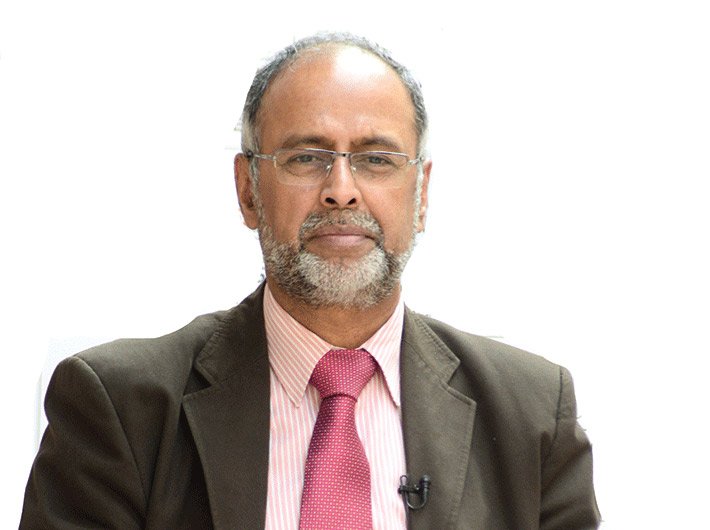


Sudhir Krishna is the chairman of the sectional committee appointed by the Bureau of Indian Standards (BIS) on setting standards for smartcities. The committee is likely to submit its first draft by March. Krishna was previously secretary of the ministry of urban development (MoUD), the nodal ministry for smart cities mission.

What are the terms of reference for the committee?
BIS, as the national standards body (NSB), has created a new sectional committee for developing standards for smart cities. These will be voluntary standards in form of guidelines, which may be adopted by cities and other authorities across the country as per their requirements. The scope of standardisation under this new committee includes terminology, components, planning, design, integration, implementation, operation and maintenance and assessment.

What is the objective behind formulating standards?
The standards for smart cities would enable any city or civic authority to make efforts to improve its services in an objective and transparent manner, which will be at par with international practices. These standards would also facilitate comparison and evaluation of various smart cities.

What all areas are you covering for formulating standards?
The various dimensions of infrastructure, including physical (transportation, water supply, waste management, energy and lighting, housing, etc.), institutional, social and economic infrastructure would be covered. In the first phase, the parameters and indicators of smart cities are being developed on the lines of international standard ISO 37120.

Can you explain the whole process of standardisation?
The committee is attempting to formulate standards based on international standards suitably modified for Indian conditions and referring to the statutory requirements/guidelines of various statutory and expert bodies such as the environment authorities, recommendations of the Indian roads congress (IRC), bureau of energy efficiency in a cohesive manner.

Nine expert working groups have been formed covering different aspects of a smart city. The preliminary draft approved by the committee shall be issued for wide circulation for eliciting public comments across India, including from the states and the local bodies. The committee shall examine the comments to finalise the draft and send it for notification.

How do you ascertain credit worthiness of cities?
The standards would facilitate the cities to make the infrastructure projects in an objective and measurable framework, as per internationally established practices. That would enable financial institutions evaluate the credit worthiness of individual projects and would also enable undertaking such projects in public-private partnership (PPP) or similar mode. The standards would also facilitate determination of financial status of the cities in absolute as well comparable frameworks.

Comments


Other News

AI: Code, Control, Conquer

India today stands at a critical juncture in the area of artificial intelligence. While the country is among the fastest adopters of AI in the world, it remains heavily reliant on technologies developed elsewhere. This paradox, experts warn, cannot persist if India seeks technological sovereignty.

RBI pauses to assess inflation risks, policy transmission

The Reserve Bank of India (RBI) has begun the new fiscal year with a calibrated pause, keeping the repo rate unchanged at 5.25 per cent in its April Monetary Policy Committee (MPC) meeting. The decision, taken unanimously, reflects a shift from aggressive policy action to cautious observation after a signi

New pathways for tourism growth

Traditionally, India’s tourism policy has been based on three main components: the number of visitors, building tourist attractions and providing facilities for tourists. Due to the increase in climate-related issues and environmental destruction that occurred over previous years, policymakers have b

Is the US a superpower anymore?

On April 8, hours after warning that “a whole civilisation will die tonight,” US president Donald Trump, exhibiting his unique style of retreating from high-voltage brinkmanship, announced that he agreed to a two-week ceasefire with Iran. The weekend talks in Islamabad have failed and the futur

Machines communicate, humans connect

There is a moment every event professional knows—the kind that arrives without warning, usually an hour before the curtain rises. Months of meticulous planning are in place. And then comes the call: “We’ll also need a projector. For the slides.”   No email

Why India is entering a ‘stagflation lite’ phase

India’s macroeconomic narrative is quietly shifting—from a rare “Goldilocks” equilibrium of stable growth and contained inflation to a more fragile phase where external shocks are beginning to dominate domestic policy outcomes. The numbers still look reassuring at first glance: GDP


Archives

Current Issue

Opinion

Facebook Twitter Google Plus Linkedin Subscribe Newsletter

Twitter

