
India needs robust broadband connectivity infrastructure: TRAI chief

To achieve the goal of connecting India digitally, there are three pre-requisites: digital infrastructure, software and digital services, and digitally empowered citizens.

GN Bureau | November 2, 2016

#digital India   #egov   #TRAI   #RS Sharma  
RS Sharma
RS Sharma

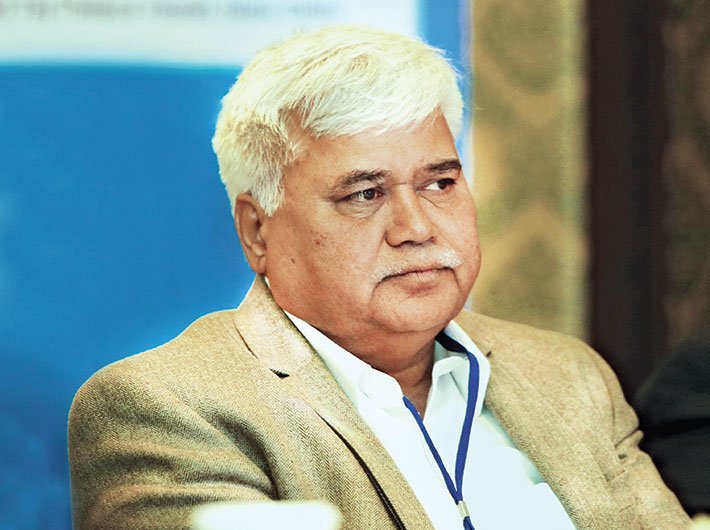
For an orderly growth of the telecom sector, it is necessary to have a clear regulatory framework with no scope of ambiguities, said RS Sharma, chairman, Telecom Regulatory Authority of India (TRAI). He underlined the need for a reliable and robust broadband connectivity infrastructure for a transformational growth of the telecom sector in India.

Delivering his keynote address on the theme ‘Assessing Future Trends and Regulatory Reforms of Telecom Sector’ at the India Telecom 2016, Sharma on Tuesday said that TRAI as a regulatory body will continue to play the role of a facilitator to the industry. He added that for an orderly growth of the sector it is necessary to have a clear regulatory framework with no scope of ambiguities.

Elaborating on Digital India, Sharma said that to achieve the goal of the initiative which is to connect India digitally there are three pre-requisites: digital infrastructure, software and digital services, and digitally empowered citizens. He added that digital infrastructure consisted of hard infrastructure, which included broadband and networks, and soft infrastructure, comprising e-payment gateways.

He said that Digital India initiative was focused on empowering people by providing services such as DigiLocker which is linked to the Unique Identification Authority of India (Aadhaar number) of the user. The space can be utilised for storing personal documents and there is also an associated facility for e-signing documents. The service is intended to minimise the use of physical documents and to provide authenticity of the e-documents. Such programmes are helping in the creation of an India which has paperless, transparent, traceable, cost effective and cashless governance.
Sharma said that India is now moving towards data from voice calls. The country is ready for this change with adequate spectrum; however, there are several challenges in this domain in terms of privacy and ownership of data, which have to be addressed. Hence, a regulatory framework was needed to resolve these issues.

READ: Call drops: TRAI suggests solutions for improving in-building network

With its low internet and broadband penetration India is at the 131st position in the UN ranking, way behind countries like Sri Lanka.

READ: Smoke signals from TRAI for harried mobile users
 

Comments


Other News

BMC polls: 24% winners have declared criminal cases against themselves

As many as 54 (or 24%) out of the 227 winning candidates of the Brihanmumbai Municipal Corporation (BMC) elections have declared criminal cases against themselves, according to an analysis by the Association for Democratic Reforms (ADR) and Maharashtra Election Watch.   As many as 29 (13

PM`s first decisions from Seva Teerth reflect spirit of Seva

In his very first set of decisions after shifting to Seva Teerth, the new address of the PMO, PM Narendra Modi signed important files relating to decisions that reflect the spirit of Seva. These decisions touch every section of society: farmers, women, youth, and vulnerable citizens. 1.

AI@Work: Driving productivity, jobs, and innovation

Key Takeaways     India ranks 3rd in Stanford University`s 2025 Global AI Vibrancy Ranking.     Data infrastructure, entrepreneurship and demography are key enablers for AI adoption.     In India the relative penetration of AI skills was 2.5 ti

Urban Blind Spot: Animals, governance, and the cost of ignoring coexistence

India’s cities are expanding at an unprecedented pace, absorbing people, infrastructure, and economic activity at scale. What urban governance frameworks have been slower to absorb is a reality already playing out on the ground: animals are an inseparable part of urban life. From community dogs and p

How India uses AI in the field of culture and languages

* India is institutionalising AI for culture and languages through national platforms such as BHASHINI, Anuvadini, Gyan Bharatam and Adi Vaani etc. * AI is being used to make cultural and knowledge assets usable by digitisation of manuscripts, translation of academic content, and in

India improves position on Network Readiness Index

India has improved its position by four slots and is now placed at 45th rank in the Network Readiness Index 2025 (NRI 2025) report prepared by Portulans Institute, Washington DC.   The report, released on February 4, maps the network-based readiness landscape of 127 economies based on th


Archives

Current Issue

Opinion

Facebook Twitter Google Plus Linkedin Subscribe Newsletter

Twitter







