
Paytm Payment Bank to be in operation from January 15

Paytm wallet users will be given the option of opening a bank account with Paytm. They will get facilities like debit card and cheque book

GN Bureau | January 11, 2017

#Paytm   #payment banks   #RBI   #digital wallets   #India Post   #cashless  
Paytm Payment Bank to be in operation from January 15

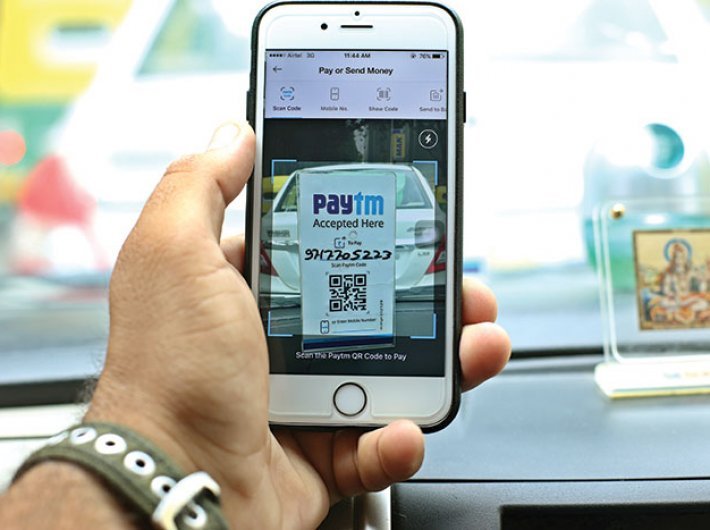
If you have a Paytm account and there is money in your wallet, then soon you can get interest on your money. The statement came from the Paytm’s blog post, in which the company announced that it will launch its payment bank on January 15.
 
Paytm wallet users will be given the option of opening a bank account with Paytm payment bank. On doing so, the user will get all the benefits of payment banks like debit card and cheque book.
 
Unlike other commercial banks, payment banks are not allowed to give credit or loans. These banks are, however, allowed to make arrangements with commercial and small finance banks, with prior permission from Reserve Bank of India (RBI). Those having a bank account in a payment bank can keep deposits up to Rs 1 lakh. Account holders in these banks get cheque books, debit card and interest on their deposits.
 
There will be no difference in usage of the Paytm wallet post January 15. All services will continue to be same, the company claims. 
The Paytm payment bank is 51 percent owned by Vijay Shekhar Sharma, India-based entrepreneur and 49 percent by One97Communication Limited, a Delhi-based internet company.
 
The intention behind payment bank is to financially include those with small saving accounts, low-income households, small businesses and unorganised sector.
 
Another payment bank licence holder is India Post. The government-run courier service will reportedly open its first payment bank (India Post Payments Bank) in Jharkhand in January. Last year, prime minister Narendra Modi had announced that all India Post offices should be converted into payment banks by January 2017.
 
RBI gave in-principal licences to 11 entities to launch payment banks, which included department of posts, Paytm, Airtel and Reliance Industries. Out of 11, three companies - Chalomandalam Distribution Services, Sun Pharmaceutical Industries Limited and Tech Mahindra – surrendered their licence.
 
As per RBI norms, “The operations of the [payment] bank should be fully networked and technology driven from the beginning, conforming to generally accepted standards and norms.”
 

Comments


Other News

Cabinet approves Mobile Phone Manufacturing Scheme

The union cabinet chaired by PM Narendra Modi has approved the Mobile Phone Manufacturing Scheme (MPMS) with a budgetary outlay of Rs 62,500 crore. It aims to further scale up the production, deepen domestic value addition, strengthen supply chain resilience, enhance global competitiveness. It

Building infrastructure is only half the job

Recent stories of stolen railway wires, disappearing communication towers and missing public infrastructure are often treated as bizarre law-and-order failures of India. Yet they raise a more fundamental question. Why does the State often discover the disappearance of a public asset only after it has alrea

New Delhi’s Indo-Pacific strategy enters a new phase

India appears to be investing fresh dynamism in its Indo-Pacific strategy. At the time when the US, under president Donald Trump, has adopted a conciliatory approach towards China and has changed the name of America’s Indo-Pacific Command to just Pacific Command, India has quietly moved towards con

CAG flags major fiscal lapses in Maharashtra

Maharashtra`s fiscal management has come under sharp scrutiny after the Comptroller and Auditor General (CAG) of India, in its State Finances Audit Report for 2024-25, flagged significant budgetary inefficiencies, accounting irregularities, understatement of key fiscal indicators and widespread governanc

The health sector research we are not doing

Some neglect is loud. This kind is quiet. It sits in research never commissioned, data never collected, questions never asked. In South Asia, that quiet has let the region’s worst health problems stay understudied, underfunded, and out of sight of those who could act.  

Study flags accessibility and last-mile challenges on Mumbai Metro Aqua Line

Mumbai Metro Line 3 (Aqua Line), the city`s first fully underground metro corridor and one of its largest public transport investments, represents a major engineering achievement and has been widely welcomed by commuters. However, the overall commuter experience continues to be constrained by accessibili

Upcoming Conferences


Archives

Current Issue

Opinion

Facebook Twitter Google Plus Linkedin Subscribe Newsletter

Twitter






