Oza’s ‘Struggle for Narmada’ how Adivasi leaders challenge ‘development’ and its promises
The Struggle for Narmada: An Oral History of the Narmada Bachao Andolan, by Adivasi Leaders Keshavbhau and Kevalsingh Vasave
By Nandini Oza, Translated from the original Marathi by Suhas Paranjape and Swatija Manorama With a Foreword by Indira Chowdhury
Orient BlackSwan, 320 pages, Rs 915
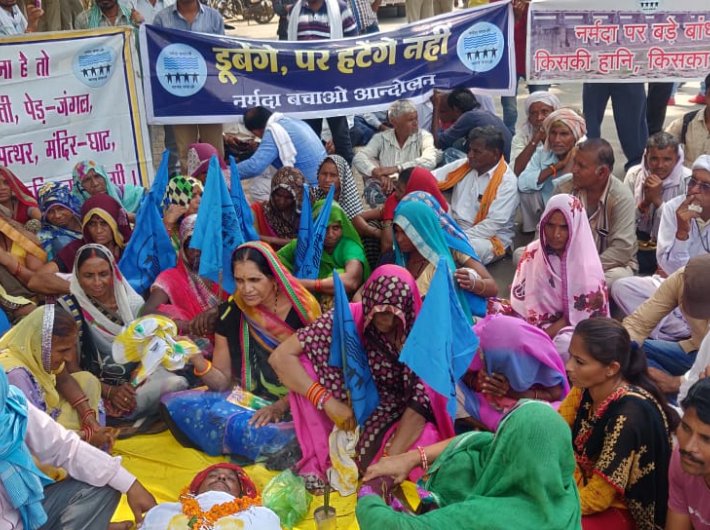
Nandini Oza’s book is an attempt at retelling the history of the Narmada Bachao Andolan (NBA) from the margins. In doing so, the book shakes mainstream environmental historiography that overlooks the contributions made by poor and subaltern communities towards collective action in postcolonial India. When much of the existing narratives have a skewed focus on Medha Patkar or Baba Amte, the book focuses on the life histories of Keshavbau Vasave and Kevalsingh Vasave, two Adivasi leaders of the NBA. Relying exclusively on the method of oral history, Oza makes a compelling attempt at reconstructing the trajectory of NBA using the voices and experiences of these two Adivasi leaders. The detailed account of the trials and tribulations that these leaders underwent to organize a collective struggle that spans various states exposes how the struggle has been a subaltern assertation against the dominant modes, idioms and practices of mainstream development in India.
Originally written in Marathi, the book is translated to English by Suhas Paranjape and Swatija Manorama. The befitting foreword by Indira Chowdhury captures the essence and mission of the book as it sets forth in its endeavour of unravelling the story of this struggle from a varied perspective.
History from the Margins
Nandini’s work is telling of the pitfalls of dominant modes of history writing that conveniently sidelines the contributions and struggles of subaltern activists from movement histories. The book carefully traces the origin, growth and decline of the NBA by enmeshing it within the local history of the place, people and ecology. By adopting a mode of oral history interviewing that let the participants reconstruct their memories surrounding the movement with minimal interventions and edits that strictly structure the responses, Oza successfully creates a style of narrative where the reader gets an experience of listening to the leaders as they retell the story of mobilisation. One feels the emotions and often gets moved while reading through the personal and biographical consequences that Keshavbau and Kevalsingh had to face while organising a mass movement against the Sardar Sarovar Project (SSP). The incident about Keshavbau leaving behind his very sick son for Andolan work and living for months with the hope that he is still alive stands testimony to the sacrifices and dedication from these leaders that kept the movement alive.
Sustaining a movement takes a lot of sacrifices from its members which often go unnoticed in the larger schema of reporting that focuses on the binary of success and failure. The task of providing food to the parikramavasis and visitors to the village during various stages of the movement (Jeevan Shalas, at one point the leader talks how it was important for the Andolan to provide more attention on this) had placed economic pressure on the local leaders whose only source of livelihood was farming. Though they were provided a small honorarium later (Rs.300), it is important to recognise these local mobilising structures that sustain resource-poor movements like NBA that almost runs exclusively on the selflessness and sacrifice of the Adivasi community. Additionally, due to the heightened scrutiny regarding the expenses, Keshavbau declined this honorarium later on indicating how the bureaucratisation of movements hurts its own members the most.
It also offers a glimpse of how shrewd bureaucrats and politicians made repeated attempts to break the movement. The oral history narratives also rationalises the lack of trust in state rehabilitation programmes or redressal mechanisms citing the many instances where the promises from the state on land, livelihoods and jobs were continuously broken even after the villages were submerged. In Keshavbau’s words:
“From time to time, the government invited us to participate in meetings to talk about the Sardar Sarovar, but we refused. And the reason was, if there had been no rehabilitation for the past three years, why would it happen now? We kept on saying, ‘Let whatever we have in the village remain with us’.”
As the words above show, the book also teases out the ways in which many protest tactics and collective action frames emerged from the sense of autonomy, belonging and assertion of their rights to the land and resources of the region by the local community.
Development and its Unequal Burdens
What stands out the most throughout the book is the clarity with which these two leaders critique the imagination of development that has been adopted in the country and its social and ecological fallouts. By raising slogans such as ‘In This World, Whose Development? Whose Destruction?’ the people called out the problematics of postcolonial India’s obsession with large-scale development projects. More importantly, it exposes the unequal ecological exchange underlying such projects where the burden of development falls disproportionately on the poor and marginalized sections of our country. Questioning such unequal burdens underlying the SSP, Keshavbau says:
“Many leaders were saying that big dams have their benefits. If we did not allow big dams to be built, how can we achieve development? But we could see, one Sardar Sarovar would kill one to two lakh people, and in lieu of that, how many people would get food and an opportunity to live? Why did two lakhs need to die? We would die, but for whom should we die? For the benefit of the urban residents?”
The impasse between development and environment and the concomitant destruction of the lives and livelihoods of people clearly comes through the oral history interviews. The excerpt above challenges the logic of development as modernisation and exposes how it was rationalised by distributing the burdens on the poor and marginalised section of our country. It thus reiterates the fact that our environmental history is laden with stories of unequal ecological exchanges where the poor were forced to pay the price for development as “progress”.
The book clearly ascertains how the Adivasi leaders offer an ontological challenge to development and its promises. Quite similar to global environmental history, Indian environmental history is laden with such rampant violations of the rights and livelihoods of Adivasi communities in the name of modernisation, progress and development. And it is important to rewrite this history of development as destruction and the concomitant struggles it engendered from the standpoints of Adivasi communities. In doing so, the book points towards the social vulnerability to development burdens in India given the multiple systems of stratification that structure and confine everyday living. Thus, only an intersectional approach that considers the social hierarchies (caste, class, gender etc.) and makes a committed attempt at featuring the voices and experiences of the sidelined leaders alone can delve deep into the rich history of social and environmental struggles in our country. Oza’s long association with the movement here provides them with the unique opportunity and lens to observe and participate in it from the insides.
Dr. Silpa Satheesh is Assistant Professor, School of Social Sciences, Mahatma Gandhi University, Kottayam, Kerala.