‘The Golden Chisel’ tells the story of Arun Yogiraj, the man behind the Ram Lalla statue
The Golden Chisel: The Story Behind the Making of Ram Lalla
By Seethalakshmi S. and Rahul Nandan
Rupa Publications, 168 pages, Rs 395
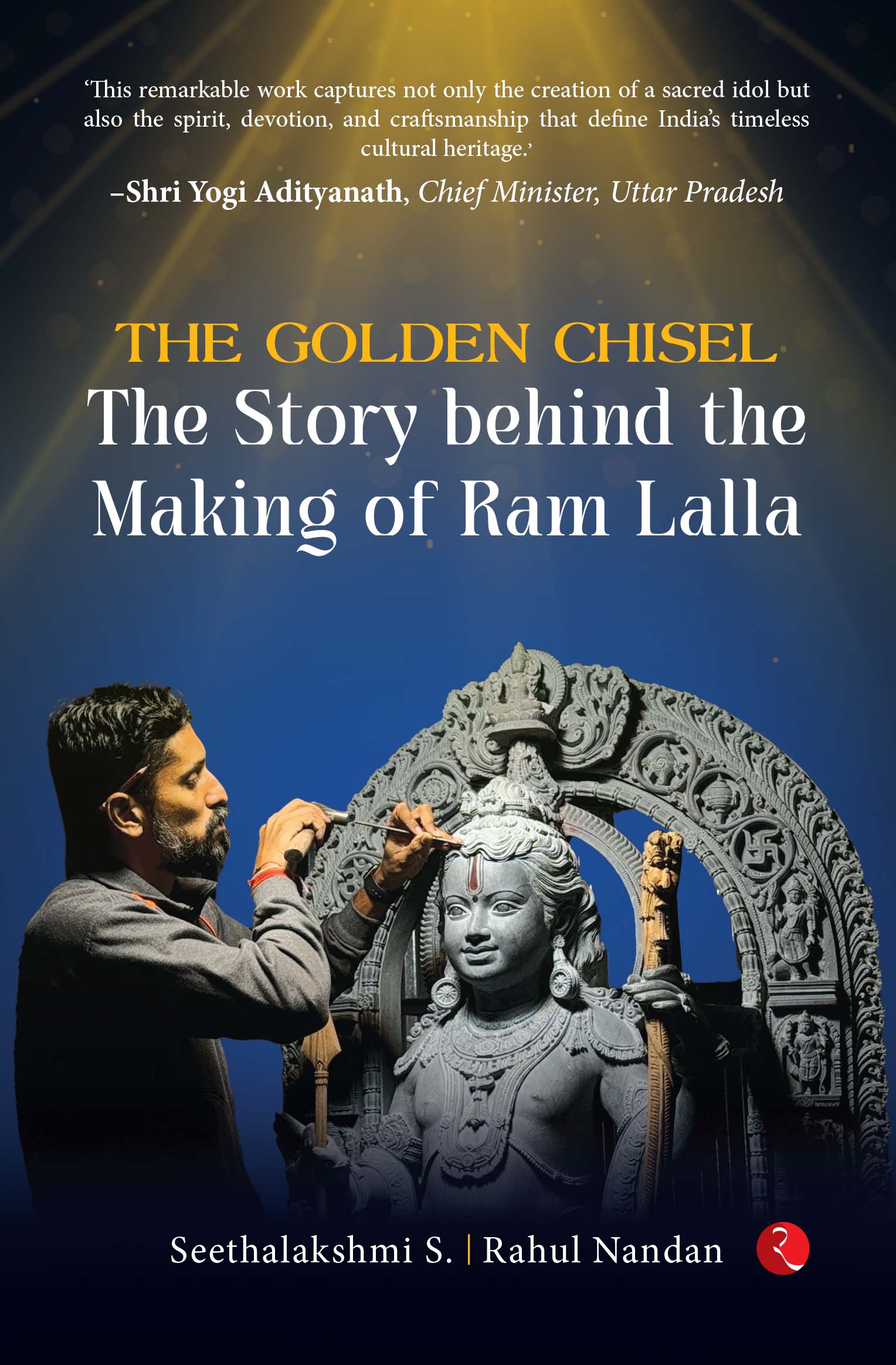
‘The Golden Chisel’ takes readers behind one of the most watched moments in modern Indian history: the making of the Ram Lalla idol at Ayodhya’s Ram Janmabhoomi Temple. Through conversations with master sculptor Arun Yogiraj, journalists Seethalakshmi S. and Rahul Nandan reveal the nine-month journey of creating the iconic idol, alongside the faith, pressure, craftsmanship and human story behind it.
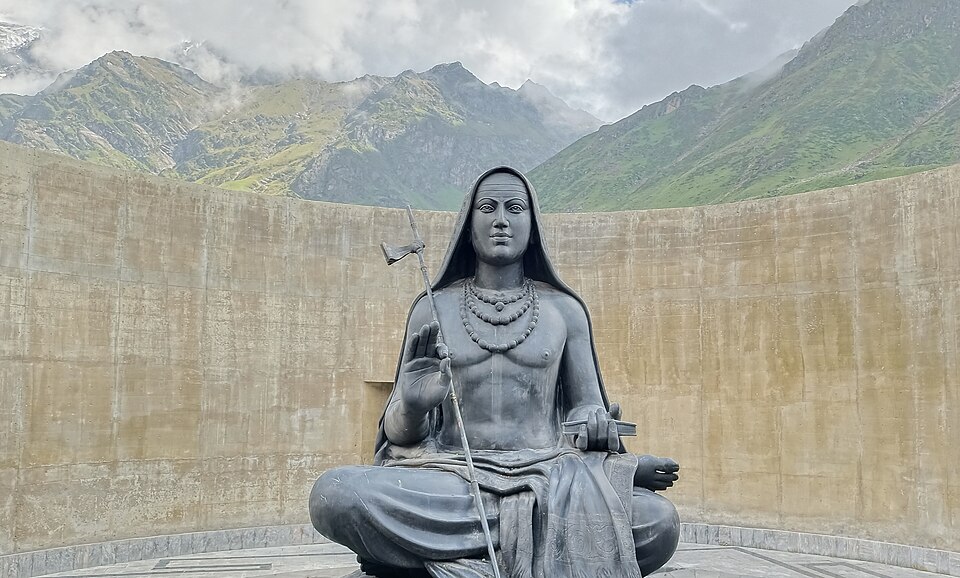
The book also revisits some of his earlier works, including the Adi Shankaracharya statue at Kedarnath and the Netaji Subhas Chandra Bose statue at India Gate, tracing the journey of an artist entrusted with shaping the icons of a nation.
Here is an excerpt from the book:
Yogiraj Carves Adi Shankaracharya and Netaji
In July 2020, India was battling with the deadly first wave of COVID-19. Lockdowns were imposed, lifted and imposed again. It was during these troubled times that Arun Yogiraj got a call from Professor Mohanrao B. Panchal, Chair of the Department of Visual Arts, Kannada University, Hampi, asking him to send photographs of his best sculpting works. At least seven more artists across Karnataka had been contacted. The selection committee had to see photos of previous sculptures of all the sculptors contacted, including Arun Yogiraj.
Yogiraj bags first national project
Adi Shankaracharya is a much-revered eighth-century Indian saint and philosopher who is believed to have taken samadhi at Kedarnath in Uttarakhand. During the catastrophic flash floods of 2013 in the state, the Kedarnath shrine was partially destroyed, and the original statue of Adi Shankaracharya was washed away. The JSW group, headed by Chairman Sajjan Jindal, was entrusted with the responsibility of the reconstruction and restoration of the Adi Shankaracharya Samadhi, among other things by the Government of Uttarakhand. Additionally, the project’s progress was constantly reviewed and monitored by the Prime Minister’s Office (PMO).
To reconstruct the Adi Shankaracharya statue, JSW proposed the Mysuru-based sculptor Yogiraj’s name. Yogiraj was asked to create a small model of Shankaracharya in around twenty-five days. Since the PMO was directly involved in the selection of the sculptor, the finalized model was flown to Delhi to be presented to the prime minister in September 2020. Among the four to five models brought from across India, Yogiraj’s model was selected. He was commissioned to create a twelve-foot statue, which had to be earthquake-proof as Kedarnath falls in the seismic zone of the Himalaya.
This was a life-changing moment for the Mysuru sculptor. ‘Until then, my work was limited to South India,’ says Yogiraj. He started work on a huge 128-tonne chlorite schist stone block, a type of rock specially chosen for its durability. He readied a part of the idol at his two-hundred-year-old ancestral home in Mysuru before moving it to Chamoli district in Uttarakhand and finally to Kedarnath to assemble it and give it the final touches.
‘I began sculpting the idol from my Mysuru workshop. As the word spread in the city that I had been chosen to do the epic Adi Shankaracharya statue, people started thronging my house. My father, a tough taskmaster and my harshest critic, brimmed with pride,’ says Yogiraj.
Arun loses his father
Making Shankaracharya appear both beautiful and divine at the same time was a formidable challenge for Yogiraj. To achieve that, he had to work hard, especially since he wanted people to connect with the idol.
Initially, he was not happy after finishing the idol in Mysuru. He had carved the face and eyes, but was dissatisfied with the outcome. He told his father that he wanted to chip off the face and redo the eyes, as he could not connect with them. His father gave him his blessings to go ahead.
The idol still had stone on its back, and changes were possible at this stage. He chipped away at the stone and started carving the eyes again. Suddenly, he felt that Adi Shankaracharya was looking at him. ‘I was supposed to carve the insides of the eyeballs clean. I was midway through my task when I told my father that I wanted to stop right there, as I felt that the divine sage was looking at me. The idol’s eyes are still like that as I did not carve them clean,’ says Yogiraj.
‘My father was very happy with my work. I have always done everything to impress my father. Sadly, he did not live to see the idol’s installation at Kedarnath. My father met with a road accident on 30 September 2021. I was in Rishikesh working on the idol when I got a call about my father’s accident and was told that he had a head injury. He was put on a ventilator.’ While Yogiraj immediately rushed home to be with his father, his team moved to Kedarnath. Five days later, his father passed away. He had just about completed the funeral rituals when he got a call to resume work. He left on a chartered flight and reached Kedarnath the same day to install the statue.
‘It was an extremely difficult time. How could I continue working when I had lost someone who was my pillar? But my father would often tell me that work is worship and deadlines are sacrosanct. So, I resumed sculpting, holding back my emotions. I completed the installation on 25 October 2021,’ says Yogiraj. Even today, when he is feeling low, he looks at his father’s picture, his role model and mentor, and feels he is guiding him through his life journey.
The statue reaches Kedarnath
To airlift a monolithic twelve-foot stone idol (in a sitting posture), weighing twenty-eight tonnes, from the Chamoli airbase to Kedarnath was a herculean task. The weight of the statue exceeded the carrying capacity of the Indian Air Force’s Chinook helicopter meant to transport it. Yogiraj was informed that only two to two and a half tonnse of weight could be lifted at a time. This meant that the statue had to be divided into multiple pieces. This required detailed plans and precise calculations to determine where to make the necessary chippings, how to separate the pieces and how much each piece must weigh. Finally, after intense planning and deliberations, Yogiraj decided to carve the monolithic idol into eighteen different pieces. Once all the pieces were separated, their individual weights were measured.
‘I separated the head, divided the chest into two parts, then the belly and then the left and right knees. Once all the pieces were put together, work began. Yogiraj sculpted eighteen pieces separately. They were packed and lifted by helicopter, and finally assembled together in Kedarnath. I carved sixteen pieces with the correct weight, but the remaining two pieces exceeded the weight limit by two hundred kilos. To remedy that, I made a depression at the bottom of the stone. This depression would also help in case of an earthquake in Kedarnath,’ says Yogiraj. All eighteen pieces were packed separately in wooden boxes and were transported one at a time from the Chamoli airbase to Kedarnath.
During the installation of the idol behind the Kedarnath Temple, a crane was used to place those eighteen different pieces on top of each other and rotate them repeatedly to enable them to develop a bond, reduce the gap between the joints and minimize their visibility. The pieces were joined with a unique locking mechanism. No one can make out that the idol is in parts, as the joints are not at all visible. To counteract the gravitational pull on the hands, a bronze-rod joint was used. This component underwent rigorous testing to see if it would react to weather changes, as Kedarnath has extremely cold conditions.
‘Everyone was surprised at what we were doing,’ he says. At the inauguration of the idol on 5 November 2021, Prime Minister Modi appreciated the idol, particularly its eyes.
[The excerpt reproduced with the permission of the publishers.]