
Rajesh Talwar’s new play for children introduces the life and works of Gandhiji to a young audience
Rajesh Talwar | January 30, 2023
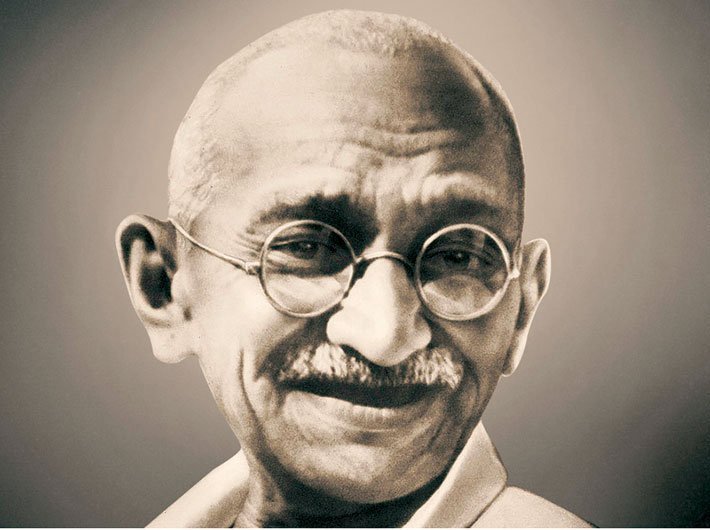
This year, as the nation commemorates the 75th death anniversary of Mahatma Gandhi on January 30, Rajesh Talwar, a prolific author who is also a legal advisor to the UN, is all set to release a play for children on non-violence chronicling the life of Mahatma Gandhi, ‘The Boy Who Became the Mahatma’ (Ponytale Books).
 This is reminiscent of Talwar’s recent ‘The Boy Who Wrote a Constitution’, introducing Dr. Ambedkar’s life and works to children, which received critical acclaim and was shortlisted for the PVLF Awards. The new work adds a contemporary feel to the modern-day relevance of Gandhi's life as a young man fighting discrimination in South Africa.
Here is an excerpt:
SCENE: 7
The year is 1893. The stage is divided into two sections. One section shows the interiors of a stationary train and the other a railway platform. Barrister Gandhi is wearing a tailored suit and seated in the first-class compartment as evidenced by a board hanging inside. The compartment is well-furnished, befitting the first class. A sign board on the railway platform gives out the name of the station as Maritzburg, which is where the incident took place. The platform is mostly deserted except for two Africans selling sundry items, creating the necessary ambience for a South African setting.
Gandhi: (seated inside the compartment and speaking aloud, a newspaper held in his hands) It’s all quiet here today. My client was willing to pay five shillings for bedding in the first class but I explained to him that it would be a waste of money.
Enter Station Attendant, a South African in uniform
Station Attendant: (loudly) Beddings anyone? Only five shillings. (looks around) Bedding for you, sah?
Gandhi: No, thank you. I am quite comfortable, thank you.
Station Attendant: (doffs his cap): Very well, sah, thank you.
Exit Station Attendant
Enter White Man, (a passenger)
Gandhi: (looks up from his paper) Good evening to you.
White Man: (clearly not happy to see Gandhi, and looks him up and down) Humph.
Exit White Man
Gandhi returns to reading his newspaper Enter White Man with Ticket Checker (TC)
TC: Hey, you!
Gandhi: Excuse me.
TC: Yes, you! I’m talking to you.
Gandhi: Yes (puts aside his newspaper) Did you wish to see my ticket?
TC: Yes, show it to me.
Gandhi brings out a first-class ticket from his coat pocket and gives it to the ticket checker
TC: Now where in the devil did you get this from?
Gandhi: By paying good money, how else?
TC: Yes, but I mean how did they sell it to you?
Gandhi: What do you mean?
TC: (shouting) I mean, that you’re a bloody darkie, that’s who you are. You may have money but your kind can’t be permittedto travel with thegentry.
Gandhi: (also raising his voice) My client purchased the ticket for me and I’ll have you know I’m a qualified barrister from the Inner Temple.
TC: (dismissively) Doesn’t matter where you qualified from, or what yourqualifications are. Your lot can’t be travelling with white folk. You better be moving to the van compartment; that’s the right place for the likes of you. Is that understood?
Gandhi: (angrily) Not at all. I have a first-class ticket and that’s how I travelled from Durban till here.
TC: That doesn’t matter. You were lucky to have been able to travel this far. You’re now in Maritzburg, the capital of Natal, and I’m the man who decides who sits where on thistrain
Gandhi: I insist on travelling in thiscompartment.
TC: (in a temper; raises his voice)You cannot. You must leave this compartment at once, or else I shall have to call a police constable to push youout.
Gandhi: (stands his ground) You may do so. I refuse to go out voluntarily.
Exit Ticket Checker. The white passenger remains standing inside glowering at Gandhi. A little while later the ticket checker returns and re-enters with a constable
TC: Constable, throw this darkie and his luggage out of the first class. He should be travelling in thevan.
The constable pushes a resisting Gandhi out of the compartment. He flings Gandhi’s briefcase and bag out as well. Gandhi is on the floor of the platform. His bag has opened and his belongings scatter all around
Constable: (rubs his hands in satisfaction) Good riddance to bad rubbish!
TC: (laughs) We won’t be seeing you trying to board the first class for some time, I imagine.
Gandhi: (shouts from the floor) All this will be changing, one day, I promise you!
Mumbai’s real estate market keeps growing, yet homeownership remains out of reach for much of its population. Three experts – urban researcher Hussain Indorewala, urban planner Vidyadhar Phatak and developer Kamlesh Thakur of NAREDCO Maharashtra, agree that simply constructing more apartments
US secretary of state Marco Rubio has said he was unfamiliar with the Wall Street Journal report suggesting Elon Musk had decided to throttle Starlink services in Ukraine, but rejected claims that Washington had ordered the restrictions to pressure Kyiv. “There was no
Breast cancer has become a public-health challenge in India. The greatest opportunity is to find cancers earlier. Artificial intelligence (AI) is opening a new era in breast cancer detection. AI systems can analyse mammograms and other breast-imaging studies, identify subtle abnormalities and assist radi
Indian agriculture is experiencing significant climate volatility, while the world economy seems to be in a highly volatile situation. Economic indices from various countries show that they need to recalibrate their strategies to withstand economic headwinds. In such a challenging situation, a country li
India’s southwest monsoon ended with a 13% rainfall deficit in 2026, its weakest performance in a decade, raising concerns over agricultural production, water security and the upcoming rabi season. With El Niño expected to persist into early 2027, experts warn that declining soil moisture, dep
For over a decade, India’s e-commerce story has rested on a simple premise: platforms connect buyers and sellers, while data fuels efficiency, personalisation, and scale. However, as the market matured, its structure has revealed a growing imbalance. E-commerce platforms, especially marketplace ent










