
PSU banks in sweet spot: Report

The stocks, particularly of the larger banks, can easily move up by another 30-40 percent, taking their market capitalisation higher

GN Bureau | October 31, 2017

#PSU   #PSU Banks   #Assocham  
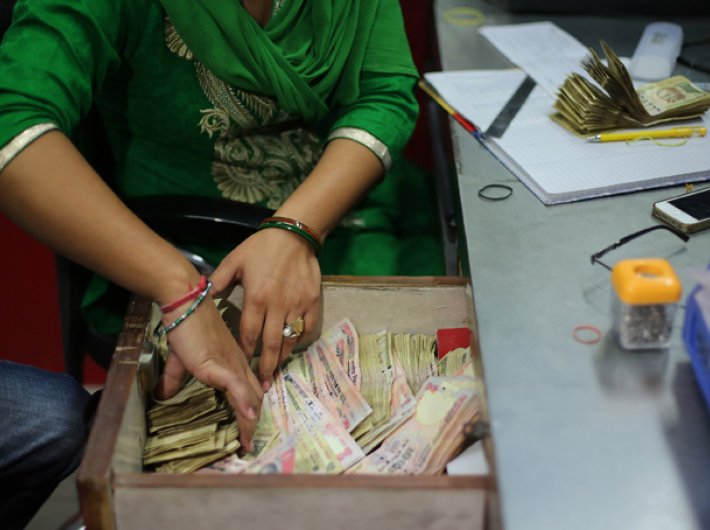
Representational image

If the change of perception for PSU banks, post the mega capital infusion scheme is any indication, dilution of government equity up to 52 percent in the state-owned lenders can fetch valuation much higher than the estimated potential of Rs 58,000 crore as provided in the Rs 211,000 crore re-capitalisation plan, said an Assocham report.

“As PSU banks have been given over-weightage following the government announcement of capital infusion, their valuations have already gone up between 20-30 percent in the first few days, even before unveiling of  details of the recapitalisation bonds and the reform roadmap.

“As the details emerge in the coming few weeks and months, these stocks, particularly of the larger banks can easily move up by another 30-40 percent, taking their market capitalisation commensurately high. This would surely mean, that if the banks are able to encash the sweet spot, they can easily raise much more than Rs 58,000 crore,” said the report.

The government holding in several banks is still well above the 52 percent mark, which had been decided to be maintained.  “It is a different matter that the money so raised by government dilution would accrue to the banks and not the exchequer. All the same, all this financial revamp would ultimately lead to a huge benefit to the government itself, in terms of higher market capitalisation. After all, the largest shareholder would still be the Government of India," said Assocham secretary general DS Rawat.

Besides, the chamber report said that once the uptick in lending resumes, there would be consequent advantages by way of higher economic growth and tax buoyancy.
 

Comments


Other News

Five ways to realise the potential of India’s handicraft and handloom sector

India`s economic ambitions are increasingly defined by the industries of the future. Semiconductors, electronics, artificial intelligence and advanced manufacturing dominate policy conversations. Yet one of India`s largest employment-intensive sectors continues to occupy a surprisingly marginal place in ec

Beyond toilets: Why open defecation persists in rural India

Despite the awareness campaigns on sanitation across India, open defecation (OD) is practised openly and widely in both rural and urban areas. Research shows that rural respondents are well aware of the negative impacts of OD, yet this awareness does not lead to toilet construction or use. In rural North I

What unpaid nation builders want from policymakers

The Supreme Court recently described homemakers as “nation builders” and fixed a notional monthly income of Rs 30,000 for them in motor accident compensation cases. The judgment was not about wages. It was about compensation. Yet it inadvertently raised a larger economic question: If a homemake

What the US–Iran peace deal means for India

After months of rising tensions, the United States and Iran have reached a memorandum of understanding called the "Islamabad Agreement." This agreement allows for the immediate reopening of the Strait of Hormuz without tolls and provides Iran with relief from sanctions, depending on its complianc

V. M. Tarkunde: A legal luminary par excellence

14 Lawyers: Portraits from The Bar By Raju Ramachandran  Juggernaut, 248 pages, Rs. 799  

The Cost of Obesity

The latest episode of Checks and Balances focuses on the ticking time bomb of obesity in India, and Geetanjali Minhas of Governance Now spoke with a panel of experts. You can watch the episode here: https://youtu.be/mH


Archives

Current Issue

Opinion

Facebook Twitter Google Plus Linkedin Subscribe Newsletter

Twitter







