The demand for separate cadre in respect of Arunachal Pradesh is necessary in present dynamic structures of administration.
In the politico-administrative set up of India, executives are a vital part and have been empowered to formulate policies and implement them for the welfare of the people. Executives are of two types. The first category belongs to political executives who are directly elected from the people and the other category is of permanent executives who are recruited through public service commissions. They help in execution of policies as decided by political executives.
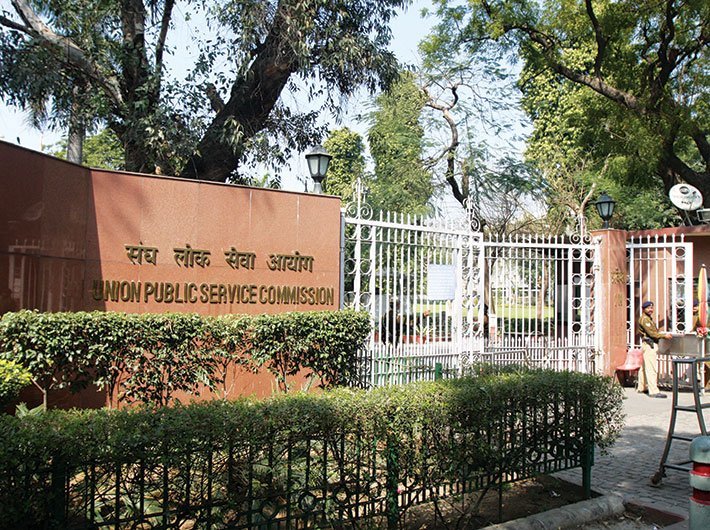
Through the UPSC examination, All India Service allocation is made in three services namely IAS (Indian Administrative Services), IPS (Indian Police Services) and IFS (Indian Forest Services) and officers are placed to serve in a particular cadre.
These officers are vested with huge responsibilities and they have proved their mettle in the administrative functioning of the system.
AGMUT is one of the important cadres in All-India Services and is a joint cadre serving Arunachal Pradesh, Goa, Mizoram and Union Territories. The other joint cadre is Assam and Meghalaya. The rest of the states have their own specific cadres. The joint cadre system is creating impediments in the road towards more efficient and effective governance which must be rectified by the government.
The demand for separate cadre in respect of Arunachal Pradesh is necessary in present dynamic structures of administration. Officers who spend a good amount of time in the state and understand it better in terms of administration are transferred to other location of AGMUT cadre, never to return back probably which creates gaps in administrative understanding. For instance, if an officer has served as an administrator in one of the districts of Arunachal Pradesh, then he/she has a better understanding of the existing scenario, which he/she developed over a period of time. But an officer of AGMUT cadre maybe directly transferred to other state/UT overlooking this fact. Officers having substantial experience are sometimes involved in very critical projects and they have to just leavethe state in case of transfers without adding anything concrete which they could have done, had they been in same state.
We can look at the problem through another lens also. For example, if an officer is serving in the state of Rajasthan, then he/she can be transferred within state only, maybe from Jaisalmer to Jodhpur. But the officer has understood the nuances of policies and implementation in the state of Rajasthan and he/she has good chance of serving the needs and aspirations of people with greater and detailed comprehension about the state. Thus an officer serving in a specific cadre can prove to be more effective and efficient. This is a serious loophole and needs our undivided attention which will improve overall policymaking scenario of the country and especially of the state of Arunachal Pradesh.
When the joint cadre was allotted to Arunachal Pradesh, then it was a new state and continued to be mainly under AGMUT which served UTs generally. But time has arrived now to consider a separate cadre for Arunachal Pradesh under All India Services which will only simplify administration and make governance more coordinated and collaborative in Arunachal Pradesh.
Even smaller states like Manipur, Tripura, Sikkim have their own separate cadre and have benefitted greatly by dedicated service of All India Service officers in their own cadres. A much larger Arunachal Pradesh (compared to these three states) does not have a specific cadre, which results in loss of officers and creates gaps which are very difficult to fill in rapidly. And the new officers who come, by the time they mature they are also sent somewhere else. Thus the government must act to provide a separate cadre to Arunachal Pradesh now. It is of urgent need to the state.
Few years back, the central government had separated cadres of Manipur and Tripura which has lesser All India Service officers as compared to Arunachal Pradesh. And even a separate cadre of Arunachal Pradesh will create a pool of senior officers who will better understand the nuances of public policy and execute decision making process with a lucid comprehension of the existing system. A large and diverse cadre like AGMUT can at times become messy and create more problems of transfer and postings rather than simplifying the administration.
Generally, north-eastern states are not preferred by officers (widely seen in the cadre preference order of AIS officers) to work and these are considered to be tough postings which is a big concern. Within AGMUT too, Delhi is considered to be the best posting and Arunachal Pradesh as one of the worst. If a separate cadre of Arunachal Pradesh is created, then we will have a dedicated team of officers who will be serving to the state in the best possible manner rather than trying to make attempts to get transferred outside the state.
A separate cadre for Arunachal Pradesh is not only the need of the hour but will also serve the longer purpose of creating officers who will be deeply attached to the welfare of the people of the “Land of dawn-lit mountains”.
(Ninong Ering is member of parliament from Arunachal East constituency. Abhishek Ranjan is a research and policy analyst)