Rajnath's rivals surrendered before the battle

But BJP president takes “mere formality” seriously, reaches out to small social groups

ajay

Ajay Singh | April 23, 2014


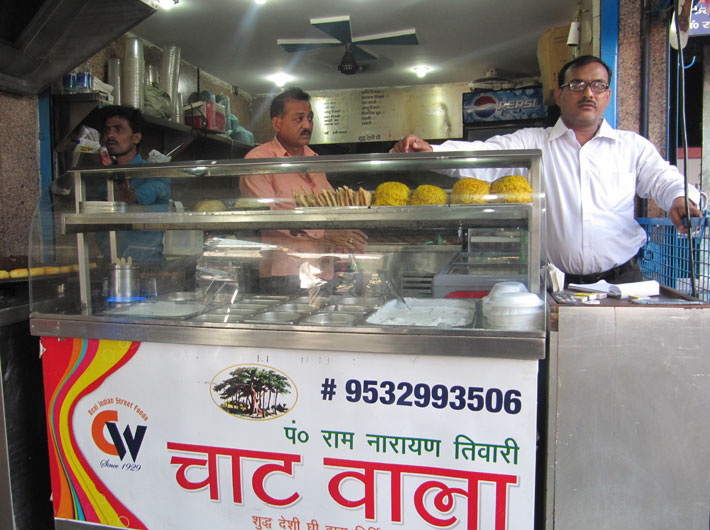
The famous Tiwari chaat stall on Lucknow’s Latouche Road.

As a student of physics in the Gorakhpur university, BJP president Rajnath Singh must have learnt Newton's Laws by rote. But as a practitioner of realpolitik, he would certainly have wished to reformulate the law on action and reaction.

Politics is rather a more complex and often irrational phenomenon, compared to physics. Singh realised this when he learnt that nearly 30,000-odd Sindhi voters of his constituency hold him responsible for marginalisation of BJP's patriarch LK Advani. The impression that Advani has been reduced to a Sindhi leader in Lucknow's political discourse is clearly an indication of absolute power shift in the new BJP. An astute politician that he is, Singh leaves nothing to chance. He called a meeting of Sindhis in Lucknow and pacified them with his sweet talk. At the same time, a request was also made to Advani to hold meetings in Lucknow to mobilise support for the BJP president. “You cannot ignore even the smallest social group,” said a party strategist.

In fact, Singh's strategy is aimed at roping in social groups like Sindhis, Sikhs and Khatris whose hostility or indifference could prove costly. As of now, he seems to have substantially succeeded in winning them over. Khatris, who have nearly one lakh votes, were alienated because of Lalji Tandon’s displacement from Lucknow, but they are now gravitating towards the BJP. As for Sikhs, they have felicitated Singh and his son Pankaj, after denying that honour to Congress candidate Rita Bahuguna Joshi.

“For all practical purposes, this election is ‘rasm adayagi’ (mere formality),” said Ibne Hasan, an eminent citizen of Lucknow who has seen the evolution of politics in Lucknow for close to five decades. Hasan's assessment of the political scenario is based not on cynicism but on critical inputs from the ground. “They surrendered much before the battle begins,” Hasan said, referring to Singh’s opponents.

A cursory visit to urban Lucknow's nerve centres would prove it beyond doubt that Singh is far ahead of his rivals. He has also visited Muslim clerics, thus effectively neutralising the possibility of intense polarisation. A small section of BJP supporters among Shia Muslims is not averse to siding with him.

At the same time, urban voters, comprising largely upper castes, seem to be in thrall of Modi mania. Ajay Tiwari, a prominent chaat stall owner at Latouche Road, said that though he had certain reservations about Rajnath Singh, he would vote for the BJP. “This is necessary for a larger cause,” he said with all seriousness. Obviously, Singh is also aware of Modi's influence on voters and is playing it to the hilt.

After a hectic day-long campaign till 12 midnight on Tuesday, he returned home, looked completely tired and drained, but still went on with his appointments with local satraps.

Asked how he felt after three phases of polls, he said, “This is a unique phenomenon that transcends even the JP movement.” As BJP president he apparently cannot afford to show slightest scepticism but he is cautious enough not to be guided by irrational exuberance as well. That explains his strategy not to ignore even small social groups like Sindhis even if the writing on the wall is all too clear.

Comments


Other News

“Indians, yet treated like outsiders”

Moving to Delhi-NCR for education can be an exciting experience for students from Northeast India. It gives us a chance to meet new people, experience a different culture and become more independent. But living away from home also comes with challenges that people who have not experienced them may not al

Import duty on major edible oils cut

The government has reduced the Basic Customs Duty (BCD) on major imported crude edible oils with a view to moderating domestic edible oil prices, providing relief to consumers and mitigating inflationary pressures arising from the sharp increase in international edible oil prices.  

From pyramid to platform: BRICS agenda for Global South

In his opening address at the 18th BRICS Summit in New Delhi on September 12, prime minister Narendra Modi did something India`s diplomacy has been building towards for three years: he moved the ‘Voice of the Global South’ from a slogan to a work plan. Addressing the leaders, he argued that t

How to realise the full transformative potential of PM-JAY

The Pradhan Mantri Jan Arogya Yojana (PM-JAY), a welfare scheme which covers approximately 45 crore beneficiaries across India, provides cashless health cover of Rs. 5 lakh per family per year. It is the largest health insurance scheme which helped crores of poor families by reducing out-of-pocket expend

The missing men in India`s family planning story

Every pregnancy requires two people. Yet India`s family planning programme continues to ask only one of them to bear almost all of its medical consequences. The newly released National Family Health Survey-6 (2023-24) confirms just how entrenched this asymmetry remains: 36.5% of currently married women a

`Development must be judged beyond GDP, with rights and justice at core`

Delivering the IXth Chief Justice M.C. Chagla Memorial Lecture on ‘Human Rights and Sustainable Development Goals’, in Mumbai Friday,  former Chief Justice of India Bhushan R. Gavai questioned whether conventional economic indicators such as gross domestic product (GDP), national income,

Upcoming Conferences


-->

Archives

Current Issue

Opinion

Facebook Twitter Google Plus Linkedin Subscribe Newsletter

Twitter