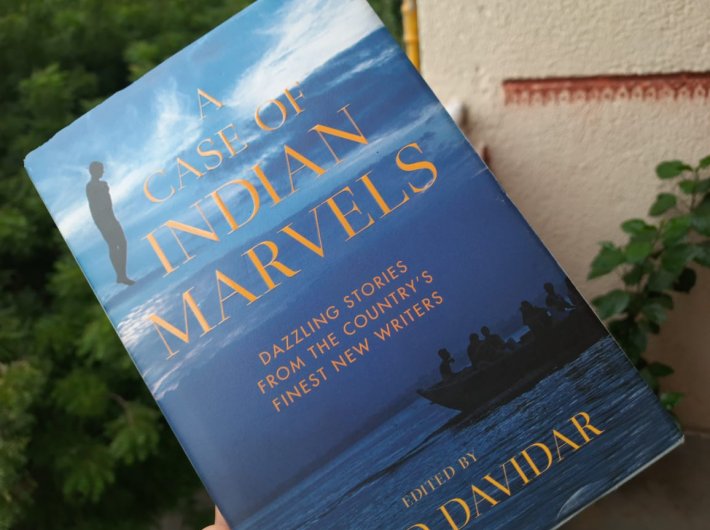
‘A Case of Indian Marvels’ gathers some dazzling stories – many bearing witness to our hard times
A Case of Indian Marvels: Dazzling Stories from the Country’s Finest Writers
Edited by David Davidar
Aleph, 390 pages, Rs 999
Change is the only constant, and India has always been doing so. Yet, after independence, if there was a year when the pace of change quickened more than ever before, it was in 1991. The ‘economic reforms’ metamorphosed the life of the nation. The way we made money and the way we spent differed a lot from the previous era. That change, with some unfathomable connection, led to many other changes in unforeseeable parts of our lives, down to moral attitudes too.
The more things change, it was said, the more they remain the ditto. But the second part started seeming like carbon copies, and then photocopies. The same but slightly different. This was bound to be reflected in creative pursuits. Premchand and other masters still speak to us, but their voice is fainter, tinged with a quaint charm. Contemporary authors speak to us in more urgent tones, with their markers of here and now. ‘A Case of Indian Marvels’, an anthology of short stories edited by David Davidar, thus, is a follow-up, a sequel to his previous ‘A Clutch of Indian Masterpieces’. The new work puts together forty of the best short fiction from writers born after 1981. These Forty Under Forty and those veteran masters of the previous volume present an unmatchable combination.
The new, first-of-its-kind collection excites the reader with its deft packaging – a beautiful cover, impressive production values, and putting together these talented youngsters in company with one another for the first time. It promises a great literary feast. That the reader comes out of the feast not wholly satisfied may be partly due to her own exaggerated expectations and partly due to limitations on the availability of quality translations from India’s own languages. All the same, the feast is going to be memorable for a while.
First, the pluses:
* Some of the more talked-about short stories of the recent years – for instance, Kritika Pandey’s Commonwealth Short Stories Prize winner ‘The Great Indian Tee and Snakes’ and Madhuri Vijay’s ‘Lorry Raja’ – appear in an Indian publication for the first time alongside the celebrated numbers such as Hansda Sowvendra Shekhar’s ‘The Adivasi Will Not Dance’ that are anthologized for the first time.
* The anthology does make space for regional languages – a story each from Malayalam, Gujarati, Bengali, Kannada and Telugu.
* More importantly, quite a number of stories here narrate incidents and processes that go into the making of what many call a New India. “The slow drip of sectarian hatred into the open veins of our society, and the all-out assault on liberal values and creative expression by an assortment of uneducated, illiberal thugs, often egged on by those at the top, will permanently reshape the country—and not for the better,” writes the editor in his excellent introduction.
But also consider:
* While the selection process, we are told, was elaborate and a much larger long-list was whittled down to 30, no entry from Hindi – the International Booker Prize-winner language – or Tamil, among others, is surprising. Moreover, from the languages that made the cut, some readers can think of far better entries (from, say, Aleph’s own ‘Greatest Stories Ever Told’ series).
* The “sectarian hatred” is certainly more pronounced these days, but it has not obliterated the other fault lines – of caste, class, gender and so on. While they get a good representation here, some readers may feel the caste question could have found more expression, especially when the Dalit literature id producing marvels after marvels.
* Hard times, according to the introduction, made Saadat Hasan Manto a good short story writer. The times are harder but no Manto is in sight yet. His openness to the material and resistance to imposing pre-conceived schemes on it is difficult to develop. The stories here with a political intent are heart-warming, recording this time for posterity, but whether they are doing so in “new, unsettling, and truthful ways” is debatable. Writing in a programmatic way, not to investigate or explore but to prove a point, have a facile structure leading to a QED in the last paragraph or the last sentence.
* The previous generation of IWE writers thought it necessary to explain Indian terms, such as ‘Bindi’ and ‘Daal’, to the reader. Some from this generation are going the other way, writing dialogues, comebacks and repartees in a diction that is foreign to their subaltern characters.
That makes this tome all the more indispensable, a must-read, for readers and writers to discuss the state of the short fiction in India. Even after the complaints, the reader is bound to devour this book, ticking off one story after another. If the basic credo of the short story, going by the Saunders manifesto, is keep the reader hooked to read the next line, well, each marvel in this collection passes the test.