
BJP’s income highest among all national parties: ADR

BSP, Trinamool didn’t spend much of its total income

GN Bureau | May 9, 2017

#BJP   #ADR   #donations   #Political funding   #Political Parties   #Election Commission  
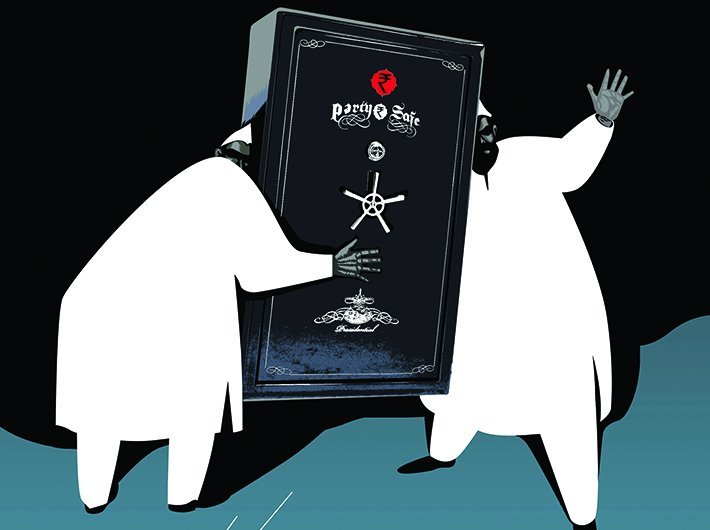
Representational illustration (Ashish Asthana)

The income of the Bharatiya Janata Party (BJP) during 2014-15 was highest among all national parties. The party had declared a total income of Rs 970.43 crore but is yet to submit its copy of income tax returns for 2015-16 to the Election Commission of India, showed an analysis of income and expenditure of national political parties for 2015-2016.

The analysis carried out by the Association by Democratic Reforms (ADR) showed that between 2014-15 and 2015-16, the income of All India Trinamool Congress (AITC) increased by 180.68% (Rs 22.26 crore) from Rs 12.32 crore to Rs 34.58 crore while the income of NCP decreased by 86.49% (Rs 58.51 crore) from Rs 67.65 crore to Rs 9.14 crore.

The income of BSP decreased by 57.68% (Rs 64.58 crore) from Rs 111.96 crore during 2014-15 to Rs 47.38 crore during 2015-16.
With regard to the total income and expenditure, BSP declared a total income of Rs 47.385 crore during 2015-16, but spent only 25% (Rs 11.90 crore) of the total income.

AITC declared a total income of Rs 34.578 crore during 2015-16, but spent only 39% (Rs 13.35 crore) of the total income.

NCP is the only party which has spent 19% more than its total income during FY- 2015-16. While the party’s income was Rs 9.14 crore, it incurred a total expenditure of Rs 10.84 crore.

The analysis showed that 5 out of 7 National Parties (BSP, NCP, CPM, CPI and AITC) have declared a total income of Rs 200.76 crore, collected from all over India.

CPM has shown the highest income amongst the national parties with a total income of Rs 107.48 crore during 2015-16. This forms 53.34% of the total income national parties, together during 2015-16.

BSP declared the second highest income of Rs 47.385 crore which forms 23.60% of the total income of the 5 national parties.

The ADR recommended that full details of all donors should be made available for public scrutiny under the RTI. Some countries where this is done include Bhutan, Nepal, Germany, France, Italy, Brazil, Bulgaria, the US and Japan. In none of these countries is it possible for 75% of the source of funds to be unknown.

Any party which does not submit its IT returns or donation statement to the ECI on or before the due date, their income should not be tax-exempted and defaulting parties should be derecognized, it added.
 

Comments


Other News

Why Swami Vivekananda is the pathfinder for our times

Swami Vivekananda for Our Times  Edited and compiled by Rajiv Sikri, with Introduction by S. Gurumurthy Rupa Publications, 552 pages, Rs 695  

Five ways to realise the potential of India’s handicraft and handloom sector

India`s economic ambitions are increasingly defined by the industries of the future. Semiconductors, electronics, artificial intelligence and advanced manufacturing dominate policy conversations. Yet one of India`s largest employment-intensive sectors continues to occupy a surprisingly marginal place in ec

Beyond toilets: Why open defecation persists in rural India

Despite the awareness campaigns on sanitation across India, open defecation (OD) is practised openly and widely in both rural and urban areas. Research shows that rural respondents are well aware of the negative impacts of OD, yet this awareness does not lead to toilet construction or use. In rural North I

What unpaid nation builders want from policymakers

The Supreme Court recently described homemakers as “nation builders” and fixed a notional monthly income of Rs 30,000 for them in motor accident compensation cases. The judgment was not about wages. It was about compensation. Yet it inadvertently raised a larger economic question: If a homemake

What the US–Iran peace deal means for India

After months of rising tensions, the United States and Iran have reached a memorandum of understanding called the "Islamabad Agreement." This agreement allows for the immediate reopening of the Strait of Hormuz without tolls and provides Iran with relief from sanctions, depending on its complianc

V. M. Tarkunde: A legal luminary par excellence

14 Lawyers: Portraits from The Bar By Raju Ramachandran  Juggernaut, 248 pages, Rs. 799  


Archives

Current Issue

Opinion

Facebook Twitter Google Plus Linkedin Subscribe Newsletter

Twitter







