
Will serve as a hub for other incubators operating within the CSIR Labs: Dr Jitendra Singh

Geetanjali Minhas | January 18, 2025 | Mumbai

India is home to many small and big industries where research is carried out, yet many innovators are not able to find a platform to bring their ideas into fruition. Despite having a vast network of government laboratories that perform ground breaking research, these innovations struggle to translate into market products and services due to regulatory requirements. Moreover, the concept of incubation centres too has not met with much success.
To overcome these barriers, the Council of Scientific and Industrial Research (CSIR) on Friday launched a one-of-its-kind, state-of-the-art Innovation Complex at Andheri in Mumbai which will also function as the corporate centre of CSIR.
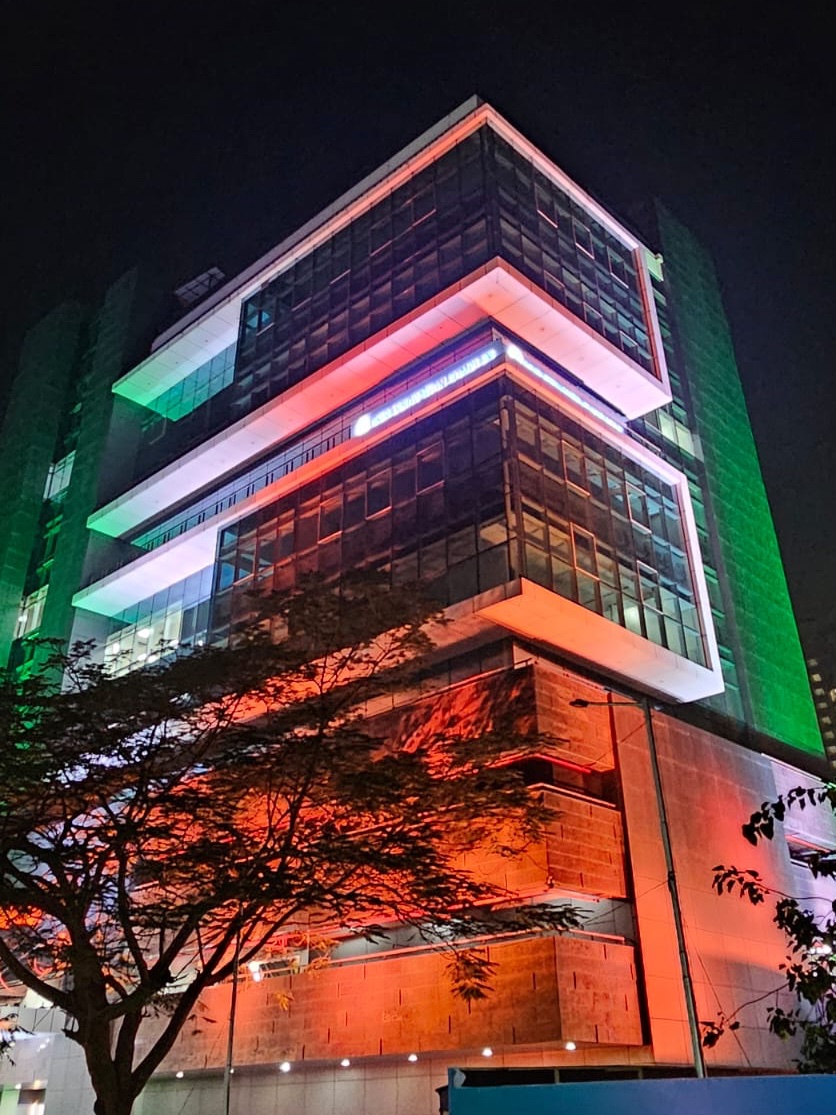 The CSIR Innovation Complex has been designed to bridge the critical gap between lab-scale research and industry implementation. It is equipped with scientific infrastructure and expertise aimed at fostering translational research and catalyzing faster technology transfers for start-ups, MSMEs, and CSIR labs. The facility features 24 ready-to-move incubation labs, furnished office spaces, and advanced equipment, catering to the diverse needs of key industrial sectors, including healthcare, chemicals, materials, and energy. CSIR-ICM will serve as a hub for business development, regulatory compliance, and innovation support for start-ups, MSMEs, public-funded research institutions, and CSIR labs.
In his virtual address, union minister of state for science and technology Dr. Jitendra Singh said that CSIR has been addressing the country’s national needs through its innovative research, industrial and societal partnerships, entrepreneurship, capacity building, and policy formulation. He said that IC-Mumbai will be used to strengthen the business development and tech-transfer activities of CSIR labs, leveraging the unique opportunities offered by Mumbai which will serve as a hub for other incubators operating within the CSIR Labs.
The Minister also stated that India has the third-largest Start-Up ecosystem in the world, with over 100 Unicorns that stand as testaments to the nation’s entrepreneurial spirit.
“CSIR-IC Mumbai is a state-of-the-art innovation-cum-incubation facility with high-end scientific infrastructure and expertise, designed to foster critical translational unmet needs for start-ups, MSMEs and CSIR labs and to catalyze faster tech”, he said.
CSIR director general Dr. N. Kalaiselvi stated that every year 10-15 technologies are developed by CSIR which are globally appreciated. She added that that not just in India but CSIR is collaborating internationally as well.
She also said that that the new innovation complex will bring R&D infrastructure, industries and innovators at single platform where they would discuss the ideas, conceptualize the innovations and then bring them in the market for wider use.
“The establishment of Innovation Complex, Mumbai is very well aligned with the Government of India’s vision of ‘Viksit Bharat 2047’ in the area of science and technology by bridging the gap between technology, industry and society” said Dr. Kalaiselvi
Dr. V.K. Paul, member, Niti Aayog, recalled the untiring efforts of the CSIR team during the pandemic. He appreciated CSIR for developing CRISPR diagnostic test being the first in the world for development of oxygen concentrators and sending it to every remote corner of the country.
Dr. V.K. Saraswat, member, Niti Aayog, advised to take innovation to industry rather than calling industry to innovation.
The event facilitated 50 technology transfers from CSIR institutes to startups, MSMEs and institutions. CSIR Innovation Complex (C-ICM) signed MOAs with various institutions to boost innovation and entrepreneurship. These include partnerships with IIT Bombay’s SINE, iCreate, NRDC, BCIL, and IPA to support start up incubation, mentorship, technology development across various sectors, fostering joint R&D and capacity building.
CSIR has a network of 37 national laboratories, 39 outreach centres, and three units with a pan-India presence. It covers a wide spectrum of science and technology ranging oceanography, geophysics, chemicals, drugs, genomics, biotechnology and nanotechnology to mining, aeronautics, instrumentation, environmental engineering and information technology.
Mumbai’s real estate market keeps growing, yet homeownership remains out of reach for much of its population. Three experts – urban researcher Hussain Indorewala, urban planner Vidyadhar Phatak and developer Kamlesh Thakur of NAREDCO Maharashtra, agree that simply constructing more apartments
US secretary of state Marco Rubio has said he was unfamiliar with the Wall Street Journal report suggesting Elon Musk had decided to throttle Starlink services in Ukraine, but rejected claims that Washington had ordered the restrictions to pressure Kyiv. “There was no
Breast cancer has become a public-health challenge in India. The greatest opportunity is to find cancers earlier. Artificial intelligence (AI) is opening a new era in breast cancer detection. AI systems can analyse mammograms and other breast-imaging studies, identify subtle abnormalities and assist radi
Indian agriculture is experiencing significant climate volatility, while the world economy seems to be in a highly volatile situation. Economic indices from various countries show that they need to recalibrate their strategies to withstand economic headwinds. In such a challenging situation, a country li
India’s southwest monsoon ended with a 13% rainfall deficit in 2026, its weakest performance in a decade, raising concerns over agricultural production, water security and the upcoming rabi season. With El Niño expected to persist into early 2027, experts warn that declining soil moisture, dep
For over a decade, India’s e-commerce story has rested on a simple premise: platforms connect buyers and sellers, while data fuels efficiency, personalisation, and scale. However, as the market matured, its structure has revealed a growing imbalance. E-commerce platforms, especially marketplace ent










