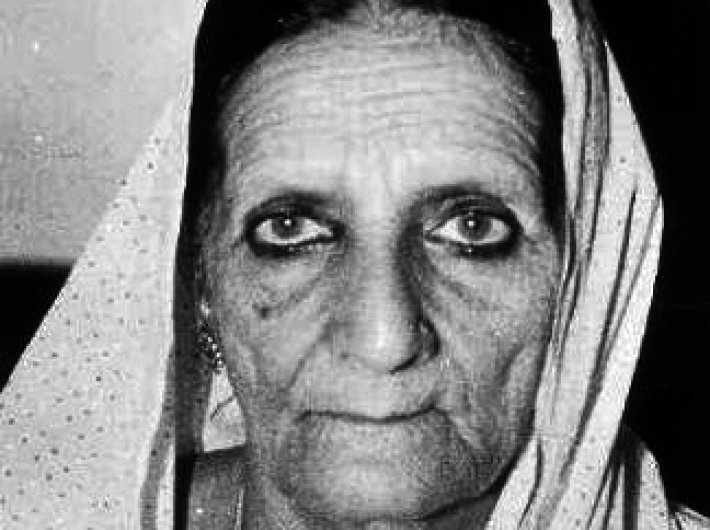
History could have repeated itself as a farce, but in the triple talaq case today, there has been no replay. A historic blunder has been undone, though it has taken three decades.
The supreme court has once again taken a stance in favour of individual freedom and against fundamentalism – just as it did in 1985, when it declared triple talaq invalid in the Shah Bano case. Justice YV Chandrachud had to emphasise the moral underpinning of his verdict in order to hedge against charges of religious bigotry.
The country was then passing through tumultuous times. Prime minister Indira Gandhi was assassinated in 1984, triggering an orgy of communal violence and killings in Delhi, Bokaro, Kanpur and other parts of the country.
Her son Rajiv Gandhi with his charming smile was the new crown prince who got democratic anointment by winning elections with an unprecedented number of seats. The SC decision came against a political backdrop that would have settled the matter once for all. Progressive Muslims were quite enthusiastic about the verdict which was seen more as a gender-equality issue rather than religious issue.
Rajiv as prime minister had then chosen Arif Mohammad Khan as one of his trusted lieutenants to articulate views on Muslim issues. And Khan, during a debate in parliament, spoke eloquently about the progressive march of Muslims. But that was the end of the matter. Rajiv soon capitulated before the Muslim fundamentalists and brought in a law in 1986 that overturned the SC verdict. A frustrated Khan resigned – but not without reciting an Urdu couplet:
Tu idhar udhar ki baat na kar, yeh bata ke kaafila kyon loota,
Mujhe rahjano se gila nahin, teri rahbari ka sawaal hai
[Don’t talk about this and that, tell us who looted the caravan. We don’t have any complaint against passers-by, but your leadership is in question.]
With this couplet, Khan pinned the blame squarely on Rajiv for giving in to Islamic fundamentalism. Khan maintains to this day that Rajiv’s decision was a great setback for the Muslim community’s embrace of secular and progressive values. Subsequently he chose a different path.
In fact, with the benefit of hindsight that gives you perfect vision, it can be said that if Rajiv had not overturned the Shah Bano verdict, the Ayodhya-Ram Janmabhoomi campaign would not have gained traction. And those watching the political developments of those times would testify that Rajiv’s folly in the Shah Bano case was the prime cause resurgence of the Hindu nationalism.
If you have any doubt, please refer to this anecdote usually recounted by LK Advani, the chief architect of the Ayodhya movement. Just after the Shah Bano verdict, Rajiv came under intense pressure from Muslim fundamentalists who interpreted the verdict as interference in their religious beliefs. Syed Shahabuddin, an ex-IFS officer, was leading the front against the government and rallying fundamentalists against the verdict. Rajiv came to see Advani on a courtesy visit, and sought his advice. And Advani gave him the right advice of not capitulating before mullahs and fundamentalists as such a move would take the country on a different political trajectory.
Needless to say, Rajiv chose to ignore Advani and introduced the legislation in parliament that overturned the verdict. With brute majority, his government steamrolled the opposition. One mistake led to another, and Rajiv’s remaining term, till 1989, became a saga of dalliances with communalism of all hues. In order to pacify Hindus who were upset with his capitulation in the Shah Bano case, he persuaded the then Uttar Pradesh chief minister Vir Bahadur Singh to open the locks of the temple within the Babri mosque in Ayodhya in February 1986. This was followed by the foundation laying ceremony at the disputed site, ostensibly at his instance.
There is no denying the fact that Rajiv had sown seeds of the Congress’s destruction in this successive action. The rise of the RSS-BJP-VHP combine, and their emergence later as the principal pole of Indian politics can be traced back to these complex political events.
The supreme court’s decision on August 22 to invalidate triple talaq has once again reaffirmed the judicial and legal tenability of the Shah Bano case. History is always replete with instances where ‘if’ becomes quite critical. In this context, if Rajiv had not surrendered before Muslim fundamentalists and allowed the judicial verdict to prevail, the trajectory of India’s politics would have certainly been different. It would not have been bogged down by the polarized secularism/communalism debate or the Babri mosque/Ram Janmabhoomi developments. And perhaps the Congress would not have lost its political primacy.