
Kovind said BJP wants to shed upper caste party image: WikiLeaks

NDA’s presidential candidate predicted in 2005 that caste-based discrimination will exist for at least the next 50-100 years in India

GN Bureau | June 21, 2017

#Dalit   #Caste   #Presidential Elections   #Ram Nath Kovind   #BJP  
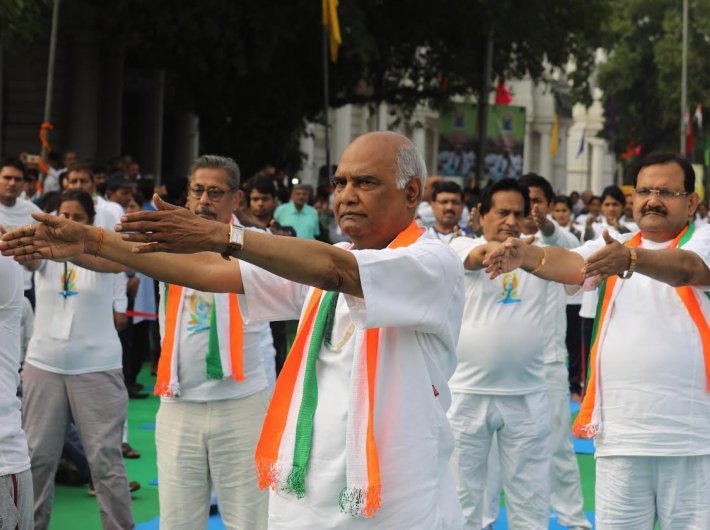
NDA presidential candidate Ram Nath Kovind

 Ram Nath Kovind, the presidential candidate of the BJP-led National Democratic Alliance (NDA), said in 2005 that his party is determined to help dalits and shed the image that it is only an "upper caste party". 

 
A US embassy document – ‘Socioeconomic future of Indian dalits remains bleak’ quoted Kovind as saying that only a nationalist party like the BJP will succeed in fighting discrimination against dalits, as India cannot become a world power until dalits and low-caste persons are brought up to the level of the rest of society. The document was part of the many that became public under the WikiLeaks campaign.
 
He told the embassy interlocutors that the true basis of discrimination is economic in nature rather than caste-based, as the "haves discriminate against the have-nots" and use the caste system to perpetuate differences between economic groups. 
 
“Comparing the caste system to the trade guilds in feudal Europe (in that certain groups performed specific jobs), he added that under the caste system persons acquire their trade at birth, while the guilds allowed job mobility.  Caste factors are now used to protect jobs and livelihoods more than anything else,” argued Kovind, who then headed the BJP’s dalit cell.
 
The confidential document dated June 22, 2005 said: “Embassy interlocutors report that after one year of UPA rule, limited government efforts to improve dalit (formerly called "untouchables") socioeconomic status have shown little success, ensuring that they continue to face severe economic and social discrimination.  Government reservation laws do not extend to the private sector, the largest and fastest growing segment of the economy.  Most experts believe the key to ending discrimination is a comprehensive education campaign starting at the primary level to teach acceptance of dalits, a topic completely absent from India's public school system.”
 
Kovind, who was then a Rajya Sabha member, said that “open discrimination against dalits has decreased dramatically over the last decade, while the number of persons who genuinely care about helping dalits has increased.  He maintained that while discrimination persists in the housing sector, employment decisions are usually free from bias.”
 
He also asserted that the current legislation has to a large degree been successful in protecting dalit rights, “but that India still has work to do to end discrimination, citing increasing dalit access to primary education as a place to start”.
 
“Kovind predicted that caste-based discrimination will exist for at least the next 50-100 years in India. He suggested that since the Hindu religion condones caste, it will take longer for the GOI to end caste discrimination in India than it will take to eradicate racial discrimination in the US.
 
“Kovind stated that the BJP favors reservations in the private sector and will pressure the UPA government to institute them.”

Comments


Other News

Dharmendra Pradhan tenders resignation

Dharmendra Pradhan, education minister at the centre of the storm of the NEET paper leak, offered his resignation to the prime minister on Saturday.   He posted a two-page letter on X, saying he was pained by the events of the last ten days. "This is not a matter of personal

Cabinet approves scheme of chemical parks

The union cabinet chaired by the PM has approved Bharat Audyogik Vikas Yojana Rasayan or BHAVYA - Rasayan Scheme for establishing three dedicated Chemical Parks in the country. The Scheme was announced in the Union Budget of FY 2026–27.   The Scheme will have a total financ

Anurag Jain, IAS appointed as Chief Executive Officer, NITI Aayog

 Anurag Jain, a 1989-batch IAS officer of the Madhya Pradesh cadre, has been appointed as the Chief Executive Officer (CEO) of NITI Aayog for a two-year term after serving as the Chief Secretary of Madhya Pradesh. A distinguished administrator with extensive experience in infrastructure, industrial de

Shri Ashok Barnwal, IAS has been appointed as the Chief Secretary of Madhya Pradesh

 Ashok Barnwal, a 1991-batch IAS officer of the Madhya Pradesh cadre, has been appointed as the Chief Secretary of Madhya Pradesh, succeeding Anurag Jain following his appointment as CEO of NITI Aayog. Prior to assuming the state`s top bureaucratic position, Barnwal served as Additional Chief Secretar

PM announces fast-track courts for paper leak cases

Prime minister Narendra Modi on Thursday stated that the government has decided to set up fast-track courts to ensure swift and stringent punishment for those involved in paper leaks. Emphasising that nothing is more important than the welfare and future of the youth, he noted that h

Making India’s textile & apparel sector sustainable

India’s textile and apparel sector sits at the heart of the economy but is constrained by traditional manufacturing approach. It contributes close to 2% of GDP and around 11% of manufacturing gross value added, with GDP share expected to reach 5% by the end of the decade. The sector employs around 45

Upcoming Conferences


Archives

Current Issue

Opinion

Facebook Twitter Google Plus Linkedin Subscribe Newsletter

Twitter






