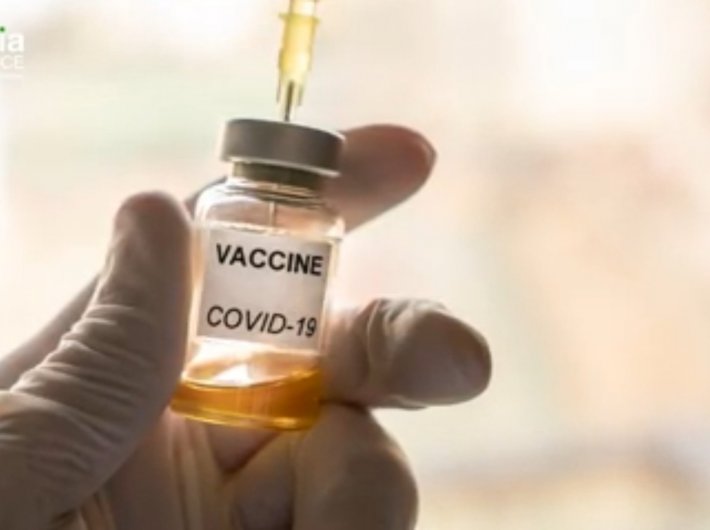
Findings: Covishield™ consistently demonstrated more robust immune responses compared to Covaxin®
A study by a consortium of eleven institutes, led by scientists from the National Centre for Biological Sciences (NCBS), Bengaluru, compares the immunogenicity of Covishield(™) and Covaxin® -- two primary COVID-19 vaccines widely used in India. The findings of the study offer valuable insights into the quality and quantity of immune responses induced by these vaccines against SARS-CoV-2, with significant implications for shaping future vaccination strategies. The study titled “Immunogenicity of SARS-CoV-2 vaccines BBV152 (COVAXIN®) and ChAdOx1 nCoV-19 (COVISHIELD™) in seronegative and seropositive individuals in India: a multicentre, nonrandomised observational study” has been published in the journal The Lancet Regional Health Southeast Asia.
This comprehensive study, carried out from June 2021 to January 2022, involved assessing 691 participants aged between 18 and 45 years from Bengaluru and Pune. It examined their vaccination records and monitored their immune responses at different intervals, both prior to and following vaccination, NCBS said in a statement on Wednesday.
“Follow-up studies on vaccine immunology and the analysis of immune protection factors were lacking and, there's a scarcity of comparative studies on these two vaccines. This is one of the very few studies that not only investigates the immune responses of participants after vaccination but also considers their immune history prior to vaccination,” explained Dr. Mangaiarkarasi Asokan, lead author of the study and former programme head, Vaccine Immunology Studies-Indian Outbreak-response Network (VISION).
Key findings from the study are:
• Covishield™, leveraging a virus vector to deliver the spike protein of the coronavirus, consistently demonstrated more robust immune responses compared to Covaxin®, an inactivated virus vaccine. Notably, Covishield™ exhibited near-complete immune response in the majority of participants, whereas the response to Covaxin® was variable, particularly among those inoculated before the emergence of the omicron variant.
• Covishield™ induced higher antibody levels in both seronegative (individuals without prior exposure) and seropositive (individuals with prior exposure)subjects, suggesting a more potent and enduring immune response.,
• Covishield™ elicited a higher number of T cells compared to Covaxin®, indicative of a stronger immune response.
• Covishield™ consistently exhibited higher level of antibodies against various virus strains compared to Covaxin®, suggesting its potential superior protection against variants such as omicron.
Commenting on the study, Prof. Satyajit Mayor, scientist, NCBS-TIFR, remarked, "This study was done at the height of the pandemic and reflected a collective sentiment to bring evidence-based decision making to the outcomes of vaccination in the Indian population, using two indigenous vaccines that were rolled out very quickly for the Indian population. The creation of a biorepository from the 15-month longitudinal study is invaluable and the analysis of the data and exploring the collected bioresources will inform future immunizations strategies, at least for Covid. Finally, the outcome of the study where the Covishield vaccine was shown to outperform Covaxin in all respects, should have important implications to strategize future vaccination drives."
These findings hold profound implications for future vaccination strategies, emphasizing the critical importance of continued surveillance of vaccine performance, particularly in the face of evolving viral variants. As the global community continues its battle against COVID-19, informed decision-making based on comprehensive research is imperative to safeguarding public health and ensuring optimal population protection.
This study represents a distinctive partnership between academic institutions and hospital research centers under the VISION (Vaccine Immunology Studies-Indian Outbreak-response Network) consortium. Funding was provided through Corporate Social Responsibility grants from Hindustan Unilever Limited and Unilever India Pvt. Ltd.
Prof. L.S. Shashidhara (Centre Director, NCBS) said, “This is first of its kind population-level immunological study on vaccines, post-deployment, particularly when the target virus is still spreading and evolving. Such studies need serum samples from diverse subjects representing genetic, geoclimatic and nutritional diversity and innovative study design and rigorous statistical methods. No one single organisation can undertake such a study. We are grateful to all our partners and indebted to Hindustan Unilever for their generous funding. Results of this study so far and additional research that we are pursuing will have major inputs for future vaccine strategies as a public health program.”
Building on Prof. Shashidhara’s point, Dr. Asokan emphasized the benefits of multiple institutions pooling their expertise, knowledge, and facilities to achieve these findings. She highlighted, "these analyses necessitate networks of laboratories for testing. VISION was established with the aim of creating such networks capable of producing high-quality data in a coordinated manner."
Apart from NCBS, the participating institutions in this study were Christian Medical College, Vellore, Bangalore Baptist Hospital, Bengaluru, King Edward Memorial Hospital Research Centre, Pune, National Centre for Cell Sciences, Pune, National Chemical Laboratory, Pune, Pune Knowledge Cluster, Pune, St. John’s Research Institute, Bengaluru, Symbiosis University Hospital and Research Centre, Symbiosis Medical College for Women, Symbiosis School of Biological Sciences, Symbiosis International (Deemed University), Pune, Institute for Stem Cell Science and Regenerative Medicine, Bengaluru, and Indian Institute of Science Education and Research-Pune, Pune.