Parikrama politics: UP goes around in circles

It is 1990s all over again as VHP and Mulayam play dangerous games

ajay

Ajay Singh | August 23, 2013


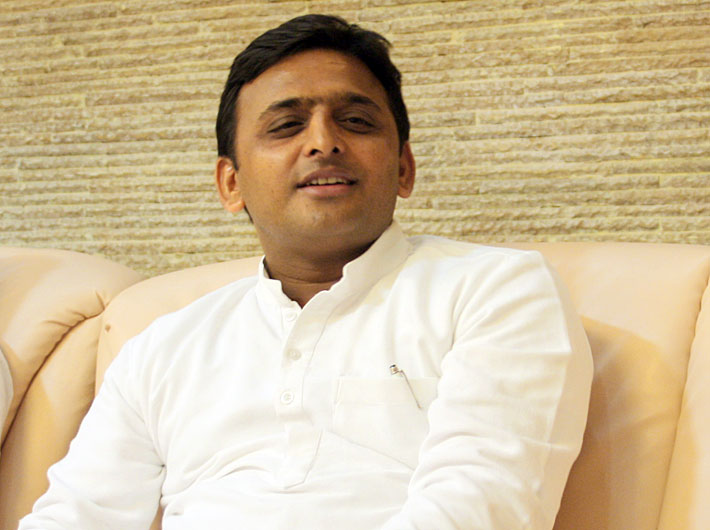
Chief minister Akhilesh Yadav

The problem with religious revivalists has always been that they rarely come up with original ideas. That is exactly what has happened in Uttar Pradesh as the Akhilesh Yadav government has decided to ban the parikrama, or circumambulation, around Ayodhya that has been planned by some Vishwa Hindu Parishad (VHP) activists.

Circumambulation around a religious place is an age-old ritual practice of Hinduism. Such circumambulation is regularly performed around Mathura, Kashi and Ayodhya by devotees. The proposed 20-day yatra from August 25, covering 84 kos (or nearly 200-odd kms – and hence the name ‘choryasi kos’) passes through all the districts adjoining Faizabad where Ayodhya is located.

The VHP did not hit upon a novel idea when its leaders and activists decided to take out the 84 kos parikrama. They are merely making a desperate move to revive a local ritual which was gradually fading away. There was nothing original about it. Similarly, the manner in which the Samajwadi Party (SP) regime banned the yatra and cried hoarse about not letting the communal forces have a field day in UP has a ring of familiarity around it.

The decision to ban the parikrama was certainly necessitated more by political considerations than administrative reasons. Just a day before the parikrama was to be launched, the administration was geared to make adequate arrangements. However, at the last minute it was decided to ban the yatra and deny entry into Faizabad to any person having the slightest resemblance to a sadhu. This decision provoked reactions on expected lines as the VHP once again sough to whip up passions by talking of "persecuted Hinduism", a convenient ploy to mobilise Hindus in the state. On the other hand, this gives enough scope for SP chief Mulayam Singh Yadav to emerge as the saviour of Muslims against the backdrop of Gujarat chief minister Narendra Modi’s projection as the BJP's prime ministerial candidate.

There is little doubt that UP has been passing through a rough patch on account of juvenile administration of the Akhilesh Yadav and increasing criminalisation of the political culture. What appears sinister is the frequency with which conflicts of communal nature have been happening all around the state. The state intelligence headquarters is believed to have collected reports of over 100-odd minor incidents of communal nature across the state that went unreported. But the figure is indicative of the tinderbox situation in which the country's largest state is placed. This becomes rather scary if one takes into account nearly 40-odd riots that took place all over the state ever since Akhilesh Yadav took the reins.

If one recalls the 1990s when the Ram temple issue was at its peak and the state was intensely polarised on communal lines, today's scenario seems to be running on a familiar script. If the state is pushed towards intense polarisation, two key players - the RSS/VHP/BJP and Mulayam Singh Yadav - expect windfall gain at the expense of their rivals. Sadly this cynical calculation has become integral to politics being played out in UP. 

Comments


Other News

RBI pauses to assess inflation risks, policy transmission

The Reserve Bank of India (RBI) has begun the new fiscal year with a calibrated pause, keeping the repo rate unchanged at 5.25 per cent in its April Monetary Policy Committee (MPC) meeting. The decision, taken unanimously, reflects a shift from aggressive policy action to cautious observation after a signi

New pathways for tourism growth

Traditionally, India’s tourism policy has been based on three main components: the number of visitors, building tourist attractions and providing facilities for tourists. Due to the increase in climate-related issues and environmental destruction that occurred over previous years, policymakers have b

Is the US a superpower anymore?

On April 8, hours after warning that “a whole civilisation will die tonight,” US president Donald Trump, exhibiting his unique style of retreating from high-voltage brinkmanship, announced that he agreed to a two-week ceasefire with Iran. The weekend talks in Islamabad have failed and the futur

Machines communicate, humans connect

There is a moment every event professional knows—the kind that arrives without warning, usually an hour before the curtain rises. Months of meticulous planning are in place. And then comes the call: “We’ll also need a projector. For the slides.”   No email

Why India is entering a ‘stagflation lite’ phase

India’s macroeconomic narrative is quietly shifting—from a rare “Goldilocks” equilibrium of stable growth and contained inflation to a more fragile phase where external shocks are beginning to dominate domestic policy outcomes. The numbers still look reassuring at first glance: GDP

Labour law in India: A decade of transition

The story of labour law in India is not just about laws and codes, but also about how the nation has continued to negotiate the position of the workforce within its economic framework. The implementation of the Labour Codes across the country in November 2025 marks a definitive endpoint in the process. Yet


Archives

Current Issue

Opinion

Facebook Twitter Google Plus Linkedin Subscribe Newsletter

Twitter