
Plug the loopholes and get back black money

Panama Papers leak brings focus again on politically sensitive and economically urgent issue

rahul

Rahul Dass | April 5, 2016 | New Delhi

#Amitabh Bachchan   #Narendra Modi   #NDA   #economy   #black money   #Panama Papers  


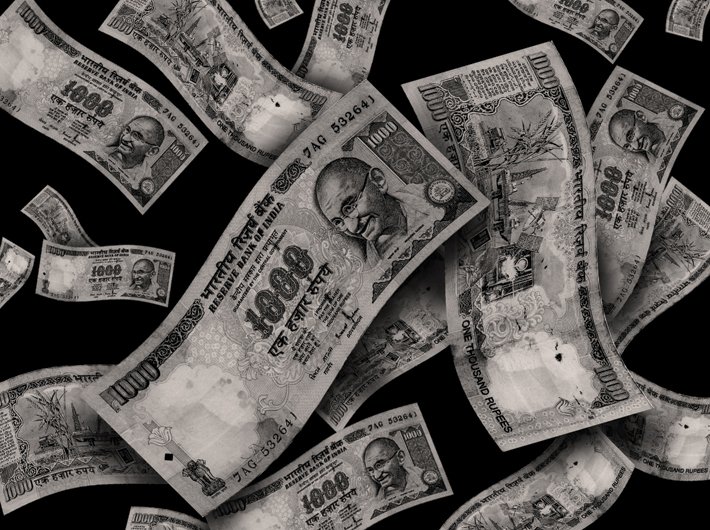
Filmstars and business tycoons are among the 500 Indian names that were revealed through the Panama Papers, which are over 11 million leaked documents – bringing into focus black money, a politically sensitive and economically urgent issue that has triggered considerable debate in the recent past.

Celebrities like Amitabh Bachchan and his daughter-in-law Aishwarya Rai as well as business tycoons like DLF founder KP Singh and IndiaBulls promoter Sameer Gehlaut feature in the huge cache of documents from Mossack Fonseca based in Panama, a country whose image is that of a haven for money laundering.

The Indian Express expose has once again shown that unaccounted-for wealth stashed abroad continues to be a bane for the country, despite promises during the heated campaign ahead of the general election that brought the NDA to power in 2014.

The Congress has repeatedly referred to prime minister Narendra Modi’s election campaign speeches in which he had said that black money to the tune of Rs 80 lakh crore was stashed abroad and his government would bring it back in 100 days of coming to power. He had also reportedly hinted that the repatriated money would be enough to deposit Rs15 lakh into the bank account of every Indian.

The NDA government did put in an effort that saw the passage of the black money bill. But that may not be enough to get black money that is hidden away from the prying eyes of tax sleuths.

Those who succeeded in avoiding taxes in India have been able to exploit the loopholes, which needs to be plugged.

The decision taken by the government to form a multi-agency group including the Financial Intelligence Unit, CBDT and RBI is a step in the right direction – with a caveat. It can also be a kneejerk reaction following the damning Panama Papers that have once again shown that all is not well without our financial system.

There are only guesstimates with regard to black money. A study by industry body Assocham says nearly $2 trillion or Rs 120 lakh crore of Indian black money is stashed overseas. That is more than the country's nominal GDP, which stood at Rs 114 lakh crore or $1.9 trillion in 2013-14. The numbers are simply mind-boggling.

Incidentally, as India struggles to bring back black money, Panama itself has not benefitted as the country has the second worst income distribution in Latin America—and about one-fourth of the population lives in poverty.


Comments


Other News

Why civilization is a precarious thing

The Decline of Hindu Civilization: Lessons from the Past By Shashi Ranjan Kumar Rupa Publications, 416 pages, Rs 995

End of an era: BJP poised to rule Mumbai after 25 years

The BJP-led Mahayuti alliance was set for a decisive victory in the Maharashtra municipal corporation elections, consolidating its dominance across Maharashtra’s urban landscape. As per the latest trends from the vote counting on Friday afternoon, the state`s ruling coalition was leading in 19 of the

Startup India initiative: A decade of building India’s innovation backbone

* With over 2 lakh DPIIT-recognised startups as of December 2025, India stands firmly as one of the world’s largest startup ecosystems. * A decade of Startup India has built a full-lifecycle support system spanning ideation, funding, mentorship, and scale-up. * Around 50% of DPIIT-r

How toll policies are redefining the highway journeys

With the phenomenal growth in National Highways, queues at toll plazas used to affect commuters. However, over the last decade, tolling has undergone a major technological transformation, bringing faster movement and significant ease for road users. Building on this progress, year 2025 saw further people-c

From vulnerabilities to empowerment: Building resilience for small and marginal farmers

India’s small and marginal farmers are at the centre of a paradox in agrarian economy. They are the backbone of the food economy, but they are the most vulnerable stakeholders within agricultural economy. Among the 126 million farmers in India today, nearly makes 86% operate on small and marginal hol

Concerns over Mumbai air pollution ahead of Marathon

Environmental organisation Awaaz Foundation has flagged serious concerns over deteriorating air quality in Mumbai and the potential health risks it poses to participants of the Tata Mumbai Marathon scheduled for January 18. It has urged civic and pollution control authorities to conduct advance air quality


Archives

Current Issue

Opinion

Facebook Twitter Google Plus Linkedin Subscribe Newsletter

Twitter






