
Repo rate cut to benefit consumers, EMI to drop

RBI effects interest rate cut for third time this year as it sees strong economy growing on policy push

GN Bureau | June 2, 2015

#rbi   #reserve bank of india   #repo rate   #cash reserve ratio  


Showing confidence that the economy is in good shape to withstand any turbulence and sending out a strong signal to the banks to cut interest rates for consumers, the Reserve Bank of India (RBI) cut interest rates for a third time this year on Tuesday.  The RBI brought down the Repo Rate by 25 basis points to 7.25% but did not touch the Cash Reserve Ratio.

With the repo rate reduced, EMIs are likely to come down much to the relief of consumers.

The reverse repo rate stands adjusted to 6.25 per cent, and the marginal standing facility (MSF) rate and the Bank Rate to 8.25 per cent.

Previous cuts, in January and March, had also been by 25 basis points.The reduction showed policymakers recognised the need to put the economy on a sounder footing, regardless of data released on Friday that showed India outpaced China by growing 7.5 percent in the March quarter.

"With low domestic capacity utilization, still mixed indicators of recovery, and subdued investment and credit growth, there is a case for a cut in the policy rate today," the RBI said in a statement.

Still, the RBI did not take any new steps to free up cash-strapped commercial banks' liquidity, which bankers had said were needed for them to lower lending rates further and pass on the benefits of monetary easing to the broader economy. Instead, the central bank urged lenders to lower their lending rates.

The RBI also warned it would closely track inflationary trends, citing risks posed to food prices if monsoon rains are weaker than expected, or global crude prices recover, or the rupee weakens due to volatility in global markets.

"A more appropriate stance is to front-load a rate cut today and then wait for data that clarify uncertainty. Meanwhile banks should pass through the sequence of rate cuts into lending rates," the central bank said.

The rate reduction answered calls from both the government and businesses for the RBI to do more to shore up the economy.

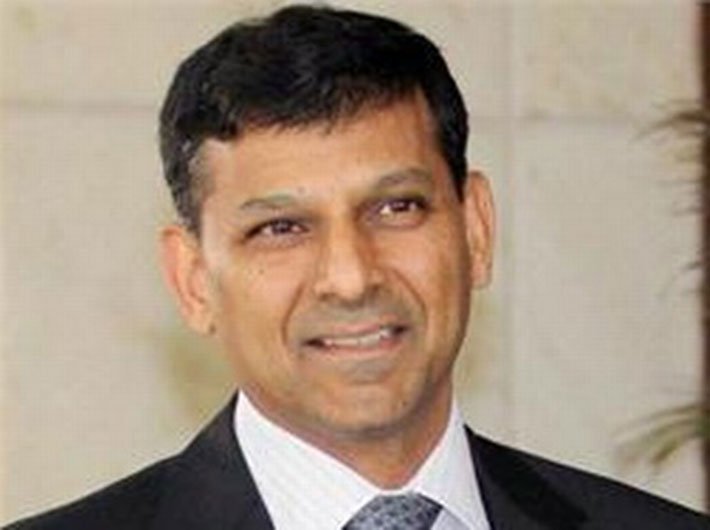
While announcing the Second Bi-monthly Policy Statement for the year 2015-16, RBI Governor Raghuram Rajan said, "The rate cut is an attempt to boost investment. We have done what we think is 'appropriate' in view of current data."

In its credit policy review, the RBI expects Current Account Deficit (CAD) at 1.5% of Gross Domestic Product (GDP) in the financial year 2015-16. The RBI also expects inflation to start rising to 6% by January 2016.

There are considerable hopes that Prime Minister Narendra Modi's economic reforms and aggressive spending on infrastructure will solidify the gains in economic growth.

Policy Statement: Click here

Comments


Other News

How Rafi, Raj Kapoor helped pave the way for a great uranium deal

There`s a certain moment in diplomacy that`s too personal to be captured in a communiqué, too small to make the front page, but more revealing than the front page. This week, prime minister Narendra Modi reached Tashkent and, amid the pomp of state visits, managed to evoke the old Bollywood tunes

Distinguishing Fish 1 and Fish 2: The pragmatism behind India’s WTO ratification

 India became the 123rd WTO member to ratify the multilateral Agreement on Fisheries subsidies (AoFS) when it deposited the Instrument of Acceptance for Phase 1 on July 20, 2026. The ratification is restricted to disciplining Illegal, Unreported and Unregulated fishing (IUU), protection for overfished

The 7% growth problem: Why the next 7% will be harder

India has become accustomed to hearing the 7% growth number. It is now less a milestone than an expectation. Yet the paradox is becoming clearer: maintaining 7% growth may be considerably harder than achieving it once. India’s real GDP grew 7.7% in FY2025–26, following growth of 6.5% in FY202

The Constitution cannot be altered: Justice Abhay Oka

Justice Abhay Oka, who retired from the Supreme Court in May 2025, has said that the Constitution of India cannot be altered. Explaining the landmark Kesavananda Bharati judgment (1973) on the basic structure of the Constitution, he said, “This is one judgment that has saved democracy in India.&rdq

How the flora and fauna evolved in the Indian subcontinent

Mammals of India  By A.J.T. Johnsingh and P.O. Nameer HarperCollins India in association with Bombay Natural History Society  

India`s renewable race is moving beyond megawatts

When Shell bought Sprng Energy in 2022, India`s renewable energy market appeared to offer precisely what global energy majors were seeking: scale, growth and a place in one of the world`s largest energy transitions. Four years later, Shell is selling the same business to Aditya Birla Group for an enterpris

Upcoming Conferences


-->

Archives

Current Issue

Opinion

Facebook Twitter Google Plus Linkedin Subscribe Newsletter

Twitter






