
Seven-fold increase in seizures in compared to 2018 assembly elections
GN Bureau | November 20, 2023
The Election Commission of India’s persistent efforts have led to a significant and exponential increase in seizures in the five poll-going states of Mizoram, Madhya Pradesh, Chhattisgarh, Rajasthan and Telangana. Seizures over Rs 1,760 crore have been reported in these five states since the announcement of the elections, which is more than seven times the seizures made in previous assembly elections in these states in 2018 (Rs. 239.15 crore).
The seizure figures from the ongoing elections in the five states and few previous state assembly elections demonstrate ECI’s unwavering commitment to ensuring free, fair and inducement free elections by implementing robust measures to monitor inducements and curb electoral malpractices for a level-playing field.
Seizures over Rs 1,400 crores were done in the past six state assembly elections held in Gujarat, HP, Nagaland, Meghalaya, Tripura and Karnataka which is 11 times of the previous assembly elections in these states.
This time the Commission has also embedded technology into the monitoring process through the Election Expenditure Monitoring System (ESMS) which is proving to be a catalyst, as it brought a wide array of Central and State enforcement agencies together for better coordination and intelligence sharing.
ESMS is an endeavour aimed at quick sharing of information by intercepting enforcement agencies to other relevant agencies for multiple deterrence. ESMS provides easy coordination at CEO & DEO level with multiple enforcement agencies involved in election expenditure monitoring process. The platform facilitates real-time reporting, saves time in collecting and compiling reports from various agencies and better coordination. As per reports received from the poll-going states, this internal app is working well and helping in the election expenditure monitoring process.
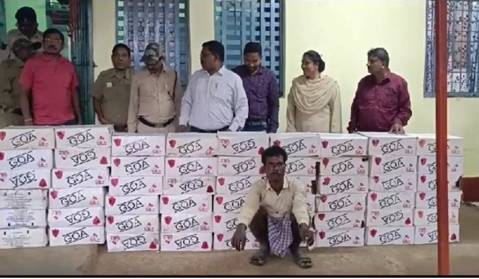
Seizure of liquor made in Bilaspur District of Chhattisgarh.
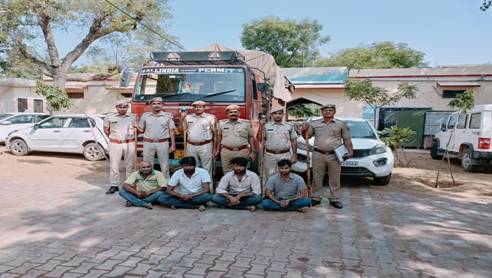
Seizure of liquor made in Rajasthan.
The monitoring process started with visits of teams headed by Sr. DECs/DECs to the poll-going states between June and August, wherein, interaction with enforcement agencies and districts was conducted with an aim to sensitize the participating field forces about the importance of expenditure monitoring and also to review their inputs for preparation for elections. Subsequently, the Commission during the review in these states, emphasised on a zero-tolerance approach on checking flow of inducements to influence voters and multi-level actions by enforcement agencies which is reflected in the increase in seizure in these states. From the day of these visits, Enforcement Agencies stepped up their vigil in their respective domains and by the time elections were announced, taken together, they had already reported seizures of Rs 576.20 crore.
The Commission also held reviews with Chief Secretaries, DGPs, Excise Commissioners, DG (Income Tax) and other senior officers of poll-going States and their respective neighbouring States and UTs.
As many as 228 experienced officers from IRS, IC&CES, IRAS, IDAS and other Central Government Services have been deployed as Expenditure Observers. For close monitoring, 194 Assembly Constituencies have been marked as Expenditure Sensitive Constituencies. It is also ensured that there is adequate availability of field level teams in the monitoring process and regular follow-ups with DEOs/SPs and enforcement agencies is done to deal with menace of money-power. The efforts on close monitoring will further continue in the poll-going States till completion of the ongoing elections and the figures of seizure are expected to rise further.
September 12 marks the International Day for South-South Cooperation, commemorating the 1978 Buenos Aires Plan of Action (BAPA). Forty-eight years later, its central proposition remains relevant: countries of the Global South can draw on their own knowledge, experience and innovations to address shared d
As India prepares to host the 18th BRICS Summit this weekend, and as prime minister Narendra Modi is set to hold a bilateral meet with president Xi Jinping, China’s growing global influence and the changing dynamics of India-China relations will be under focus. But to understand where China is head
This year marks 20 years of BRICS, with India set to host the grouping’s leaders’ summit this weekend. The anniversary offers an opportune moment to assess BRICS’ growing importance at a time when the effectiveness of global governance and the credibility of multilateralism are under in
Triumph of the Indian Republic: My Life, My Struggles By Ram Nath Kovind Rupa Publications, 400 pages, Rs 795 All our presidents so far stand out, each for a different reason. Ram Nath Kovind, the 14th president of India, from 2017 t
Pathbreakers: How 10 Visionary Leaders Transformed India by award-winning journalists By Sucheta Dalal and Debashis Basu Rupa Publications, 304 pages, Rs 695
In a significant gain for citizen protection in the digital economy, the Department of Telecommunications (DoT) has helped prevent suspected cyber fraud losses of more than ₹5,000 crore through its Financial Fraud Risk Indicator (FRI) within fifteen months of its launch on May 22, 2025. This money did











